
Commercial Pest Control
Pest Control Logbooks: What to Keep on File
A pest control logbook is the folder that proves your business checks for pests, acts on what it finds and follows up. Keep the service reports from your pest company, a sighting log for staff, a map of monitors, a record of repairs and the reports from any inspection or audit.
- Serving Columbus since 1990
- 4.5★ from 55 Google reviews
- Owner-run, based on Dunning Rd
- One-time or recurring service
How long to keep each item is set by whoever audits you, which may be a health inspector, a customer or an insurer. Ask them. This post lists what to collect, who writes each page and how to keep it usable. Our commercial pest control service supplies the reports that fill the first section.
What records belong in a pest control logbook?
Think of it as five sections. Each answers a question an inspector or auditor is likely to ask.
| Section | What goes in it | Who writes it |
|---|---|---|
| Service reports | Date, areas inspected, findings, work done, products applied, next visit | Pest company |
| Sighting log | Date, time, pest, location, who saw it, what was done | Staff |
| Monitor map and checks | Where traps and stations sit, dates checked, catches | Pest company and staff |
| Corrective actions | Repairs, sealing, sanitation fixes, with dates and who did them | Manager or maintenance |
| Inspection and audit reports | Health inspection findings and your responses | Inspector, then manager |

Need reports that match your audit?
Tell us who inspects your business and what they ask for. We will shape our documentation around it.
- Serving Columbus since 1990
- 4.5★ from 55 Google reviews
- Owner-run, based on Dunning Rd
- One-time or recurring service
What should a service report show?
A useful report is specific. Vague entries like "serviced, no issues" do not help you in an audit or a dispute. Look for these items on every report.
- Date, arrival and departure time and the name of the technician.
- Areas inspected, including the exterior, and what was found in each.
- Pests seen or signs of them, with locations.
- What was done: treatment, trap changes, exclusion work.
- Products applied and the label's re-entry time, where a treatment was made.
- Recommendations for you to act on, such as repairing a door sweep.
- The date of the next visit.
We provide documentation after an inspection, and we ask you to read it before we leave. If a line looks wrong, we fix it then.
How do you set up a sighting log staff will use?
A log nobody fills in is worse than no log, because it shows a system you did not follow. Keep it simple and put it where the staff already are.
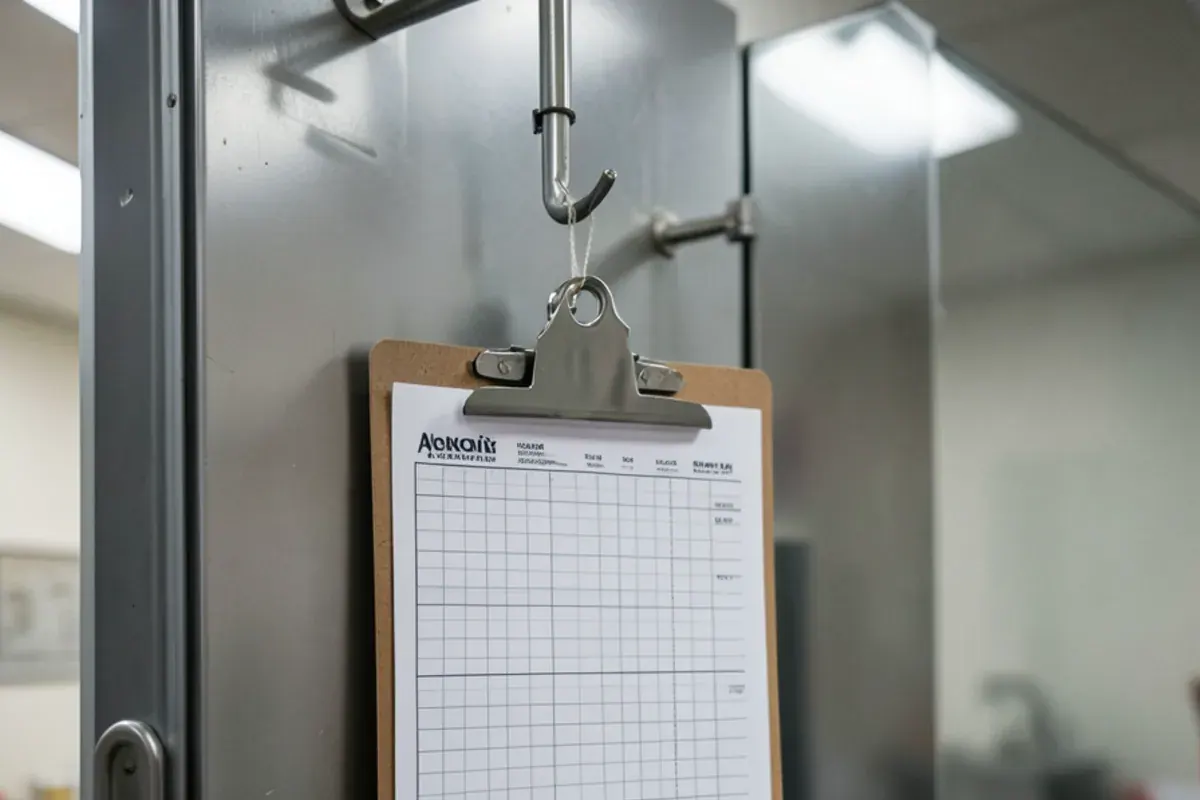
- Use a single page on a clipboard near the back door or the manager's office.
- Give it five columns: date and time, pest, location, who saw it and action taken.
- Tell the staff that logging a sighting is expected and nobody is in trouble for it.
- Review the page weekly and pass new entries to your pest company before the next visit.
- Copy the page into the logbook each month and start a new one.
What does a good corrective action entry look like?
Findings without fixes are the weakest part of most logbooks. Each entry should connect a problem to a repair and a closing date.
| Element | Weak entry | Strong entry |
|---|---|---|
| Problem | Door gap | Back door sweep worn, daylight visible at the hinge side |
| Action | Fixed | New sweep fitted, threshold caulked |
| Who | Maintenance | Named person or vendor |
| When | Last week | Date opened and date closed |
| Check | None | Re-inspected at the next pest visit, noted on the report |
Add a photo where you can. A before and after pair takes seconds and answers most questions an auditor will ask.
How long should you keep pest control records?
No single answer fits every operation. Your local health department, a customer's audit program, your insurer and your lease may each set a retention period. Ask each one what it expects, and keep records for the longest of those periods.
If nobody has named a period, a sensible rule is to keep reports through your next audit cycle and as long as any customer contract or claim could still refer to them. This is a practice suggestion, not a legal rule. If a dispute or claim is possible, ask your attorney before discarding anything.
How do records help during an inspection?
The FDA Food Code, which Ohio's Uniform Food Safety Code is built on, calls for food operations to keep premises free of insects and rodents and to limit conditions that harbor them. Inspectors look at the building, and your records show that you do something about what they might find.
A tidy logbook turns a hard question, such as "how long has this been going on?", into a quick answer. It also shows patterns, like flies every August near the same drain, that you can fix before the next summer. For a daily routine to feed it, see our restaurant pest control checklist for Columbus.
Which health department will ask for your records?
Inside the city of Columbus, Columbus Public Health licenses and inspects food facilities and posts inspection results online. Outside the city but inside Franklin County, Franklin County Public Health covers that work. Which office applies depends on your address, so confirm it before you plan what to keep.
Either office inspects against the Ohio Uniform Food Safety Code. Ask your inspector what they want to see at the visit, since the logbook is your answer to the pest questions they raise.
What mistakes make a logbook less useful?
- Gaps in the dates. A log with a three-month hole invites the question of what happened in it.
- Entries written all at once. Notes written the night before an audit look written the night before.
- No link to the service report. A sighting that never gets matched to a visit leaves the pest company guessing.
- Only the pest company's copy. If the file lives only in their system, you cannot hand it over on the spot.
- No owner. Assign one manager to review the log each week, and name a backup.
A short, current log beats a thick, stale one every time.
Paper or digital, which works better?
Either works if it is kept current and easy to find. Paper survives a power outage and sits by the door where staff will use it. Digital files are searchable and easy to share with an auditor. Many kitchens use both: a paper sighting log at the back door and scanned reports in a shared folder.
Whatever you choose, name files by date and type, and keep one master copy. Our restaurant pest control page explains what reports we provide for food businesses.
What we tell owners about records
Owners tend to see the logbook as paperwork for someone else. We see it as the only memory your business has. Technicians change, managers leave, and the folder is what remains.
At each visit we write down what we found and what we did, and we ask your manager to read it. If you tell us what an inspector or customer asks for, we can make our reports match that format as far as we are able.
We also explain the price before work starts, and we ask about pets, kids and allergies, so the record shows those were considered.
A logbook cannot replace action. It records what you did, and it does not remove a gap at a door or a drain that stays wet. We tell owners that the log should drive repairs, and if entries keep repeating without a fix, the log is showing you the problem.
Not every sighting needs a call. A single fruit fly logged in August and cleared by a wipe-down is a note, not an emergency. Call when entries repeat for the same spot within a week, when droppings turn up or when an inspector cites a pest.
Related questions
What should be in a pest control log for a restaurant?
Keep the pest company's service reports, a staff sighting log, a map of monitors with check dates, a record of repairs and sanitation fixes, and any health inspection reports with your responses. Together they show that you find problems, fix them and follow up, which is what an inspector or auditor wants to see.
Who is responsible for keeping the logbook, the business or the pest company?
Both have a part. The pest company writes the service reports and should leave you a copy. The business keeps the master logbook, the sighting log and the repair records. If an auditor asks for the file, it should be in your building, not only in your pest company's system.
Can digital records replace a paper pest control log?
Often yes, but check with whoever audits you. Some inspectors and customers accept scanned or electronic reports, while others want paper on site. Keep files organized by date and type, and make sure a manager can open them quickly during a visit.
Which health department inspects restaurants in Columbus?
Columbus Public Health licenses and inspects food facilities inside the city and posts results online, while Franklin County Public Health covers areas outside the city limits. Both inspect against the Ohio Uniform Food Safety Code. Check which office licenses your address, then ask what pest records they expect to see at an inspection.
Start with one binder or one folder, add the service reports and put a sighting log by the back door. Learn more about commercial pest control and restaurant pest control, then call (209) 563-1650 to set up reports that fit your inspections. We serve businesses across Columbus.
Sources
Questions about this? Call the shop.
Tell us what you are seeing and we will tell you what happens next.
- Serving Columbus since 1990
- 4.5★ from 55 Google reviews
- Owner-run, based on Dunning Rd
- One-time or recurring service
Boydes Exterminating Co, 1967 Dunning Rd, Columbus, OH 43219