
Insect Control
Stink Bugs and Boxelder Bugs in Central Ohio Homes
Stink bugs in Ohio, along with boxelder bugs and Asian lady beetles, gather on sunny walls each fall because they are looking for a warm place to spend winter. They are not breeding in your house and they do not damage wood, but they get inside through gaps and wake up on warm days.
- Serving Columbus since 1990
- 4.5★ from 55 Google reviews
- Owner-run, based on Dunning Rd
- One-time or recurring service
The fix is mostly timing and sealing. This post explains how to tell the three apart, why your south and west walls get hit hardest, and what to do in late summer, in fall and once they are already inside.
Why do stink bugs and boxelder bugs gather on your house?
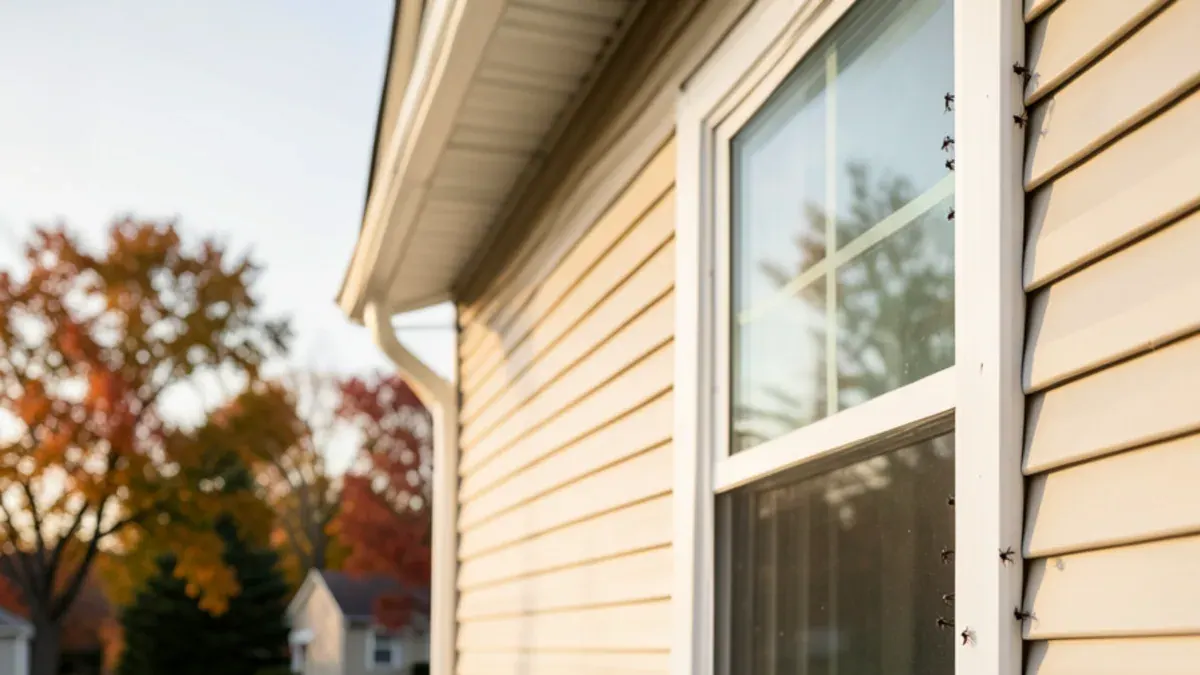
They are overwintering, which means finding a sheltered spot to wait out cold weather. As days shorten in September and October, adults leave gardens, trees and fields and fly to the warmest surface they can find. A south or west wall in afternoon sun, especially with light siding, is the best fit.
An Ohio State Extension educator describes boxelder bugs and brown marmorated stink bugs massing on the warm sides of homes and finding their way in through cracks and crevices. They slip behind trim, into soffits and around window frames, then go dormant between the studs.
That is why bugs appear indoors in January or March. A warm day wakes the ones in the wall, and they head toward the light, which is usually your living room window.
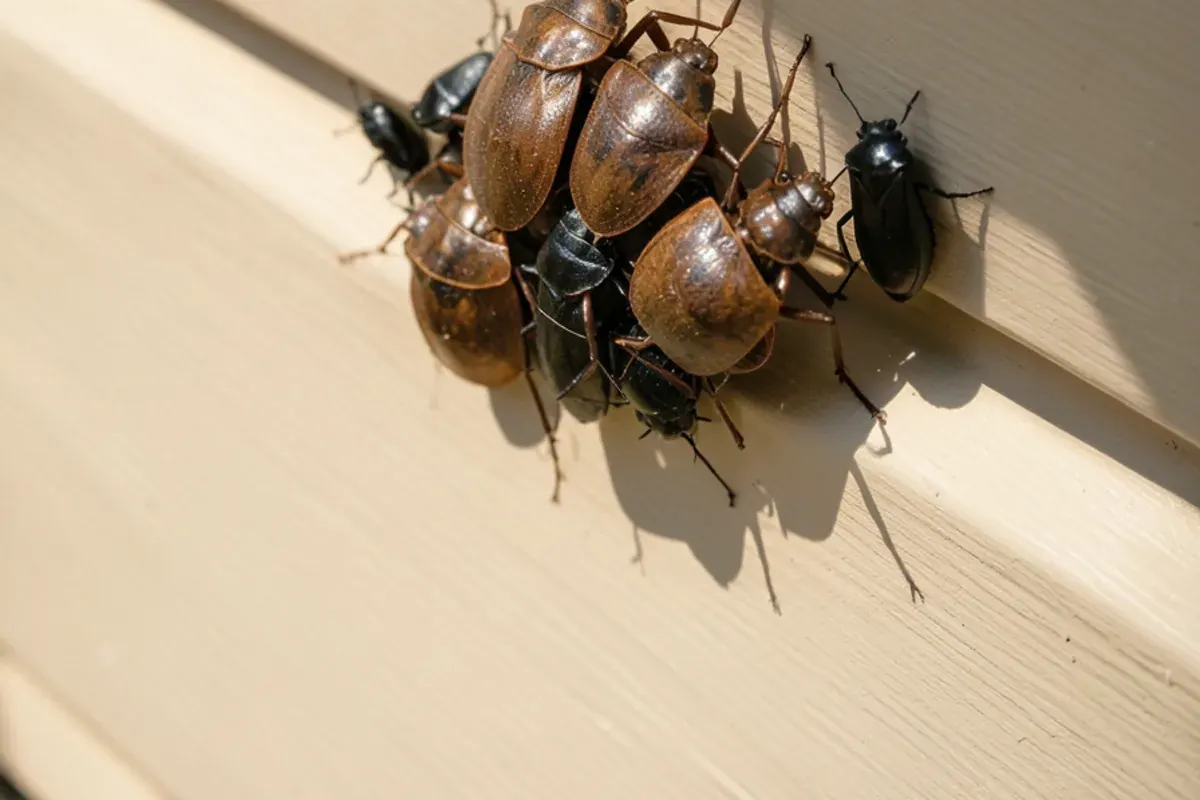
Bugs already clustering on the siding?
Tell us which walls get the sun and what you have seen. We will say what still helps this season and what to plan for next year.
- Serving Columbus since 1990
- 4.5★ from 55 Google reviews
- Owner-run, based on Dunning Rd
- One-time or recurring service
How do you tell the fall invaders apart?
Three insects use this trick in central Ohio. They look alike from a distance, but the details differ.
| Insect | Size and look | What it does indoors |
|---|---|---|
| Brown marmorated stink bug | About three-quarters of an inch, shield-shaped, mottled brown, pale bands on the antennae | Gives off a sharp odor when crushed or disturbed |
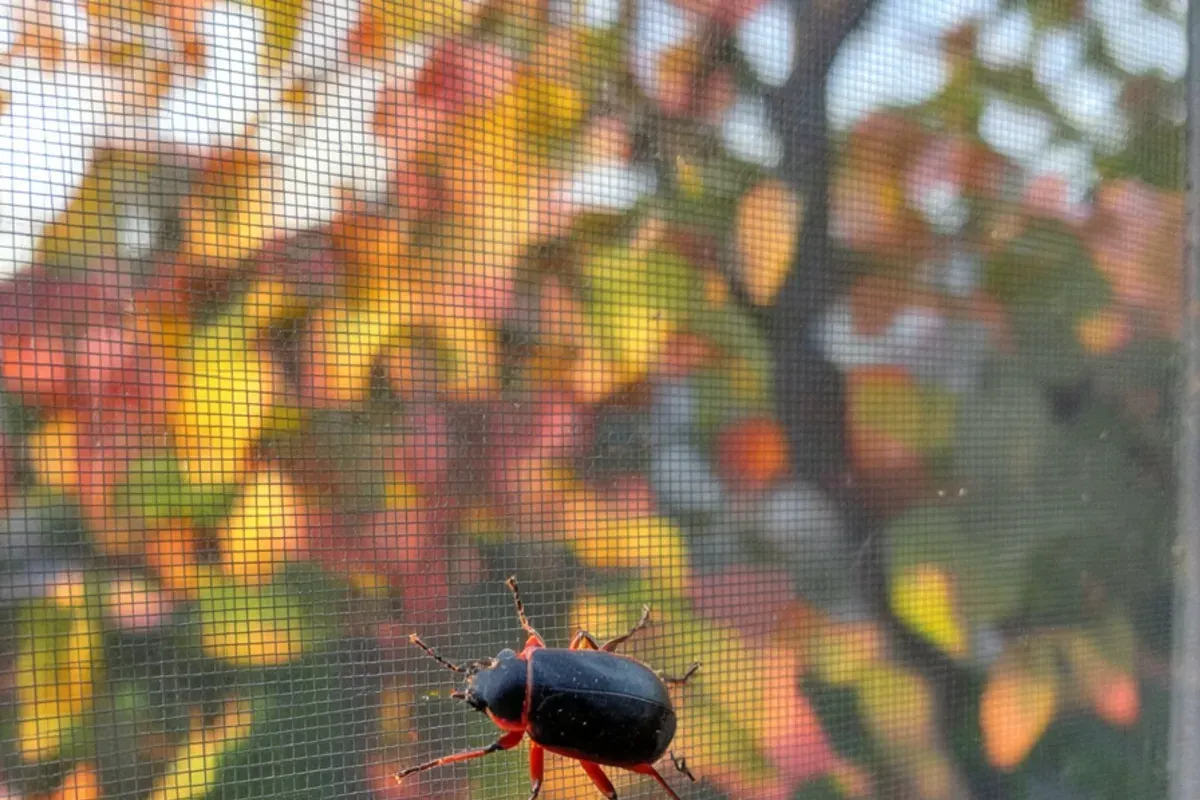
| Boxelder bug | About half an inch, black with red-orange lines on the back | Can stain curtains and walls with its droppings |
| Asian lady beetle | Under half an inch, orange to red, a white W or M shape behind the head | Can leave a yellow stain and give a mild bite |
Our page on stink bug control covers the species and the treatment in more detail. Do not confuse any of these with the spotted lanternfly, which is a plant feeder and not a house invader. See our post on spotted lanternfly in Ohio.
Why do boxelder bugs show up where they do?
Boxelder bugs develop on seed-bearing boxelder, maple and ash trees, so a female boxelder tree near the house can feed the population every year. Removing a large tree is rarely practical, which is why sealing matters more than culling.
Powell is a fair example of the pattern. The median home was built in 2001 and only about 11% are rented (ACS 2019-23), so many are owner-maintained houses with sunny exposures facing the lots and tree lines of Delaware County. Wide southern walls get hit first, then the bugs find their way into the soffits and trim.
How do you keep stink bugs out of the walls?
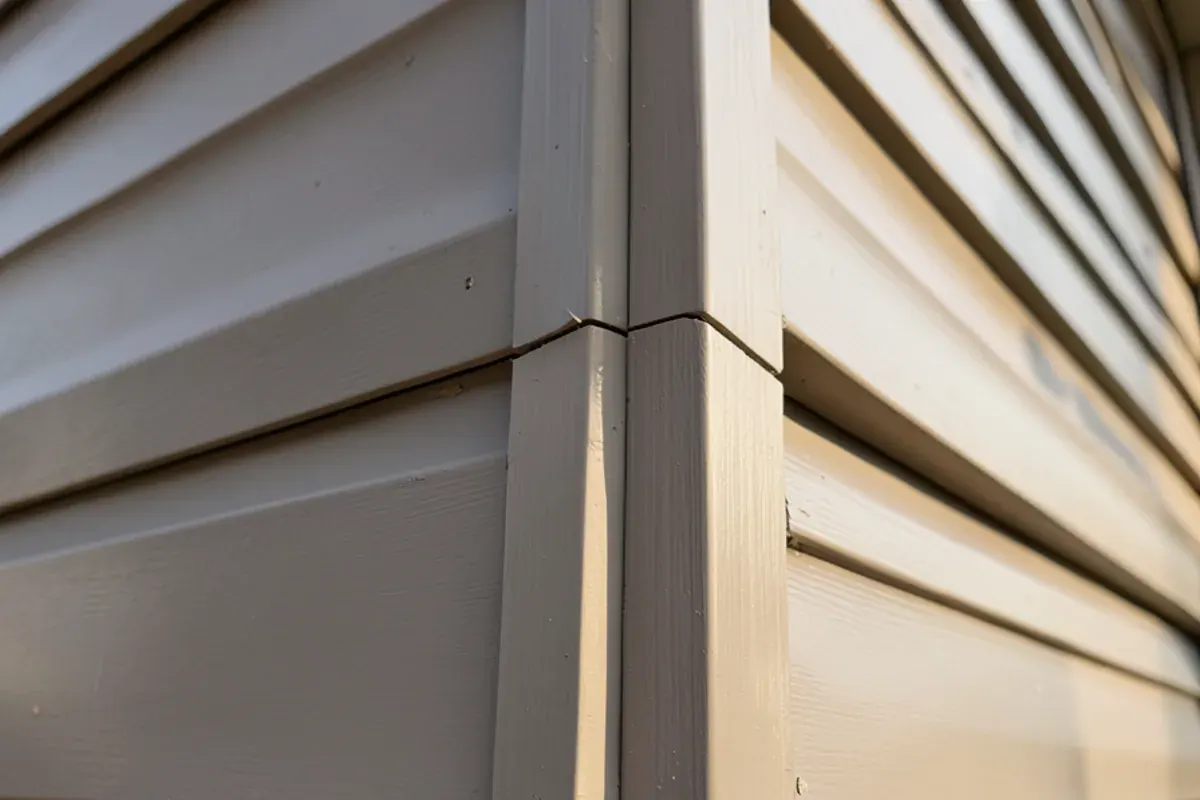
Exclusion is the answer, meaning you close the gaps insects use. Do it before the bugs arrive, since caulking in November traps whatever is already inside. Extension guidance puts exterior caulking at temperatures above about 40 degrees.
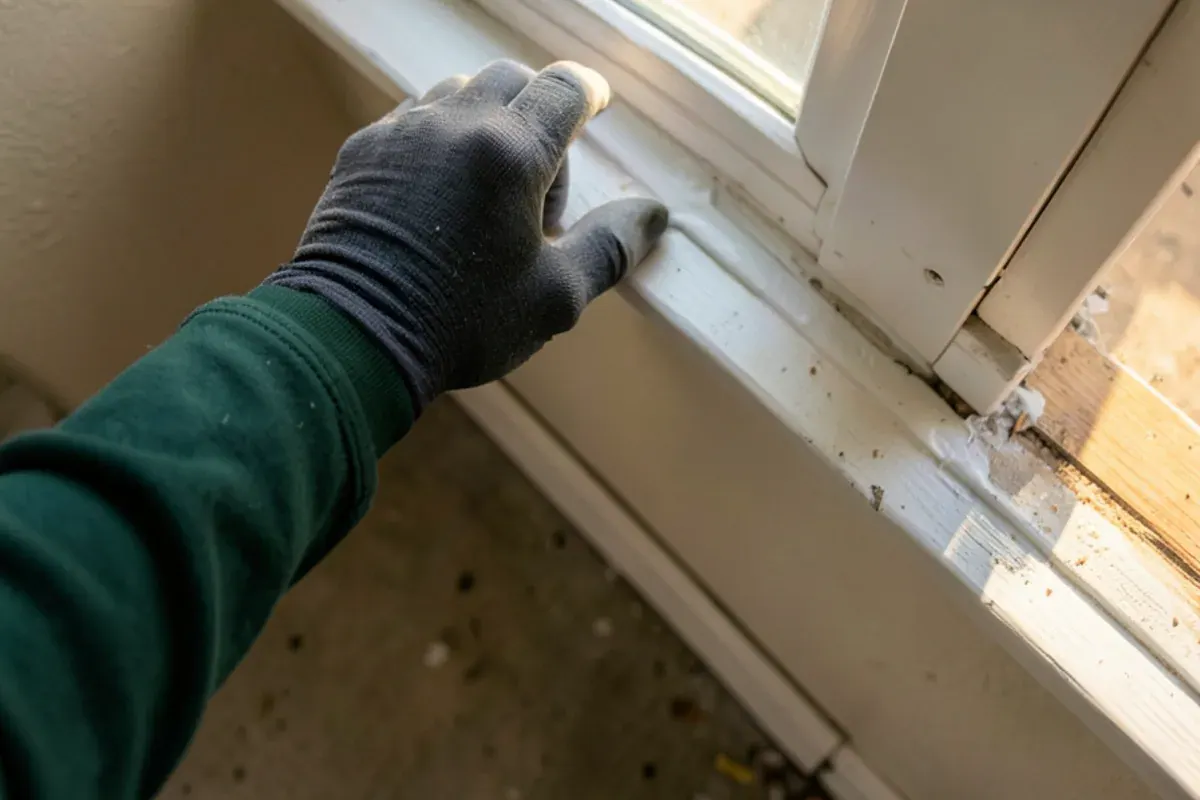
- Walk the outside in late summerCheck around windows, doors, utility lines, siding seams and fascia boards.
- Seal gaps with exterior-grade caulkA University of Kentucky Extension publication notes that some insects fit through a gap about one-eighth of an inch wide.
- Repair screens and door sweepsTorn screens and worn sweeps are open doors.
- Add mesh behind ventsSoffit and ridge vents need to breathe, so use fine mesh and not caulk.
- Consider an outside treatment before the waveA perimeter treatment goes along the foundation and sunny walls, per label directions, and works only before the bugs go into the wall.
A perimeter treatment is a band of product on the lower wall and foundation. It reduces the numbers crossing the line, and it works alongside sealing, not in place of it.
What is the fall bug calendar for a Columbus house?
Timing decides how much work the season takes. This is the order we suggest for a central Ohio house.
- August: walk the outside, fix torn screens and door sweeps, and mark every gap you find with painter's tape.
- Late August to early September: caulk the gaps on dry days when it is above about 40 degrees, and call about an outside treatment before the first wave.
- September to November: expect bugs on the sunny walls. Leave them alone outside, and keep windows closed on warm afternoons.
- December to March: pick up the stragglers that wake on warm days, and avoid spraying into the wall voids.
- April and May: the bugs head back out, since OSU notes they overwinter as adults and emerge when spring warms. Check your caulk and note the gaps they use.
What if the bugs are already in the wall?
Sealing after they are in only locks the bugs inside, and some will find their way into the living space instead. Seal the gaps you can see from the inside, such as around baseboards and light fixtures, and wait until spring for the exterior work. Plan the next summer's caulking and treatment before the bugs return.
What should you do once they are inside?
Vacuum them. A hose attachment picks them up without crushing them, and crushing is what releases the stink bug odor. Empty the canister or bag outside, since the smell lingers.
Avoid spraying aerosols into wall voids or around lights. It kills a few and leaves the rest. Dead bugs in a wall can also feed carpet beetle larvae later, so cutting the numbers before they enter is the goal.
Expect a few stragglers from January to April. If you are seeing dozens a day, there are many more in the walls, and a second round of sealing next summer will help more than anything done now.
How do you remove stink bugs without the smell?
OSU Extension suggests picking them up with tape, a tissue or a plastic glove, because they can stain skin and fabric. Drop them in a bag or jar and freeze it for about a day, or vacuum them and empty the vacuum outdoors right away. The authors do not recommend insecticides indoors, since the bugs cause no damage and more keep coming in.
A light-colored curtain beside a south window is where most of them end up. A small jar with a lid kept near that window makes the job a ten-second task.
What we tell customers about fall bugs
The most common call we get is in October, after the bugs are already on the siding. We would rather talk in August. That is when a perimeter treatment and a caulk gun do the most.
We ask which walls face the sun, whether there is a boxelder or maple tree nearby and how last year went. A home that was hit hard once will usually be hit again, because the cause is still there.
Know when a call is not worth it. If you have a handful of bugs in January, vacuuming and a promise to caulk in August will do more than any visit. An outside treatment is a better fit when you have a large sunny wall, a boxelder tree next door or a history of dozens of bugs a day. In those houses the walls are full, and no spray inside will change that.
Outside treatment is the part we handle. We apply it per label directions, you get the re-entry time from the label, and we ask about pets, children and allergies first. Sealing stays your job or a contractor's, and we give you a short list. Pricing is explained before work starts. See our insect control page for what else we cover.
Related questions
Why are there so many stink bugs on my house?
They are looking for a place to overwinter and your sunny wall is warm. Fall is the peak, from September into November. Seal gaps and repair screens before they arrive. Once bugs are in the wall, sealing no longer helps and you will see them come out on warm winter days.
Are boxelder bugs harmful?
They do not bite in any meaningful way and they do not damage wood or structure. The nuisance is staining from droppings and the sheer number on walls and windows. Vacuum them rather than crush them, and focus on sealing and, if needed, an outside treatment.
When should I treat for fall invaders in Columbus?
Late summer to early fall, before the bugs start gathering. A treatment applied after they move into the wall does not reach them. A second pass can make sense if the first wave arrives early or the weather stays warm, so call by August or early September if possible.
Do stink bugs come back every year?
Often, yes, because the same sunny wall and open gap attract them each fall. Homes near fields, tree lines or boxelder trees see them most. Sealing the gaps you find, fixing screens and timing an outside treatment before the wave reduce the repeat visits.
Do stink bugs reproduce or damage things inside my house?
No. OSU Extension says brown marmorated stink bugs cause no damage to buildings and spend winter as adults in homes, emerging in spring. They do not breed indoors. The trouble is the smell when crushed and stains on fabric. In Powell and other newer suburbs, the south wall soffits are the usual hiding spot.
A little work in August saves a lot of vacuuming in January. Start with our insect control overview, read about stink bug control, or call (209) 563-1650 to talk about your walls. We serve Powell, Columbus and the suburbs around them.
Sources
- Ohio State University Extension, What's that smell? Brown marmorated stink bug headed for homes
- University of Kentucky Extension, Keeping Accidental Insect Invaders Out
- U.S. Census Bureau, American Community Survey 2019-23, Powell housing
Questions about this? Call the shop.
Tell us what you are seeing and we will tell you what happens next.
- Serving Columbus since 1990
- 4.5★ from 55 Google reviews
- Owner-run, based on Dunning Rd
- One-time or recurring service
Boydes Exterminating Co, 1967 Dunning Rd, Columbus, OH 43219