
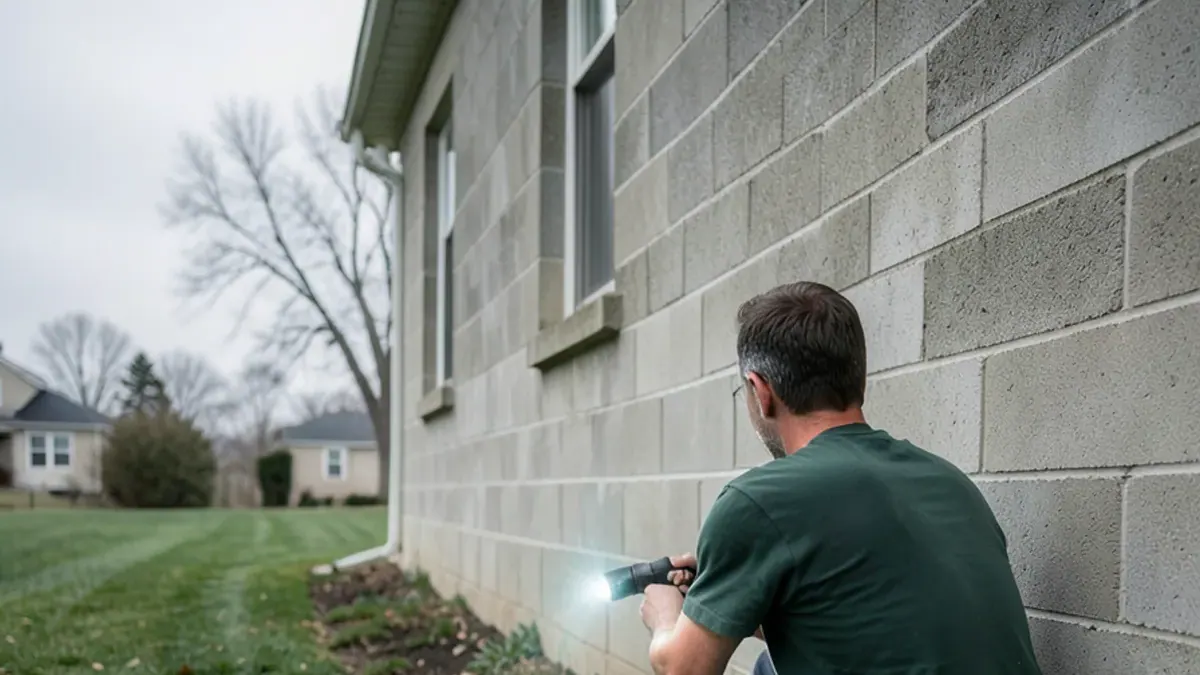
Boydes Exterminating Co
Termite & Timber-Pest Inspection in Columbus, OH
A termite inspection in Columbus, OH looks for the insects that eat wood and the damage they leave: termites, wood borers and the decay that comes with moisture. Boydes Exterminating Co does pre-purchase checks for termites, borers and wood decay, and we explain what we find in plain language.
- Serving Columbus since 1990
- 4.5★ from 55 Google reviews
- Owner-run, based on Dunning Rd
- One-time or recurring service
Buying a house is the usual trigger, but owners book them too. Because Ohio regulates who may do these inspections for a sale, this page also tells you how to check any company before you hire it. For the wider picture, see our main page on pest control in Columbus.
Do I need a termite inspection before buying a Columbus home?
Often, yes, though the requirement comes from your contract or lender, not from a blanket Ohio law. Read the purchase agreement and ask your agent and lender whether a wood-destroying insect report is expected. If it is optional, get one anyway. Termite damage hides inside framing and behind finished walls, where a standard home inspection cannot see it.
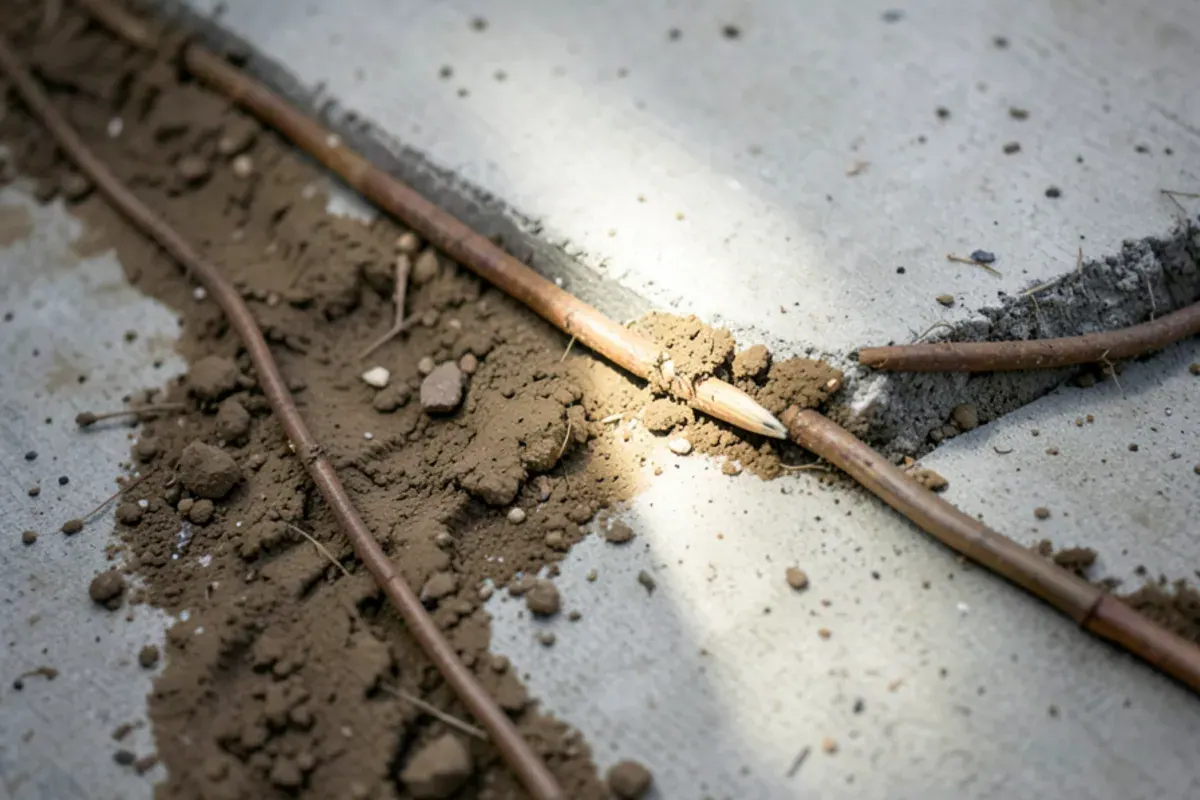
Orkin's 2025 termite city list has Columbus at No. 50. Subterranean termites are the main wood-eaters in Ohio. They live in the soil and reach a house through mud tubes, foundation cracks and wood that touches the ground, and they stay out of sight for years.
What does Ohio require for a wood destroying insect inspection?
The Ohio Department of Agriculture (ODA) requires a Pesticide Business License, at least one licensed commercial applicator, and liability insurance to apply pesticides for hire, to solicit that work, or to do wood-destroying insect inspections for real estate sales. In plain terms, Ohio requires that a WDI inspection for a sale come from a licensed business.
You do not have to take anyone's word for it. ODA runs a public lookup where you can search any company by name, and you should run that search before you hire a termite inspector, whoever it is. The lookup link is in the sources at the bottom of this page.
Under contract on a house?
Send us your closing date and the address. We will tell you what fits before your contingency runs out.
- Serving Columbus since 1990
- 4.5★ from 55 Google reviews
- Owner-run, based on Dunning Rd
- One-time or recurring service
Prefer to write it down?
Calling is fastest. The form comes to the same desk, and we call you back during business hours.
Call (209) 563-1650What is inspected for wood destroying insects and timber pests?
A timber pest inspection covers every part of the structure where wood meets soil, moisture or hidden space. We check:
- Foundation walls, sill plates and band joists for mud tubes, frass and soft wood
- Crawl spaces and basements, including support posts and wood stored against walls
- Porches, decks, steps, window frames and door casings
- Attic framing and roof edges where leaks create damp wood
- Garages and detached outbuildings
- Exterior grade, such as mulch against siding, soil piled above the foundation line and downspouts that dump water at the wall
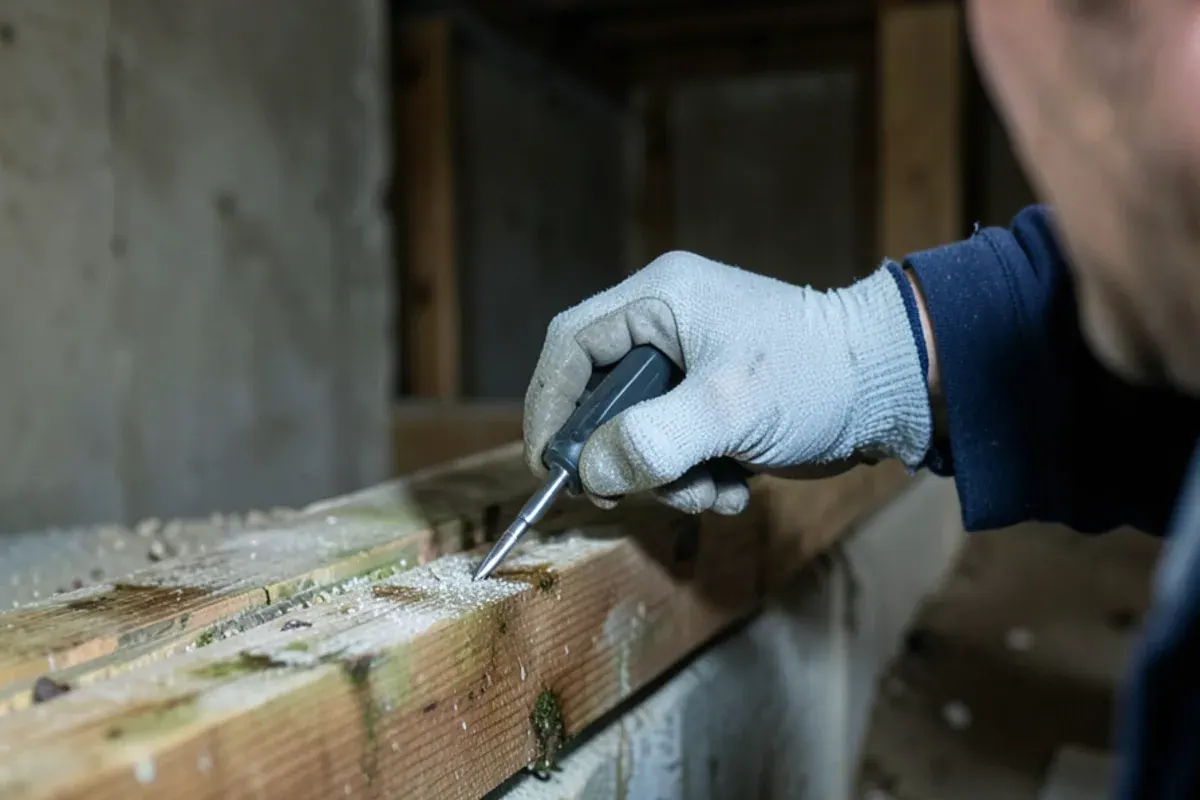
We probe suspect wood with a screwdriver and look for hollow sound, blistered paint and fine sawdust. Active infestation, past damage and conditions that invite termites are noted separately, since each one means something different for a buyer.
Do you check for wood borers as well as termites?
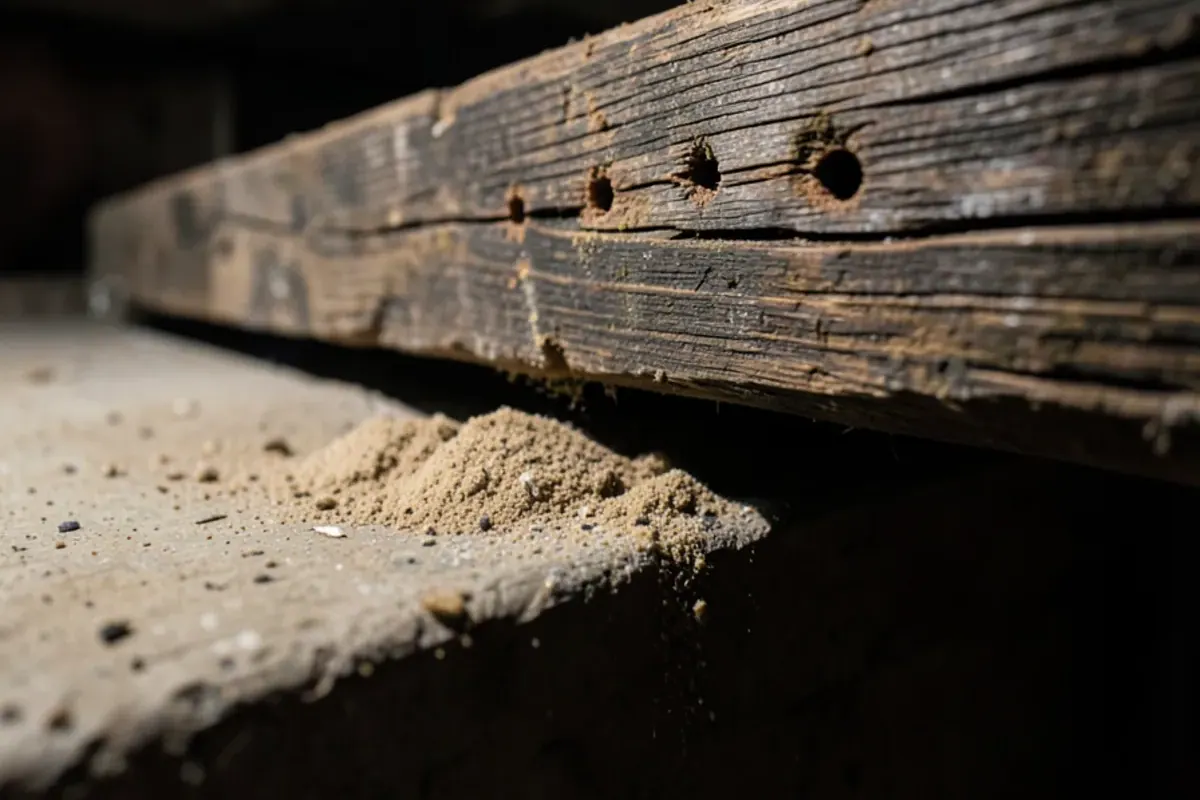
Yes. Wood borers such as powderpost beetles and carpenter ants leave different signs than termites. Beetles leave tiny round exit holes and fine, flour-like powder. Carpenter ants push out coarse shavings and tunnel into wood that is already wet. Wood decay is not an insect at all, but it matters because it shows where water has been and where pests will go next.
Telling these apart changes the fix. A beetle problem in dry lumber is treated differently than termites in the soil, and a wet beam may need repair before any treatment will hold.
What does a home buyer termite inspection involve, step by step?
- You tell us the closing timelineGive us your contingency dates, so the report reaches you while you can still negotiate.
- We inspect outside, then insideFoundation, grade and exterior wood first, then basement or crawl space, attic and visible framing.
- We document what we findYou receive documentation after the inspection listing locations, evidence and areas we could not reach.
- We explain the findingsActive insects, old damage and moisture conditions are explained separately.
- You decide the next moveThat may mean treatment, repairs, a price adjustment or nothing. See termite treatment in Columbus if treatment is needed.
Who pays for the inspection, and what happens if problems turn up?
Buyers commonly pay for the inspection, though some contracts split or assign it. We price by the property and its size, and you hear the number before booking. If termites or damage turn up, negotiating with the seller is a normal next step: ask for treatment, a repair credit or both, in writing.
Keep in mind that a clean report applies to the day of the inspection. Termites can arrive later, which is why many owners schedule a check every year. Our pest inspection page covers the general version, and the post on termites and Ohio home buyers goes deeper on contracts.
Can existing homeowners book an inspection too?
Yes. Look for swarmers in spring, discarded wings on window sills, mud tubes on foundation walls, or wood that sounds hollow when tapped. Any of those is a reason to call. So is a basement leak, since termites and decay follow moisture.
Ohio's WDI report rules: Category 12, rule 901:5-11-13 and the NPMA-33 form
Ohio Administrative Code rule 901:5-11-13 governs how wood-destroying insect inspections for real estate transactions are recorded. The standard report is the NPMA-33 form, published by the National Pest Management Association. Ohio State University Extension says inspectors need a commercial applicator license in Category 12, Wood-Destroying Insect Inspection, and training through OSU comes first.
Before you order a report for a purchase, ask three things. Which license category does the inspector hold, and is the business in ODA's public search? Will the report come on the NPMA-33 form? And which areas could not be reached, such as a finished basement wall or a blocked crawl space? Those gaps belong on the form.
Why Boydes Exterminating for this work
We do inspections before a purchase for termites, borers and wood decay, and we explain what each finding means for your negotiation.
You get a record of what was checked and found, including areas we could not reach, which is useful when you negotiate with a seller.
ODA publishes its lookup for Pesticide Business Licenses. We point you to it, so you can verify any company before you hire it.
Founded in 1990 and run today by owner Robert J. Boyde Jr. from 1967 Dunning Rd on the east side of Columbus.
The business holds 4.5 stars from 55 Google reviews. Pay the way that suits you: cash, check, debit or credit.
Where we do this work
- Bexley Median home built 1944, an age where basement walls and sill plates deserve a probe for soft wood.
- Grandview Heights The median home dates to 1954 and 43% of homes are rented, so owners and buyers both want records.
- Upper Arlington Median home built 1959 in a planned suburb begun in 1913, so older framing and basements get a close look.
- Worthington Founded in 1803 with a median home from 1963 near the Olentangy River, where damp basements and old wood meet.
- Columbus Orkin lists Columbus at No. 50 for termites in 2025, and the median home dates to 1980.
- Hilliard Sits between the Scioto River and Big Darby Creek, and the median home was built in 1997.
- Dublin The Scioto River corridor runs through the city, and a median build year of 1996 puts many homes near three decades old.
- Westerville Hoover Reservoir sits just east of town, and a 1982 median build year means many foundations are over 40 years old.
- Canal Winchester Platted in 1828 along the Ohio and Erie Canal, so old-town houses are far older than the 2000 median build year.
- Gahanna Big Walnut Creek runs through the city and the median home dates to 1985, so moisture near foundations is worth checking.
We inspect homes in Columbus and nearby, including Dublin, Upper Arlington, Hilliard and Pickerington. Check our service areas page for your town.
Termite & Timber-Pest Inspection: common questions
Do I need a termite inspection before buying a Columbus home?
Check your purchase agreement and ask your lender, since the requirement usually comes from the contract or loan. Ohio does set rules for who can do a wood-destroying insect inspection for a sale, but it does not make every buyer order one. Even when optional, it is worth getting, because damage hides inside framing.
Do you check for wood borers as well as termites?
Yes. Our pre-purchase checks cover termites, borers and wood decay. Borers such as powderpost beetles leave round exit holes and fine powder, while carpenter ants leave coarse shavings in wet wood. Decay shows where water has been. We note each separately so you know what is active, what is old and what needs repair.
Can existing homeowners book an inspection?
Yes. Owners book when they see swarmers, mud tubes, hollow-sounding wood or damp framing, and some schedule a yearly check with no symptoms at all. You get the same walk-through and documentation a buyer gets. If something is found, we explain your options and the price before any treatment is scheduled.
How do I check that a company can do a WDI inspection for a sale?
Use the Ohio Department of Agriculture's public pest business search and enter the company name. ODA requires a Pesticide Business License, a licensed commercial applicator and liability insurance for wood-destroying insect inspections tied to real estate sales. Search any company you consider, , and ask for the details if something is unclear.
When is termite season in central Ohio?
Swarmers, the winged termites that leave the colony to start new ones, usually appear in spring, often on warm days after rain. Termites feed all year inside wood and soil, though, so a winter inspection can still find damage and mud tubes. Do not wait for swarmers to book a check.
Sources
- Ohio Department of Agriculture, Pesticide Business Search (public lookup)
- Orkin, Top 50 Termite Cities, 2025 list
What customers say
4.5 stars from 55 Google reviews, checked November 2026. Read more reviews · Leave a review
Mr. Boyde’s company is responsive and honest. They answer phone calls, give estimates, and come to your home quickly. Pricing is true to market price with no surprise charges.
Great service. Super dependable. Calls right back. This time he was able to come out same day.
Excellent service, very easy to schedule appointments. No inspection needed to get the job done sooner and very forward about the cost.
Get the wood checked
Call to book a termite and timber pest inspection, and ask us anything about what the report covers.
- Serving Columbus since 1990
- 4.5★ from 55 Google reviews
- Owner-run, based on Dunning Rd
- One-time or recurring service
Boydes Exterminating Co, 1967 Dunning Rd, Columbus, OH 43219