
Boydes Exterminating Co
Bee Swarm & Hive Removal in Columbus, OH
Bee removal in Columbus, OH starts with the question of which bee you have and whether it needs removing at all, because a honey bee swarm, a colony in a wall and a bumble bee nest in a flower bed are three different problems. Boydes Exterminating Co sorts that out first as part of our stinging insect removal in Columbus work.
- Serving Columbus since 1990
- 4.5★ from 55 Google reviews
- Owner-run, based on Dunning Rd
- One-time or recurring service
Honey bees matter to Ohio gardens and orchards, so treatment is not always the first answer. A swarm or colony may be collected by a local beekeeper, and when that is realistic we will tell you.
Honey bee swarm, hive in a wall or something else?
Most calls about bees turn out to be one of five things. Match what you see to the table below. If it looks like a bee but nests in wood, our carpenter bee control page is the better fit.
| What you see | Likely insect | What it usually means |
|---|---|---|
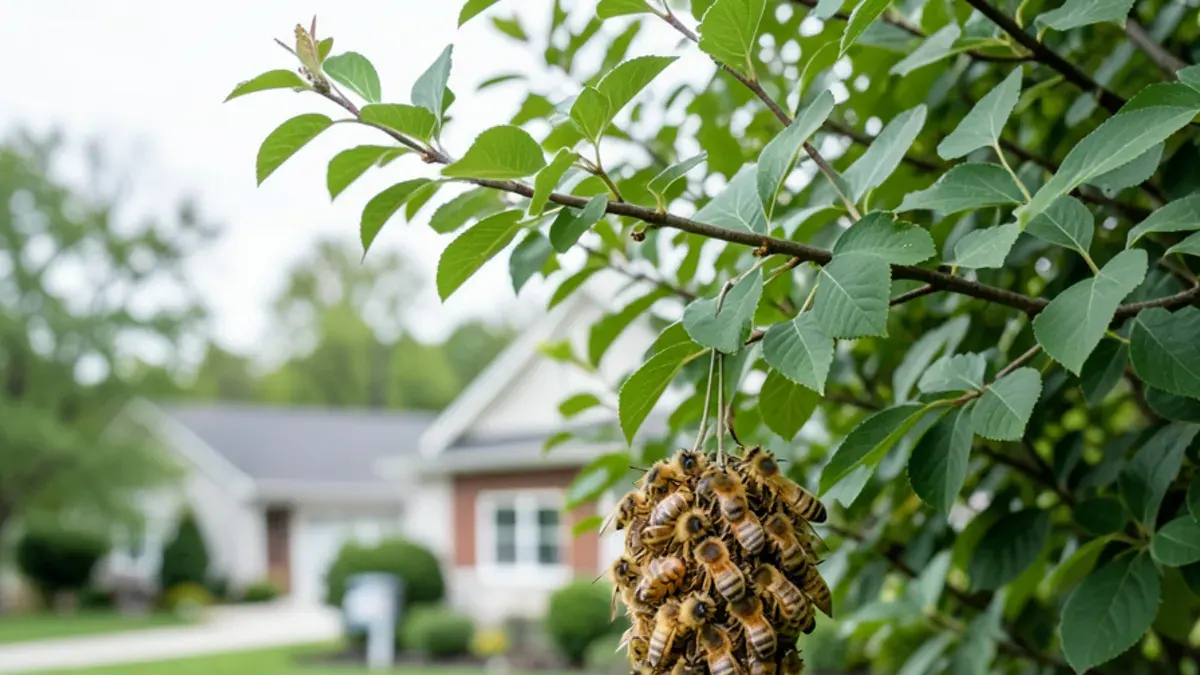
| A fuzzy clump of golden bees hanging on a branch or fence | Honey bee swarm | A colony resting while scouts look for a home. It often moves on within days |
| Steady bee traffic at a crack in siding or a soffit | Honey bee colony in a wall or roofline | An established colony with comb inside |
| Round, fuzzy bees entering a hole in the ground, a compost pile or a stack of boards | Bumble bees | A small, seasonal colony that dies off by fall |
| Small bees around bare soil mounds in spring | Mining or ground bees | Solitary bees that rarely sting and finish within weeks |
| Large bees hovering at a deck or fascia with round holes | Carpenter bees | Wood damage, covered on its own page |
A swarm landed in your yard: stay back and make one call
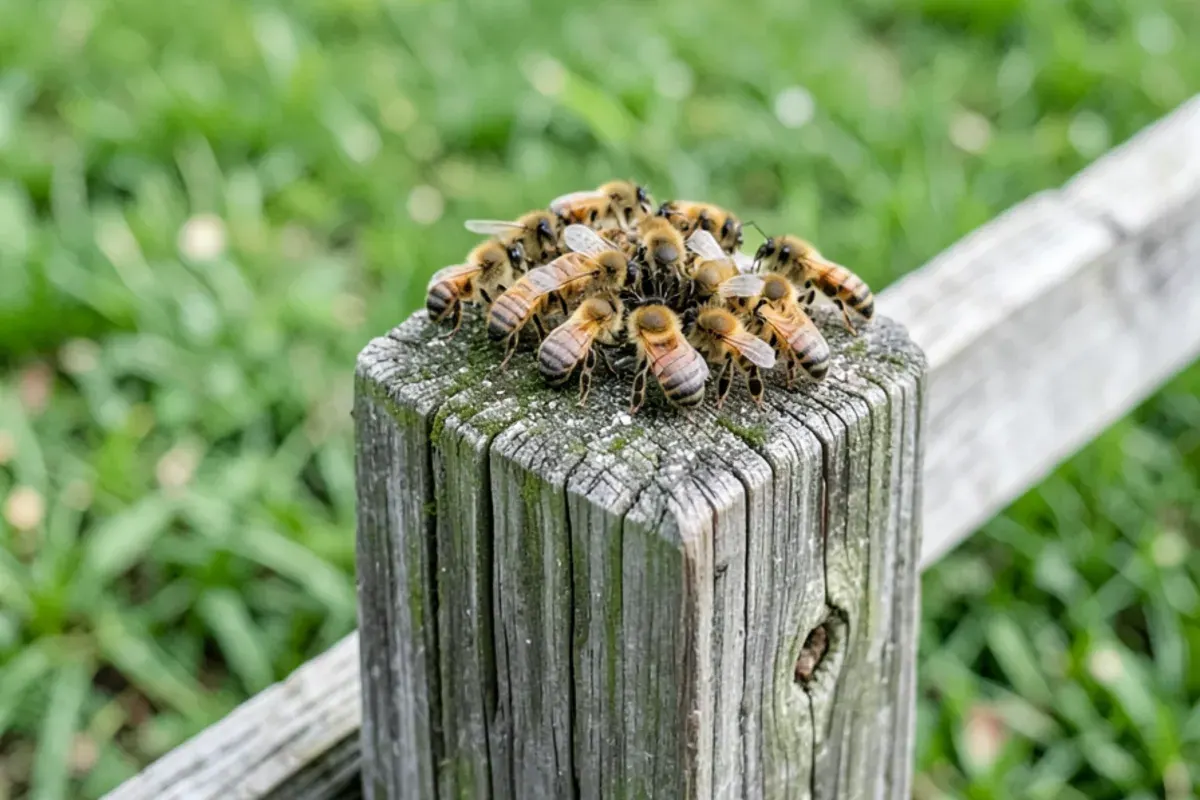
A swarm looks frightening, but swarming bees are carrying their honey and usually behave calmly. They gather around the queen and rest while scouts look for a cavity. That can last a few hours or a few days, which is why speed matters if you want a beekeeper to catch them.
- Keep people and pets away, and do not spray the cluster with a hose or a can
- Do not shake the branch or throw anything at it
- Take a photo from a distance and note the height and spot
- Call us early in the day so the bees are still where they landed
Swarming is most common in spring and early summer, when strong colonies split. A swarm in a yard is not an invasion. It is bees looking for a home, and a good outcome is that they find a better one than your wall.
Swarm on a branch right now?
Call early in the day with a photo and the location. Swarms move on, and a beekeeper needs time to get there.
- Serving Columbus since 1990
- 4.5★ from 55 Google reviews
- Owner-run, based on Dunning Rd
- One-time or recurring service
Prefer to write it down?
Calling is fastest. The form comes to the same desk, and we call you back during business hours.
Call (209) 563-1650Beekeeper first or treatment first? How we decide
A swarm or colony may be collected by a local beekeeper, and for honey bees that is often the better path. Collection saves the bees, avoids killing a colony that supports local gardens and, with a swarm, can be fast. We cannot promise a beekeeper will take every job, and availability changes with the season.
| Situation | First option | When treatment comes into it |
|---|---|---|
| Swarm resting on a branch, fence or shrub | A beekeeper collects the cluster | If no beekeeper can come and the swarm sits where people cannot avoid it |
| Colony in an open, reachable spot | A beekeeper moves the colony, comb and all | If the colony cannot be collected or is a hazard |
| Colony inside a wall or roofline | A cutout opens the wall and the colony is removed with its comb | If a cutout is not practical, with the comb still needing cleanup afterward |
| Aggressive or already treated colony | We assess it with you | Treatment when it is the only reasonable choice |

Whatever route you take, the comb has to go. Left behind, wax and honey melt, draw ants and rodents and attract a new swarm to the same cavity.
Bees in a wall in Columbus: finding where the colony lives
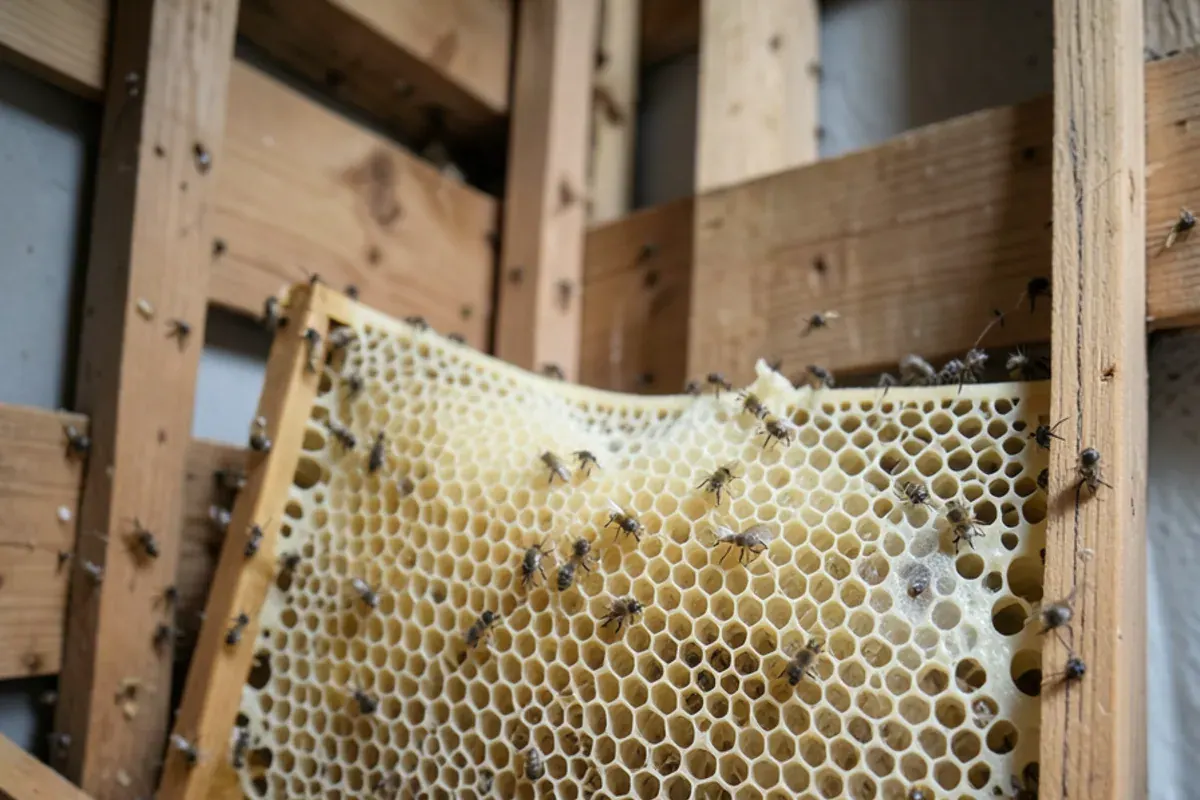
The entrance is rarely where the colony is. Bees come in at a crack, but the comb can hang several feet away inside the wall. A tell is a faint hum on a warm day, a warm patch on drywall or a honey-colored stain spreading across a ceiling.
We map the flight line, listen along the wall and look for the likely cavity. Honest answers matter here. If the colony cannot be located without opening the wall, we say so and explain your options before anything is cut.
Why not just spray the entrance?
Ohio State University Extension warns that pesticide at the entrance can drive bees indoors, and a second application may be needed. For a colony deep in a wall, it says a dust works better than a spray or aerosol and should go in at dusk or at night, not while bees are out foraging. That is why a wall colony is a plan, not a quick spray.
When is the best time to deal with bees in a wall?
Late winter or early spring is the easiest window, according to Ohio State University Extension, because bee numbers and stored honey are lowest. Waiting does not make a colony go away. A living colony does not damage the structure by itself, but one that dies or is abandoned leaves comb and honey that melt and foul wallboard, siding and insulation.
Can a trap cone remove the colony instead?
A one-way cone over the entrance, with a decoy hive nearby, can empty a colony over four to six weeks. Ohio State calls it usually impractical, and few beekeepers offer it. The comb still has to come out afterward.
What happens once the bees are gone?
Remove all dead bees, comb and honey, since the smell draws other bees and insects. Then fill the void and seal and paint the entrances. Ohio State suggests plugging the outside hole only after five to seven days of warm weather with no bee activity, so nothing is trapped inside.
What does a bee call look like, step by step?
- You send the detailsDescribe what you see, where and for how long. A photo from across the yard is enough to start.
- We identify the beeHoney bee, bumble bee, mining bee or wasp. The answer changes everything that comes next.
- We talk through the optionsBeekeeper collection, a cutout or treatment, depending on the bee, the location and what is available.
- We carry out the planIf treatment is the choice, product goes on per label directions and you get the re-entry time from the label. If a beekeeper takes the bees, we explain what is left to do.
- We deal with the leftoversWe explain comb cleanup, sealing entry points and whether a return visit is part of the plan.
How much does bee hive removal cost?
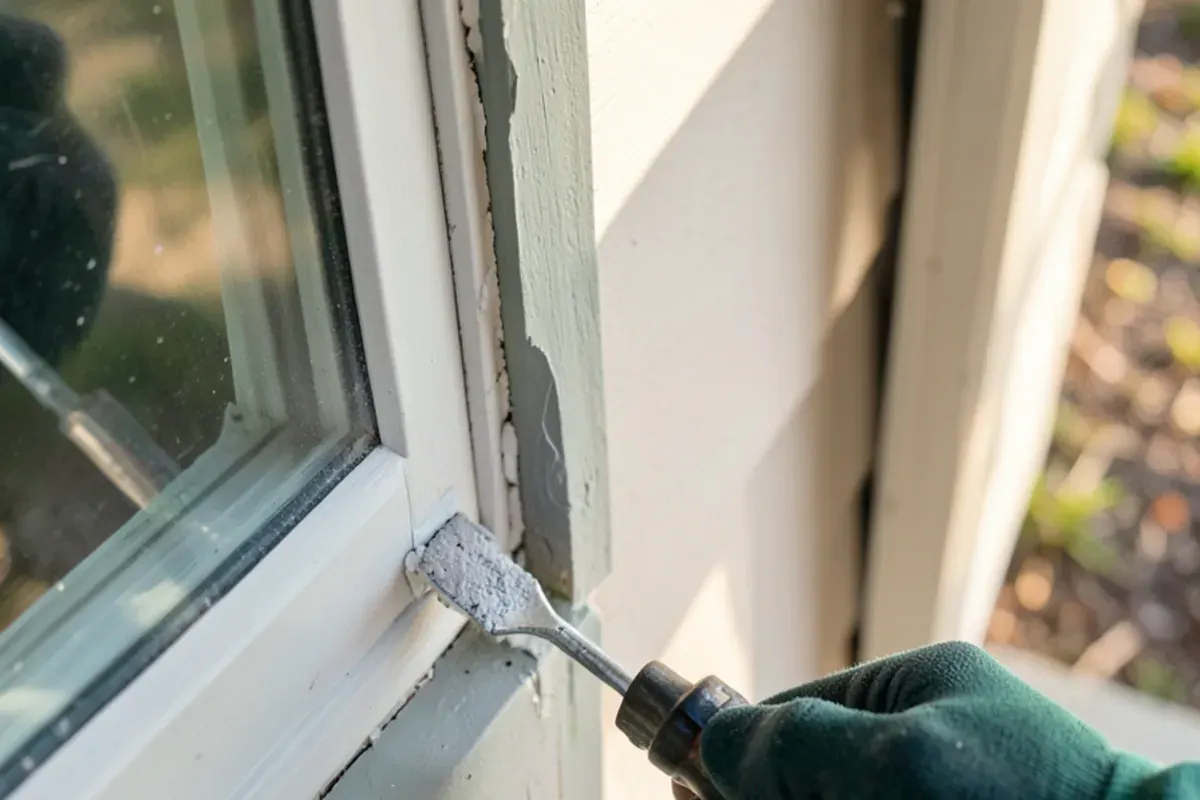
Cost depends on the bee, the location and the route. A swarm on a low branch is far simpler than a colony inside a second story wall. A cutout means opening and later repairing drywall or siding, and that repair is usually a separate trade.
We explain the price of our part before work starts, and if a beekeeper handles collection, you agree on their terms with them directly. We will not push treatment when a beekeeper is a realistic option.
Bees in a wall: Ohio State's advice on who to call and ODA's license rule
Ohio State University Extension's fact sheet on honey bees in house walls says to call a beekeeper first and, if none can help, a licensed pest management company with experience in this work. It adds that honey bees should not be killed unless they pose a hazard.
In Ohio, a company that applies pesticides for hire must hold an ODA Pesticide Business License, and ODA's public search lets you check a name before work begins. Under EPA rules the product label sets the allowed sites, so ask what product goes into the wall, and how the comb will be removed afterward.
Why Boydes Exterminating for this work
Honey bees, bumble bees and mining bees each get a different answer, so identification comes before the plan.
A swarm or colony may be collected by a local beekeeper, and we say so when it applies.
We ask about allergies each time and plan around them.
You hear the price for our work before it starts, and reviewers describe pricing as fair.
Mr. Robert Boyde opened in 1990. Robert J. Boyde Jr. runs the place now. Debit, credit, cash or check is fine. We sit at 4.5 stars on Google.
Where we do this work
- Columbus Median homes date to 1980, and older neighborhoods from German Village to Clintonville have many walls and rooflines for swarms.
- Bexley The median home dates to 1944, so older brick walls and roofline gaps are where swarms settle.
- Grandview Heights The median home dates to 1954, with older walls and soffits in a city of 1.3 square miles.
- Marble Cliff Median homes date to 1955 in a village of 0.28 square miles, with older walls and rooflines.
- Upper Arlington A suburb begun in 1913 with heavy tree canopy, where swarms cluster in branches and scout old walls.
- Worthington Old Worthington dates to 1803 and the median home to 1963, so older walls and trim are common.
- Riverlea Median homes date to 1952, on wooded lots by the Olentangy River where swarms land in trees.
- Valleyview A median home built in 1950 means older siding and soffits in a village of 0.15 square miles.
- Westerville Median homes date to 1982, and the historic Uptown district adds older buildings with roofline gaps.
We help with bees in Columbus, Westerville, Dublin, Hilliard and Upper Arlington, plus other suburbs around the city. Our shop on Dunning Rd is on the northeast side. Browse all service areas.
Bee Swarm & Hive Removal: common questions
What should I do when a swarm lands in my yard?
Stay back, keep pets and children away and do not spray or disturb the cluster. Take a photo from a distance and call early in the day. Swarms are calm but temporary, and a local beekeeper may be able to collect them if you reach us before they move on.
Can honey bees be relocated?
Often, yes. A swarm or colony may be collected by a local beekeeper, particularly when the bees are reachable. Colonies in walls take more work, including opening the wall and removing the comb. We cannot promise a beekeeper will be available, so we explain what is realistic.
How do you find a hive inside a wall?
We map where the bees enter and leave, listen along the wall and look for warm spots or honey staining. The comb is often several feet from the entry crack. If we cannot confirm the location without opening the wall, we tell you and discuss options first.
Is every bee in my yard a honey bee?
No. Bumble bees, mining bees and carpenter bees are common around Columbus, and many wasps are mistaken for bees. Most of them are less defensive than a honey bee colony and some need no action at all. Send a photo, and we will tell you what you have.
Do I have to remove the honeycomb after the bees are gone?
Yes, in most cases. Wax and honey left in a wall can melt, stain drywall, draw ants and invite other insects. New bees may move into a cavity that still smells of honey. Comb removal and sealing the entry point are part of the plan we explain with you.
Sources
What customers say
4.5 stars from 55 Google reviews, checked November 2026. Read more reviews · Leave a review
Experience with Mr Boyde so far has been exceptional! He is incredibly knowledgeable and described exactly what to look for to locate the swarm and bee hive.
Mr. Boyde’s company is responsive and honest. They answer phone calls, give estimates, and come to your home quickly. Pricing is true to market price with no surprise charges.
Great service. Super dependable. Calls right back. This time he was able to come out same day.
Bees in the wall?
Tell us where they come and go. We will identify the bee, explain the options and give you the price before we begin.
- Serving Columbus since 1990
- 4.5★ from 55 Google reviews
- Owner-run, based on Dunning Rd
- One-time or recurring service
Boydes Exterminating Co, 1967 Dunning Rd, Columbus, OH 43219