
Same-Day & Emergency Pest Control
Pest Seen in Your Restaurant? Your First 24 Hours
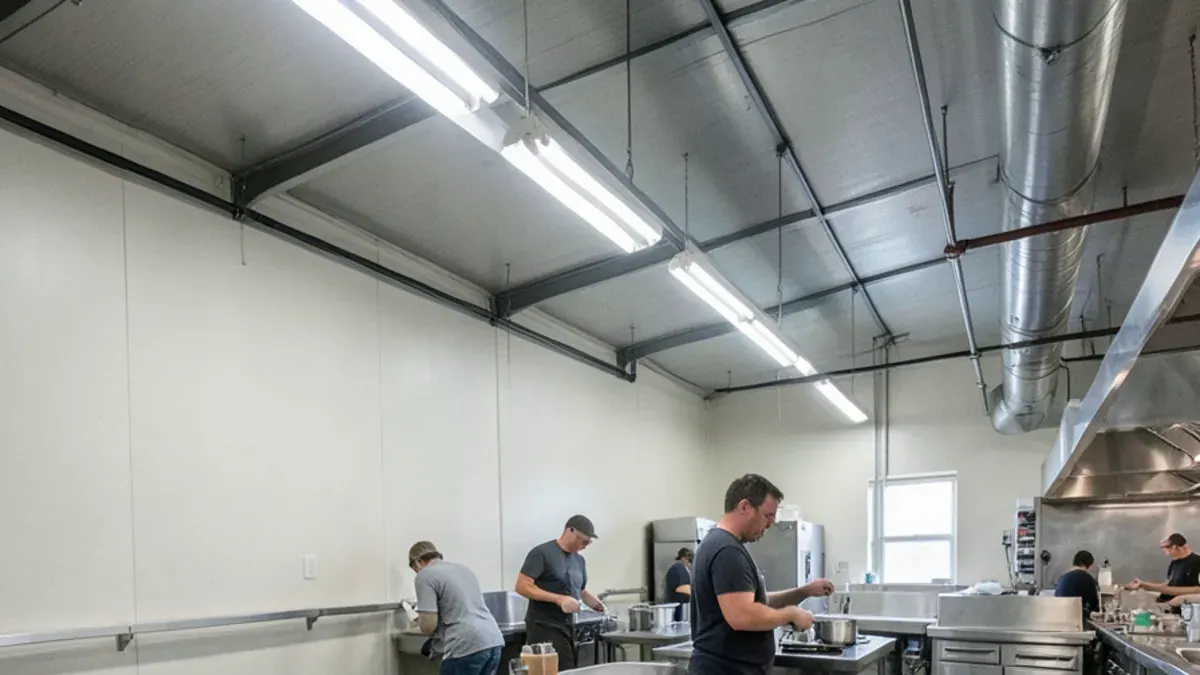
A pest in your restaurant calls for a plain order of operations: protect the food, write down what was seen, keep your own sprays out of food areas and call pest control before the next service. What to do in the first 24 hours matters because a customer's photo or an inspector's note can travel faster than you can fix the problem.
- Serving Columbus since 1990
- 4.5★ from 55 Google reviews
- Owner-run, based on Dunning Rd
- One-time or recurring service
This guide gives you an hour-by-hour plan, explains what to record, and covers what to expect from a pest company so the visit produces paperwork you can use.
What should a restaurant do in the first hour?
- Stop and lookIdentify what was seen and where. A roach in a dining room, a mouse by dry storage and a fly in the kitchen each call for different next steps.
- Protect food and surfacesCover or move exposed food, clean contact surfaces and follow your own sanitation procedures for the affected area.
- Record itNote the time, place, pest and who saw it. Take a photo if you can do so without spreading anything.
- Skip the spray canConsumer insecticides in a kitchen can contaminate surfaces and scatter insects deeper into walls. Leave treatment to a professional.
- Call earlySame-day visits happen when the schedule allows, and a morning call gives you better odds before dinner service.
What happens to the food that was exposed?
Follow your written food safety plan. The usual candidates for discard are open product stored near droppings or a sighting, and anything that sat uncovered on the affected line. Sealed cans and clean, covered product in a separate walk-in are a different case. If you are unsure about a particular item, ask Columbus Public Health instead of guessing.
Pest seen before the dinner rush?
Call early and tell us what was seen and where. We will say whether a visit fits today.
- Serving Columbus since 1990
- 4.5★ from 55 Google reviews
- Owner-run, based on Dunning Rd
- One-time or recurring service
What does each kind of sighting tell you?
The pest you saw points to where to look first. Use this as a starting point for your log, then let the inspection confirm it.
| What was seen | Check first | Common cause |
|---|---|---|
| A cockroach in the dining room or at the pass | Warm gaps behind the cooking line, dish machine and ice machine | Roaches shelter near heat and moisture and come out at night |
| Mouse droppings in dry storage | Floor edges, door sweeps and the corners behind shelving | A gap at a back door or a delivery area left open |
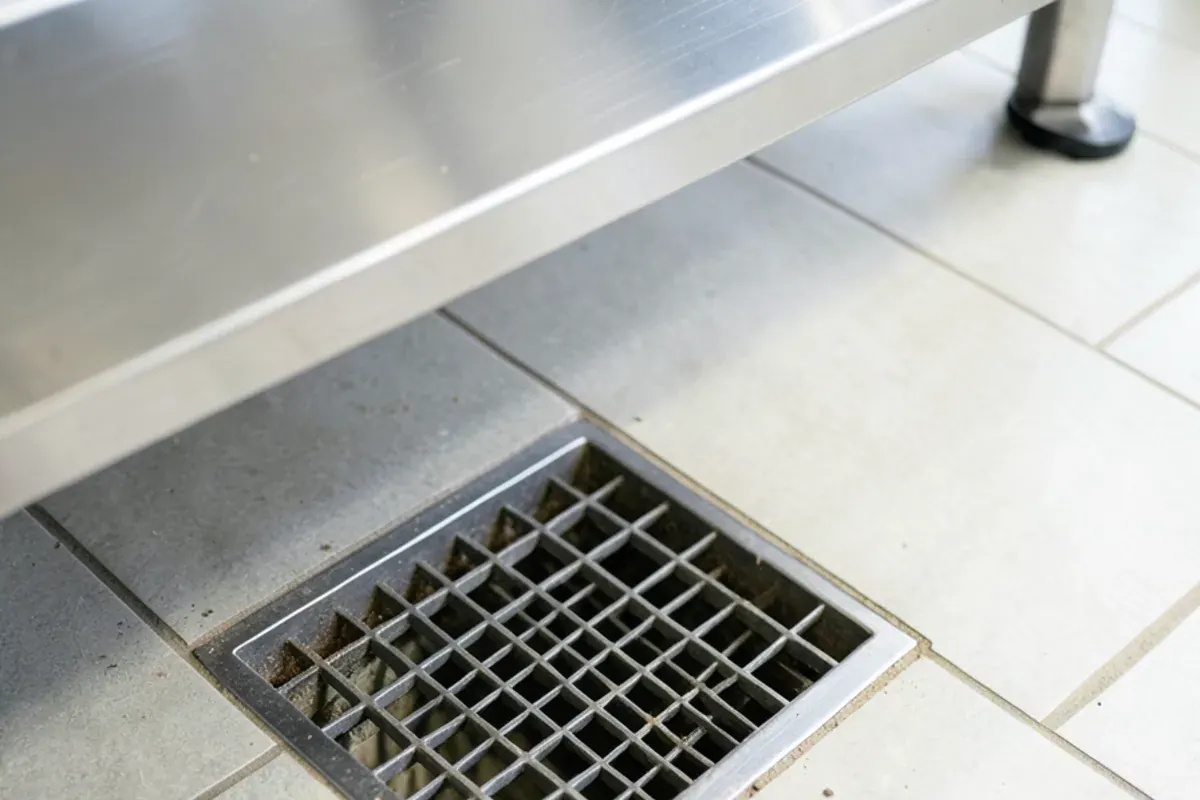
| Small flies at the bar or prep sink | Floor drains, mop sink and anywhere food film collects | Wet food residue that breeds fruit flies and drain flies |
| A fly or two near the front door | Door seals, the vestibule and the delivery door | Open doors during deliveries and rush hours |
One sighting is a clue. A pattern in the log, such as the same spot three nights running, is the thing to bring to your pest company.
What do Columbus Public Health inspections look at?
Columbus Public Health inspects food service operations in the city, and pest activity is one of the conditions inspectors note. Ohio's food safety rules expect food businesses to keep the premises free of pests. Inspectors look for live insects, droppings, gnaw marks and the entry points that let pests in.
Details change, so check specifics with Columbus Public Health directly: which violations carry a follow-up visit, how results are recorded and how you can look up your own history. We do not interpret the code for you, and you should not rely on a pest company to do so either. What we can do is give you a record of what we found and what was done.
What happens during the first 24 hours?
| When | Do this | Why |
|---|---|---|
| First hour | Contain, cover food, record the sighting | Stops a small problem from becoming a bigger one |
| Within a few hours | Call pest control and describe it in detail | Gets you on the schedule before the next service |
| Before opening or service | Clean the affected area and decide whether to use it | Your food safety plan and the inspector's expectations apply |
| Day of, or next day | Pest company inspects and explains the source | A fix needs the entry point, not just the pest |
| Within 24 hours | Review the plan and set follow-up visits | Shows a plan exists if an inspector asks |
A same-day visit is possible when the schedule allows, but do not build your night around it. Plan for the case where today is full and the next opening is tomorrow.
What should you write down?
A written log is the most useful thing you can hand a pest company or an inspector. Keep it simple and keep it going.
- Date, time and exact location, such as the prep line, the walk-in or the dining room.
- What was seen: live pest, dead pest, droppings, damage or a customer's report.
- Who saw it and what they did next.
- What you cleaned, moved or discarded, and when.
- The date of every pest visit and what the company found.
Sort the entries by date and keep them where managers can find them. If you manage more than one site, keep a separate log for each.
What does one page of a pest log look like?
Ruled columns work as well as software. Use one line per event and fill every column:
- Date and time of the sighting.
- Exact location, named the way your staff would name it.
- What was seen, and how many.
- Who saw it and who was told.
- What was cleaned, moved or thrown out, with the time.
- The pest company's visit date and what it found.
Review the log weekly. A manager who reads it every Monday spots a repeat location long before an inspector does.
What if a customer saw the pest?
Respond calmly and in person. Acknowledge what they saw, thank them for saying so and fix the table or area. Do not argue about what the pest was or minimize it, and do not guess how many more there are. Photograph the area afterward for your log.
A single sighting does not prove an infestation, and it does not prove you are clear either. Roaches are active at night and hide in cracks by day, so one seen in the open often points to more out of sight. Our commercial pest emergency page explains how we handle those calls.
What should you ask the pest company?
Ohio requires any company applying pesticides for hire to hold an ODA Pesticide Business License, with a licensed commercial applicator and liability insurance. Look up any company in the ODA's online pest business search before it treats a food area.
Then ask what you will receive in writing. We provide documentation after an inspection, which is what a business needs for its own records. Ask how the visit affects your service hours, what products go where per label directions, and when a follow-up is planned.
What should a service report show?
- The date, the areas inspected and what was found in each.
- Which pests, and any entry points or conditions that feed them.
- What was applied and where, per label directions.
- What you need to do, such as a drain cleaning or a door repair.
- The date of the next visit.
What we tell restaurant owners
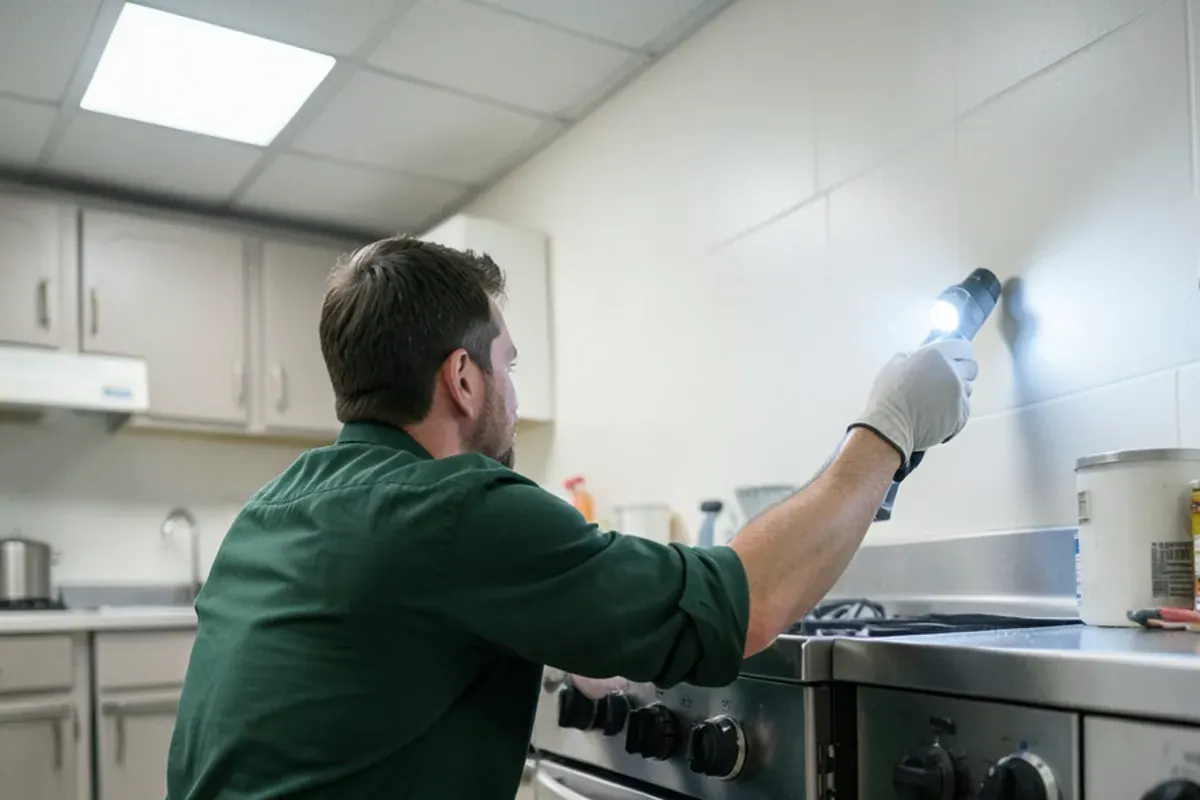
The pest is rarely the whole story. We look for the reason it got in: a gap under a back door, a floor drain that stays wet, grease behind a cooking line or a delivery that carried something in. Treating the pest without fixing the cause gives you a short quiet period.
We also tell owners to keep the log going, because the paper trail shows an inspector you have a plan. Visits can be biweekly, monthly, bimonthly or as needed, and we work with food businesses, hotels and apartment managers around central Ohio.
A pest company cannot fix everything. If the building shares a wall, a grease trap or a dumpster enclosure with a neighbor, some of the cause sits outside your lease. Say so on the call. We will tell you which parts we can treat and which belong to the landlord, and in a Columbus building with two or more units that duty falls on the owner under the Columbus Health Code.
Calling is not always the right first move, either. A single fruit fly at the bar in August is a drain and cleaning job before it is a pest job. Run the drain brush and the sanitizer routine, log it and see whether it repeats. If it does, call.
Timing is a trade-off. A visit before opening gives the technician clear access and keeps guests away from treated areas. A visit after close does the same with less pressure on your prep. We ask which suits your hours and plan around it.
Related questions
Do I have to close if I see a roach?
There is no single answer we can give you. Whether to close an area depends on what you saw, where it was and your food safety plan. Ask Columbus Public Health if you are unsure. Whatever you decide, protect the food, record the sighting and call for help that day.
Can I spray the pest myself?
It is better not to. Consumer sprays can scatter insects into walls, contaminate food surfaces and make it harder for a professional to read the activity. Clean the area, record what you saw, and let a technician apply products per label directions.
How fast can you get to a restaurant?
Same-day visits happen when the schedule allows, and our Dunning Rd base is about 7 minutes from central Columbus. Calling in the morning improves the odds. If today is full, we say so on the call and offer the next opening.
What records should I keep after a pest sighting?
Keep a dated log of each sighting, your cleaning and every pest visit, plus any inspection documentation from the company. A manager should be able to put a hand on those pages quickly if an inspector asks.
Should I tell my staff about a pest sighting?
Yes. Tell the shift managers and the closing crew what was seen and where, so they can watch that spot and write it in the log. In a Columbus kitchen, the person who closes is often the one who finds droppings first, and a short note passed along that night costs nothing.
If a customer or an inspector spotted a pest, act on it today. Read about our emergency pest control, or call (209) 563-1650 and describe what was seen. We serve restaurants across Columbus, and we will tell you plainly whether we can fit a visit in before your next service.
Sources
Questions about this? Call the shop.
Tell us what you are seeing and we will tell you what happens next.
- Serving Columbus since 1990
- 4.5★ from 55 Google reviews
- Owner-run, based on Dunning Rd
- One-time or recurring service
Boydes Exterminating Co, 1967 Dunning Rd, Columbus, OH 43219