
Rodent Control
How to Rodent-Proof a Garage and Basement in Ohio
To rodent proof a garage, start with the door: replace the bottom seal, add corner seals and close any gap along the sides and top. Then move to the basement, where rodents get in at the sill, around utility lines, through window wells and up floor drains.
- Serving Columbus since 1990
- 4.5★ from 55 Google reviews
- Owner-run, based on Dunning Rd
- One-time or recurring service
Garages and basements are where mice and rats get their first foothold, because they are dark, rarely visited and full of boxes. This guide lists what to seal, what to store differently and what to fix before the ground freezes in Ohio.
Why do garages and basements attract rodents first?
These rooms offer the three things a rodent wants: shelter, quiet and a short trip to food. Cardboard boxes make nest material. Stored fabric, paper and insulation do the same. Nobody walks through every night, so a nest can sit for weeks before anyone notices.
They are also the closest rooms to the ground. A mouse in a garage is one gap away from the kitchen, and a rat that enters a basement can follow pipes straight up the wall. Sealing these two rooms protects the whole house.
Want a second set of eyes?
Tell us about your garage and basement and where you have already sealed. We will say what is left.
- Serving Columbus since 1990
- 4.5★ from 55 Google reviews
- Owner-run, based on Dunning Rd
- One-time or recurring service
How do you rodent proof a garage door?
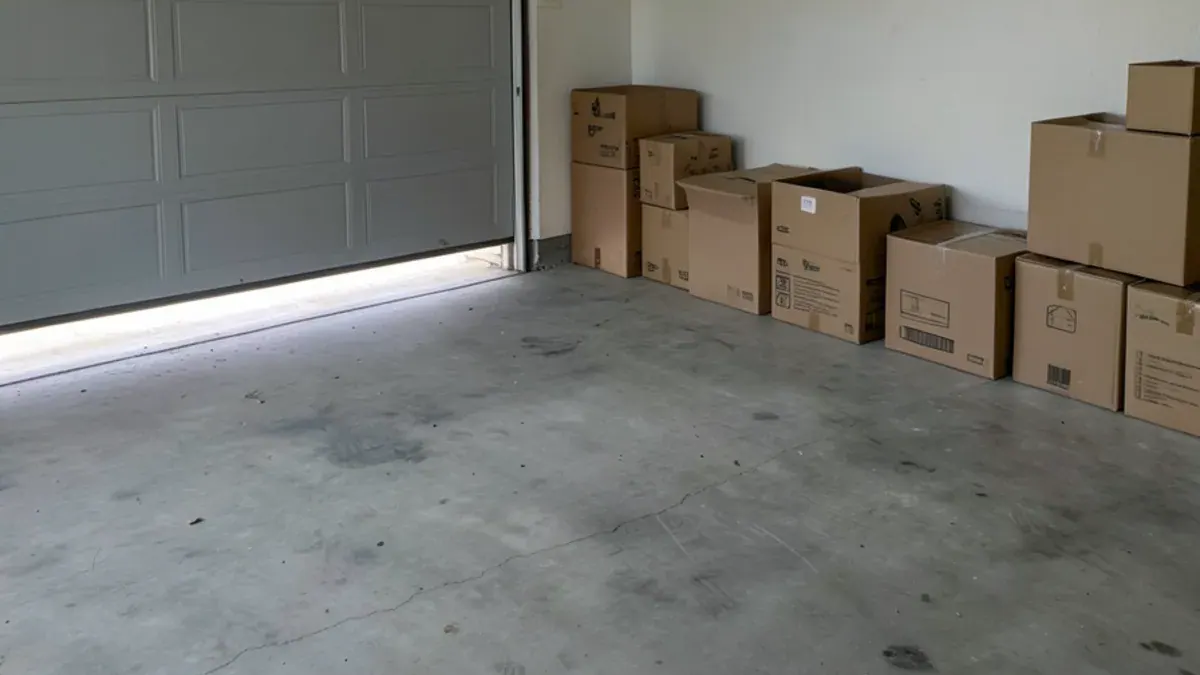
The door is the largest hole in most garages. Concrete slopes, seals curl and the corners wear first. Check these parts in this order:
- Bottom seal. Close the door and look from inside for daylight. If the rubber is cracked, flattened or pulling away, replace it. On uneven floors, a threshold seal glued to the concrete can fill the dip.
- Corners. Add corner seals or a vinyl strip where the door meets the frame. This is the spot mice use most.
- Sides and top. The weatherstrip against the door stop should touch along its full length. Replace any section that is stiff or torn.
- Entry door to the house. A sweep that touches the threshold stops a mouse from walking from the garage into the kitchen.
- Wall gaps. Look where wiring, gas lines and hose bibs pass through. Pack metal mesh and seal over it.
What if the door is tight and mice still get in?
Look at the rest of the garage envelope. A side service door often has no sweep at all. Window frames shrink away from the wall, and the joint where the slab meets the wall can open a crack that runs the full length of the room. Attached garages add one more route: the gap around the pipes and wires that pass through the wall into the house.
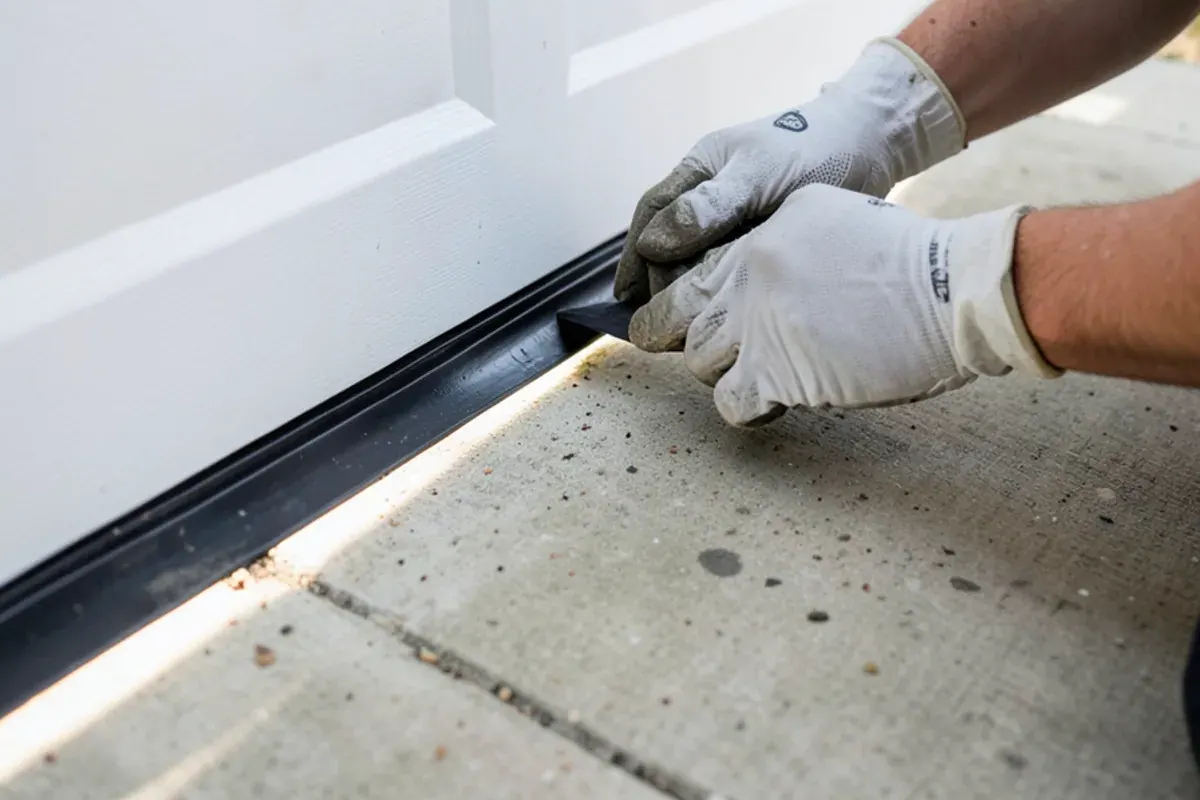
If the door is bent or the slab has a large dip, a door company may need to do the first repair. Our rodent proofing work picks up from there.
What should you seal in a basement?
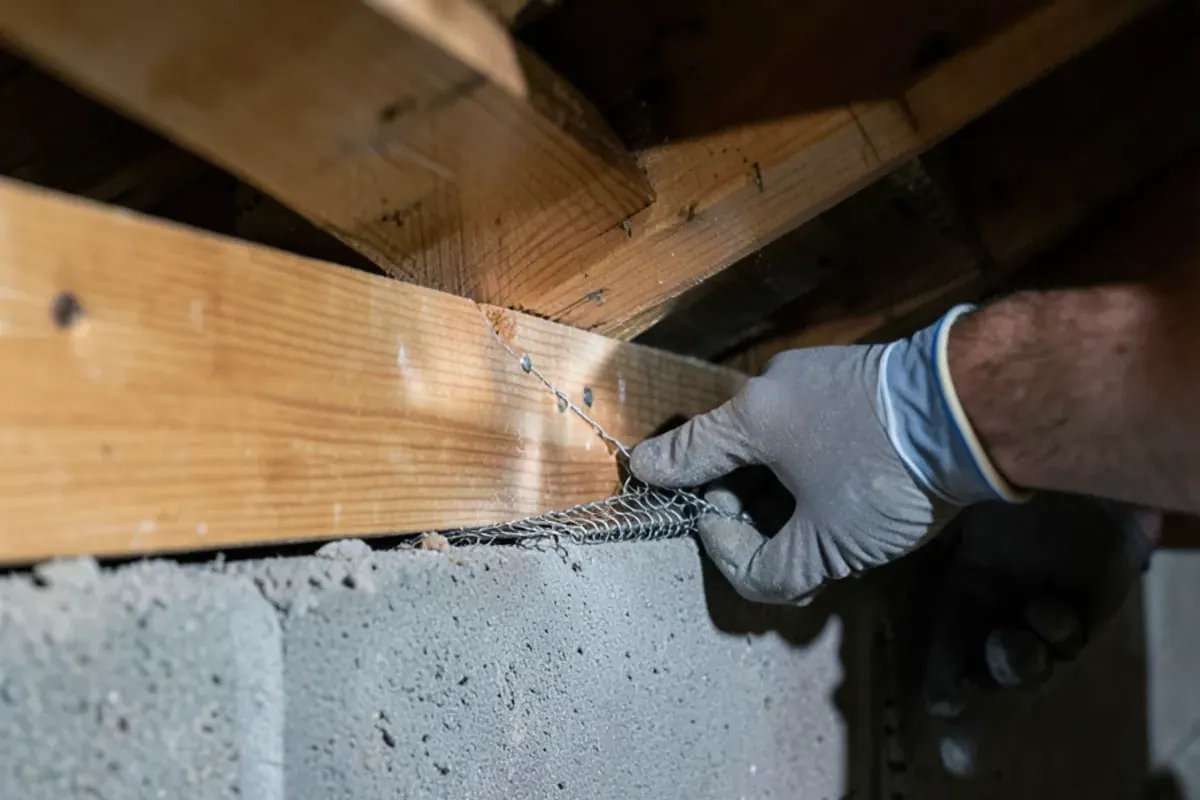
Basements hide small gaps in more places than garages do. Walk the perimeter with a flashlight and look at the top of the wall, where the wood framing sits on the foundation. That joint, called the sill, often hides a continuous gap behind the trim.
| Entry point | Why it matters | Fix |
|---|---|---|
| Sill and rim joist | A long gap at the top of the foundation | Mesh and sealant, or mortar on masonry |
| Utility penetrations | Rings of space around pipes and lines | Pack with mesh, seal over |
| Window wells | Open tops let rodents drop in | Fit covers and repair cracked frames |
| Floor drains and sump pits | Uncapped lids give access from below | Keep traps filled and lids tight |
| Dryer vent | Stuck flap leaves an open duct | A cover that closes tight |
Floor drains need one extra note. A rat can use a damaged sewer line to reach a drain, so if you smell sewage, see rats in a basement with no outside gaps or find a broken drain cap, call a plumber as well as a pest company.
What order should the work follow?
Order saves time and prevents the classic mistake of sealing animals in. Work through the job like this:
- Clear the floor and shelves along the walls so you can see every edge.
- If you find droppings or nests, clean them first (see below), then set traps and wait until nothing new appears.
- Seal the gaps from the outside in: wall penetrations, sill, vents, then the door seals.
- Move stored items back in hard totes, off the floor and away from the wall.
- Re-walk the room a week later with a flashlight and a dusting of flour along the walls. Fresh tracks mean a route you missed.
How do you clean a garage or basement after rodents?
Do not sweep or vacuum droppings and nests. The CDC says dry cleaning stirs particles into the air where you can breathe them. Its current steps are short:
- Put on rubber or plastic gloves.
- Spray droppings, urine and nesting material with a bleach solution of 1.5 cups of household bleach in 1 gallon of water, or another EPA-registered disinfectant, until everything is very wet.
- Let it soak for 5 minutes, or the time on the disinfectant label.
- Pick it up with paper towels and put it in the trash, then mop or wipe the surface with the same solution.
- Wash your gloved hands, remove the gloves and wash your bare hands with soap and water.
Make the bleach solution fresh each time you clean. Cardboard and insulation that rodents have soiled should be thrown away rather than saved. For a large mess in a crawlspace or attic, the CDC suggests calling a pest control specialist for areas you cannot reach.
Which storage habits keep rodents from settling in?
Sealing stops entry, and storage habits decide whether anything that slips in stays. A few changes make a garage or basement a poor place to nest:
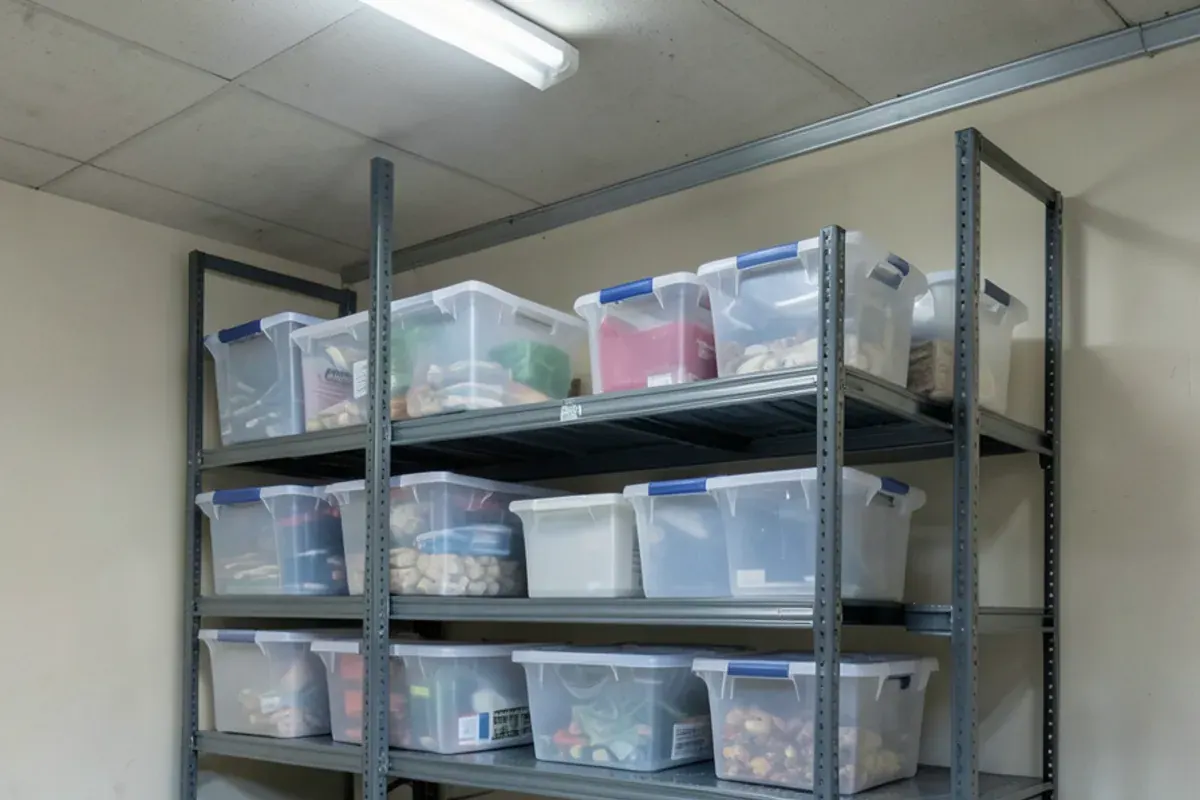
- Swap cardboard for hard plastic totes with snap lids, especially for holiday items, paper and linens.
- Keep pet food, seed and fertilizer in metal or thick plastic bins with tight lids, not in the bag.
- Raise boxes off the floor and leave a gap of about a foot between stored items and the wall so you can see activity.
- Cut back clutter along the walls. Rodents travel along edges, and a clear lane exposes them.
- Take trash out of the garage often, and rinse recycling that held food.
What about the outside of the garage and basement walls?
A tight shell is only half the plan. Pull mulch and woodpiles back from the foundation, keep gutters flowing so water does not pool at the wall and store compost in a closed bin well away from the house. Rats burrow under slabs and along footings, so soft ground beside a garage is worth a look.
If you find a burrow, do not fill it in right away. A plugged burrow pushes rats to dig a new one nearby. The article on what to do about Columbus rats covers what to check outside first.
What we tell customers about timing and order
Seal after the animals are gone, not before. We set traps first when there is activity, wait for it to stop, then close the openings. Sealing a live problem in leaves the rodents inside and teaches them to chew a new route.
We also tell people not to rely on scent repellents or sound devices. A university-backed damage control guide says commercial ultrasonic devices may move rodents out of the immediate area for a few days and does not recommend them as a solution, and it calls chemical repellents seldom practical for mice. A strip of rubber or a square of mesh does more.
Here is where the weekend job falls short. A door seal does nothing about the vent two feet away. Mesh packed in a sill gap fails if nobody sealed over it, since mice pull it out. And a garage with a heavy infestation needs trapping before any of this, or you will be sealing in the nest.
A visit is not always worth the money. If you saw one mouse in the garage in a year, the door seal is worn and nothing else is wrong, replace the seal and move food into hard bins. You do not need a visit for that. Call when you find nests, repeated droppings or gnawing, or when you cannot reach the gap.
Work that is beyond a weekend, such as a sagging door, rooflines or a broken sewer line, goes to the right trade. We will say which one. For the rest, our mouse control visits include a look at how the animals got in.
Related questions
Does a new garage door seal really keep mice out?
It helps a great deal, but only when it touches the floor along the full width of the door. Check the corners as well, since they are the weakest spot. A seal alone will not stop mice that get in through a vent, a pipe gap or the entry door to the house.
Do I need to seal the basement if I have no mice?
Sealing before you see signs is cheaper than treating after. A flashlight check of the sill, pipes and window wells takes under an hour, and a few packed gaps often cover it. Homes built in the 1980s, like many in Gahanna, are now at the age when original seals and caulk wear out.
Is there a cutoff date for rodent proofing in Ohio?
There is no legal cutoff, but the season does matter. Aim to finish by early October, before nights get cold and mice start moving indoors. Work done in winter still pays off, though trapping may need to come first if you already hear activity in the walls or ceiling.
How should I clean up mouse droppings in my garage?
Do not sweep or vacuum them. The CDC says to wear rubber or plastic gloves, spray the droppings with a bleach solution of 1.5 cups of bleach per gallon of water until very wet, let it soak for 5 minutes, then pick it up with paper towels and bag it. Ventilate the room first if it has been closed up.
Do peppermint oil or ultrasonic plug-ins keep rodents out of a basement?
Not reliably. A university-backed damage control guide says ultrasonic devices may move rodents out of the immediate area for a few days but does not recommend them as a solution, and it says repellents are seldom practical for mice. A sealed sill, tight vent covers and mesh around pipes block a basement route for good.
Seal the garage door, close the basement sill and utility gaps and move food into hard containers. If you want a second opinion on the job, read about our rodent control in Columbus or call (209) 563-1650. We serve Gahanna, about 11 minutes from our Dunning Rd base, and the neighborhoods around it, plus homes across Columbus.
Sources
- Columbus Public Health, Columbus Health Code §221.03 (dwellings kept rodent-free; openings of half an inch or more within 48 inches of ground level)
- U.S. Centers for Disease Control and Prevention, Rodents
- U.S. Census Bureau, American Community Survey 2019-23, Gahanna median year built
- U.S. Centers for Disease Control and Prevention, How to Clean Up After Rodents
- ICWDM, House Mouse Damage Prevention and Control Methods (ultrasonic devices and repellents)
Questions about this? Call the shop.
Tell us what you are seeing and we will tell you what happens next.
- Serving Columbus since 1990
- 4.5★ from 55 Google reviews
- Owner-run, based on Dunning Rd
- One-time or recurring service
Boydes Exterminating Co, 1967 Dunning Rd, Columbus, OH 43219