
Boydes Exterminating Co
Pantry Pest Control in Columbus, OH
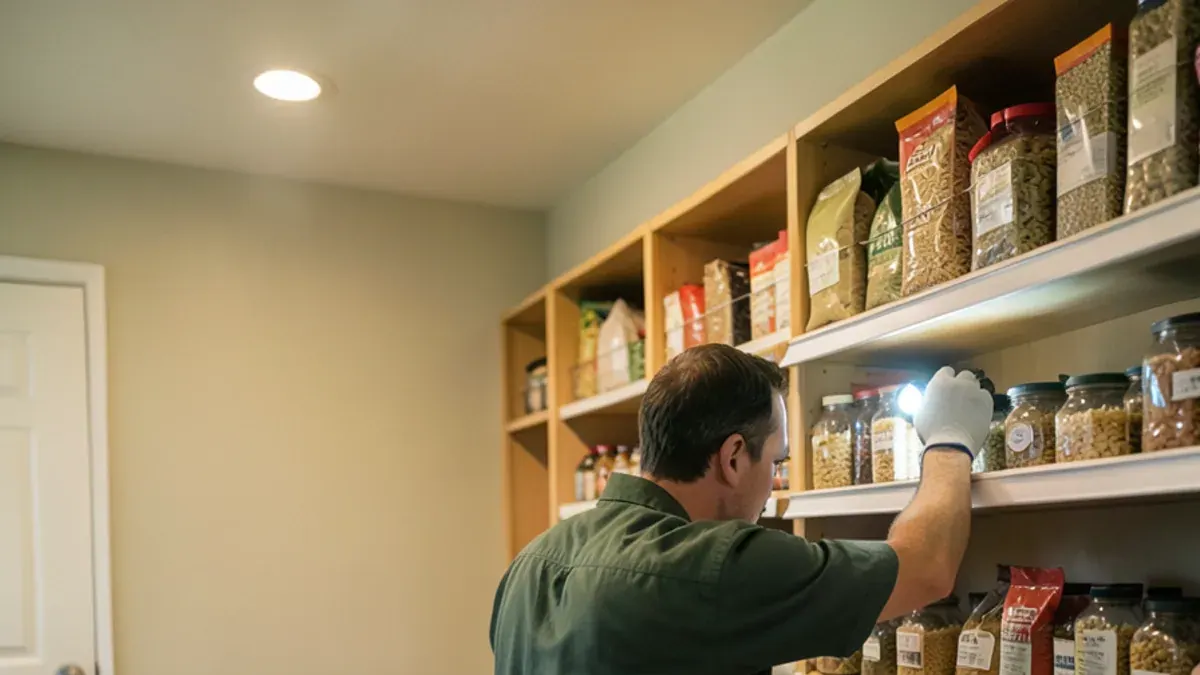
Pantry pest control in Columbus, OH begins with the food, not the walls, because Indian meal moths, weevils and grain beetles live and breed inside the packages in your cupboard. Boydes Exterminating Co tracks down the infested product, treats the shelves and cracks where larvae wander, and shows you how to keep the next bag of flour clean.
- Serving Columbus since 1990
- 4.5★ from 55 Google reviews
- Owner-run, based on Dunning Rd
- One-time or recurring service
You will not fix this with a spray alone, and anyone who says otherwise is selling a spray. This page is part of our insect control in Columbus work, and it walks through the pests, the throw-away rules and the treatment.
Where do pantry moths come from?
Almost always from the store. Eggs or tiny larvae ride into your house inside a bag of flour, a box of cereal, dry pet food or a jar of nuts, then hatch in your warm kitchen. A spotless home is no defense, because the eggs were in the package before you carried it in.
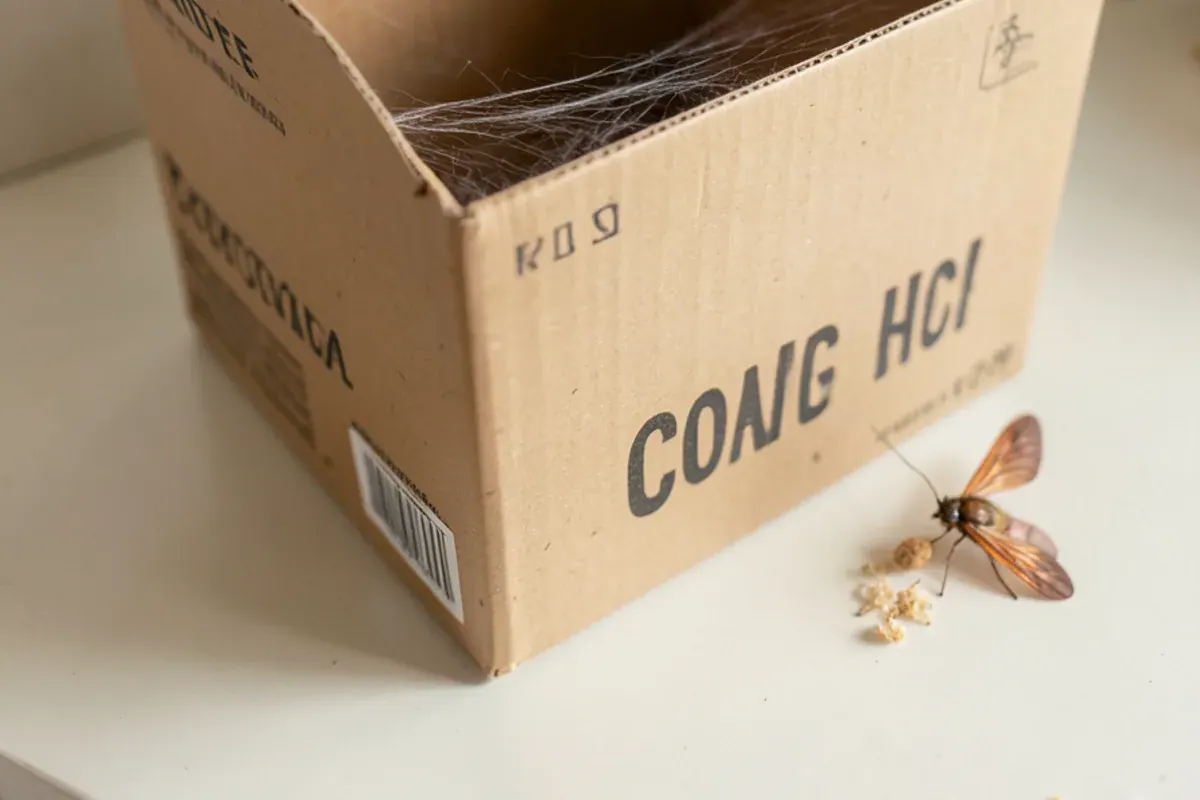
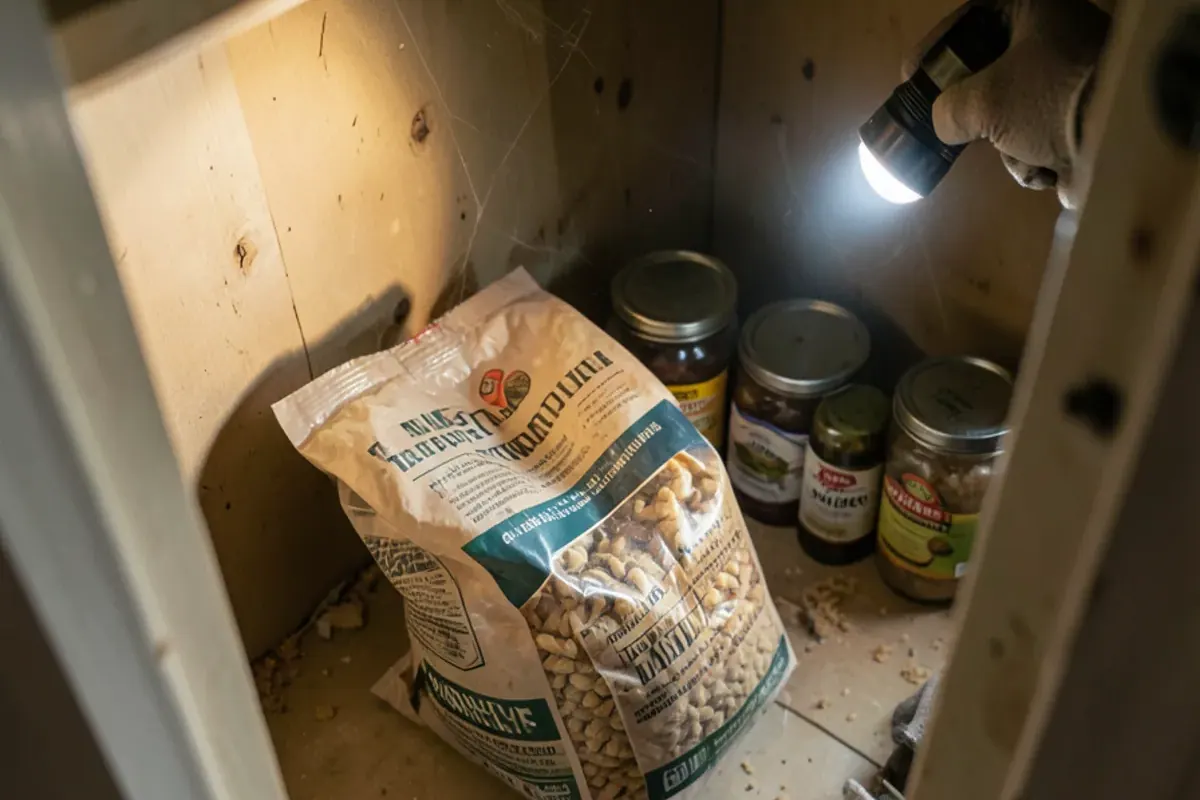
Once they hatch, moth larvae spin silky webbing through the food and leave clumps and frass, the dark specks that look like pepper. When fully grown, they leave the food and crawl up walls and across ceilings looking for a corner to spin a cocoon. That is why people notice them on the ceiling long before they find the source.
Which pantry pest do you have? Moths, weevils or beetles
The bug you see tells us what to look for in the cupboard:
| Pest | What you see | Favorite foods | Clue |
|---|---|---|---|
| Indian meal moth | Small moths with a coppery band on the wings, plus larvae and webbing | Flour, cereal, dried fruit, pet food, nuts | Moths flying at dusk, larvae on ceilings |
| Weevils | Small dark beetles with a long snout | Rice, flour, pasta, corn, grain | Tiny holes in kernels and moving specks in the bag |
| Flour beetles and sawtoothed grain beetles | Flat, reddish-brown beetles about the size of a sesame seed | Flour, cake mix, cereal, dried fruit | Musty smell and clumpy flour |
| Drugstore and cigarette beetles | Small, round, brown beetles | Spices, dried herbs, tobacco, dried flowers | Tiny round holes in the package |
Grain mites are a fourth group. They are nearly invisible and show up as a tan dust on old or damp flour and grain. Our page on mite control covers how they differ from the red mites on windowsills.
Moths on the ceiling again?
Call us. Tell us what you found in the cupboards and we will help you track down the source.
- Serving Columbus since 1990
- 4.5★ from 55 Google reviews
- Owner-run, based on Dunning Rd
- One-time or recurring service
Prefer to write it down?
Calling is fastest. The form comes to the same desk, and we call you back during business hours.
Call (209) 563-1650What food do I need to throw away?
Anything with live bugs, webbing, larvae, or the telltale clumps. Anything unopened that sat next to infested food is worth inspecting, but a sealed jar or can is fine. Paper, cardboard and thin plastic are not barriers, since larvae chew through them.
For items you are not sure about, freezing at a setting your freezer holds for several days kills all life stages in small packages. Bag the food first so the cold does not draw in moisture. After that, move it to a glass or hard plastic container with a tight lid.
- Open boxes and bags of flour, cornmeal, cereal, pasta and baking mixes
- Dry dog and cat food, treats and supplements
- Nuts, seeds, dried fruit and granola
- Spices and dried herbs that have sat for a long time
- Decorative items such as dried flowers, potpourri and ornamental corn

How we treat pantry pests in a Columbus kitchen
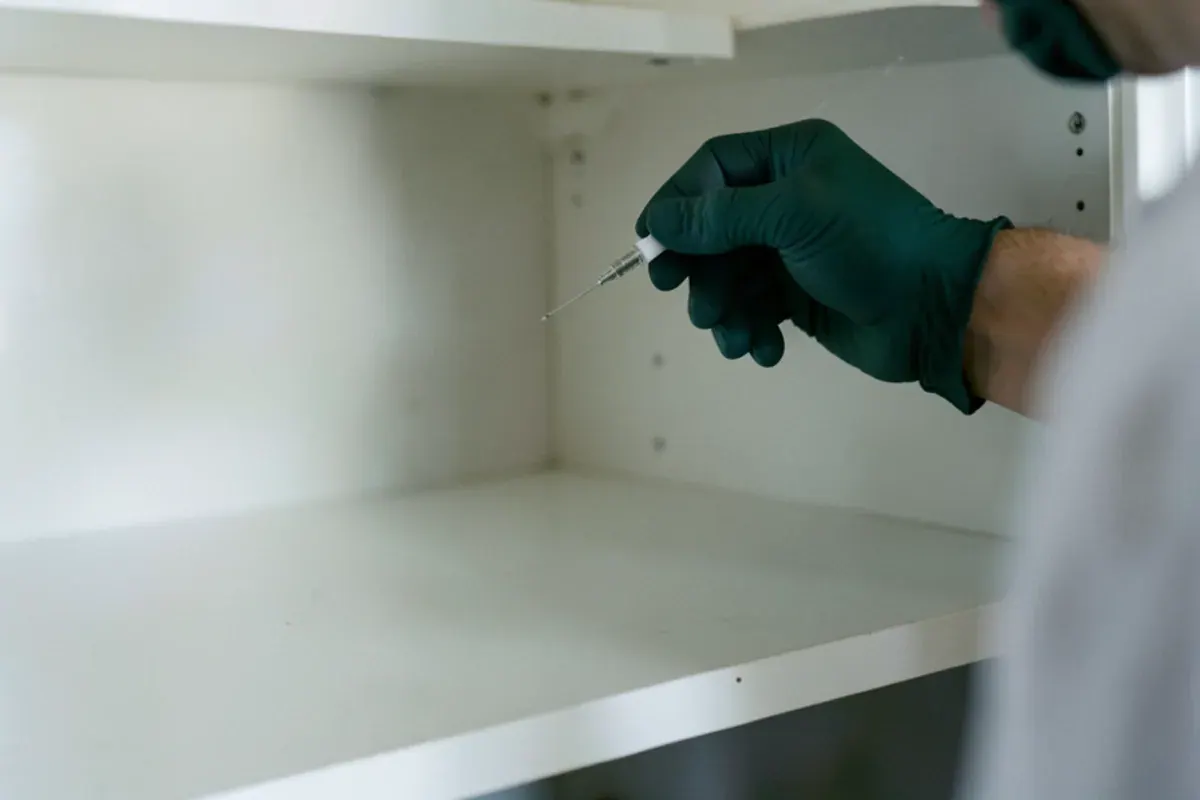
The source gets handled first. We then treat the places where larvae wander and pupate. That includes the shelf edges, crack and crevice spots behind and beneath cabinets, the gaps where the counter meets the wall and the corners of the ceiling. A crack and crevice treatment means a small amount of labeled product placed directly into the gaps where pests hide instead of broadcast across a surface.
We never treat food, food-contact surfaces or the inside of containers, and we put products on only per label directions. In kitchens we pay close attention to how much product is used and where it goes, and you get the re-entry time from the label.
Pheromone traps are useful for monitoring, because they catch male moths and tell you whether the numbers are falling. They are not a cure, and a trap that stays full tells us the source is still in the house.
What does a pantry pest visit look like, step by step?
- You tell us what you foundMoths, webbing, beetles or a bag of flour that looks wrong. A photo or a bug taped to a card helps us name the pest.
- We ask about food, pets and allergiesHousehold needs shape the plan, and we ask at every visit.
- We go through the kitchen and storageCupboards, shelf edges, pet food storage, the pantry floor, the tops of cabinets and any room where dry goods are kept.
- We find the source and treat the cracksInfested products come out. Labeled product goes into crack and crevice spots, and shelves are left ready for you to clean.
- We follow up if larvae are still wanderingMoths may keep emerging for a few weeks after the source is gone, so a return visit is part of the plan when the trap count calls for it.
What does pantry pest control cost?
Pricing depends on the type of pest and the extent of the infestation. A single bag of rice with weevils in one cupboard is a small job, while moths that have spread through a kitchen and into a second room take longer. We explain the price before work starts, and reviewers describe it as fair with no surprise charges.
The factors that change the quote are the number of cupboards and rooms involved, how many sources there are and how many follow-up visits the plan needs. Food businesses with storerooms and walk-in coolers are quoted separately.
How do I keep them from coming back?
These habits stop most repeat problems:
- Buy what you will use in a few months, since bulk bags can sit for a long time
- Move new flour, rice, cereal and pet food into glass or hard plastic containers with tight lids
- Inspect packages at home and return anything with webbing or holes to the store
- Wipe shelves and vacuum the cracks and corners each time you restock
- Rotate old stock to the front and use spices within a reasonable time

Ants raid the same cupboards for sweet foods and are a different problem. Our ant control page explains that one.
Treating a restaurant storeroom in Ohio: what OAC 3717-1-07.1 says about pesticides
For a home kitchen, the product label is the rule. For a food business, Ohio adds the Uniform Food Safety Code. Rule 3717-1-07.1 requires pesticides to be used under the label, including label language that allows use in food service or food handling areas. It also says a general use pesticide, other than incidental use, must be applied by a commercial applicator licensed under ORC 921.06 or a trained service person under that applicator's direct supervision.
Before anyone treats a storeroom, ask which product they will use and where the label permits it. Ask for the application record. ODA's public business search lets you look up a company before you book. At home, the same questions apply, and the answer you want is that nothing is applied to food or food-contact surfaces.
Why Boydes Exterminating for this work
Finding the infested product matters more than any spray. We help you do that.
Products go into gaps and voids per label directions, never onto food or food-contact surfaces.
We work with hundreds of homeowners, hotels and restaurants across central Ohio, so a stocked pantry and a stocked storeroom are both familiar.
Robert J. Boyde Jr. runs the company from 1967 Dunning Rd. Return visits are biweekly, monthly, bimonthly or as needed.
You hear the price and follow-up plan before we begin. Pay by cash, check, debit or credit. Reviewers on Google give us 4.5 stars across 55 reviews.
Where we do this work
- Columbus About 56% of Columbus homes are rented, and dry goods travel between kitchens with every move.
- Whitehall About 61% of Whitehall homes are rented, so tenants often inherit a previous resident's stocked cupboards.
- Reynoldsburg Median home built in 1984, with 39% of homes rented across a city spanning three counties.
- Pickerington Median home built in 2002 and 21% rented, with large newer kitchens that hold bulk dry goods.
- Gahanna Median home built in 1985 and 31% rented, with a mix of family pantries and apartment kitchens.
- Bexley Median home built in 1944, where older cabinets and baseboard gaps give larvae places to wander.
- Upper Arlington Median home built in 1959 and 21% rented, with older kitchens and full pantry cabinets.
- Canal Winchester Median home built in 2000 and 18% rented, where newer family kitchens keep well-stocked pantries.
- Grove City Median home built in 1993 and 30% rented, in a suburb that adjoins the I-71 corridor.
- Worthington Median home built in 1963, with older kitchens where flour and cereal can sit for months.
We handle pantry pests in kitchens across Columbus, including Reynoldsburg, Pickerington, Gahanna and Bexley. See the full list of service areas.
Pantry Pest Control: common questions
Where do pantry moths come from?
Nearly always from a package you bought. Eggs or larvae are already in the flour, cereal, nuts or pet food when it comes home, and they hatch in the warmth of your kitchen. Cleanliness is not the cause. The adults you see flying are the next generation, so look for the source product before anything else.
What food do I need to throw away?
Throw out opened dry goods with webbing, live larvae, beetles or clumps, plus pet food and treats nearby. Sealed cans and jars are fine. Unopened boxes next to an infested one need a close look, and freezing small packages for several days can save them. Always move survivors into glass or hard plastic containers.
How do I keep them from coming back?
Put new dry goods into airtight glass or hard plastic containers and inspect packages before you shelve them. Wipe shelves and vacuum the corners at each restock. Buy smaller amounts of items you use slowly, like cornmeal and dried fruit. Pheromone traps help you spot a new problem early.
Why are there moths on my ceiling but nothing in the food?
Fully grown larvae crawl away from the food to find a place to pupate, and ceiling corners are a favorite. The source may be a bag at the back of a cupboard, pet food in the garage or a spice you have not touched in years. Check every dry item in the room, including the ones you rarely open.
Are pantry pests dangerous to eat?
They are not known to carry disease, but nobody wants to eat webbing and larvae, and the food is spoiled. Discard anything that is clearly infested. If you ate something contaminated and feel unwell, call your doctor. For the kitchen itself, we treat cracks and voids, not your food.
Do you treat pantry pests in restaurants and bakeries?
Yes. Food businesses are part of our regular work. Storerooms, dry goods racks and walk-in areas are inspected, and treatment is placed in cracks and voids away from food. Businesses get documentation after an inspection and follow-ups on a schedule that fits the pest and the kitchen.
Sources
What customers say
4.5 stars from 55 Google reviews, checked November 2026. Read more reviews · Leave a review
Mr. Boyde’s company is responsive and honest. They answer phone calls, give estimates, and come to your home quickly. Pricing is true to market price with no surprise charges.
Great service. Super dependable. Calls right back. This time he was able to come out same day.
Excellent service, very easy to schedule appointments. No inspection needed to get the job done sooner and very forward about the cost.
Get your cupboards back
Describe the pest and the food it is in, and we will explain the plan and the price.
- Serving Columbus since 1990
- 4.5★ from 55 Google reviews
- Owner-run, based on Dunning Rd
- One-time or recurring service
Boydes Exterminating Co, 1967 Dunning Rd, Columbus, OH 43219