
Boydes Exterminating Co
Apartment Bed Bug Treatment in Columbus, OH
Apartment bed bug treatment in Columbus, OH works differently from treating a house, because the bugs rarely stay inside one unit. It sits inside our bed bug control in Columbus work, and it is written for tenants who found a problem and for landlords who have to answer for it.
- Serving Columbus since 1990
- 4.5★ from 55 Google reviews
- Owner-run, based on Dunning Rd
- One-time or recurring service
The short version: tell the landlord in writing, do not treat it yourself, and expect the units on either side to be checked. We work with both tenants and apartment managers.
Why do bed bugs in an apartment rarely stay in one unit?
Bed bugs walk. They travel along pipes, through gaps around outlets and under doors, and they ride on laundry, furniture and guests. In a building where units share walls, one reported unit usually means bugs have already moved or soon will.
East-side rental stock makes this pattern common. About 61% of homes in Whitehall are rented (ACS 2019-23), and many of those are doubles and small apartment buildings. The unit that notices first is not always the unit that had them first.
Do neighboring units need treatment too?
Often they need at least an inspection. We check the units on both sides, above and below, and look for evidence before we recommend treating anyone. If a neighbor shows no signs, we may only monitor. If we find bugs, the whole group gets a plan.
Treat one apartment and skip its neighbor, and the bugs often walk right back in. Coordinating access is the hard part, and it usually falls to the landlord or manager. Our bed bug inspection work covers what gets checked and documented.
Why dumping furniture or moving out spreads the problem
Ohio State University Extension lists luggage, used furniture, clothing and mattresses as the main ways bed bugs travel, and it notes that in multi-unit buildings they move through walls, pipes and shared hallways. A mattress dragged to the curb or a sofa passed to a friend carries the problem with it. If an item has to go, wrap it first and mark it, and talk to us or the manager before it leaves the unit.
Found bugs in your unit?
Call before you move furniture out. We will explain what to tell your landlord and what to leave alone.
- Serving Columbus since 1990
- 4.5★ from 55 Google reviews
- Owner-run, based on Dunning Rd
- One-time or recurring service
Prefer to write it down?
Calling is fastest. The form comes to the same desk, and we call you back during business hours.
Call (209) 563-1650Who pays for bed bug treatment in a Columbus rental?
In a building with two or more units, Columbus Public Health says the health code makes the owner responsible for getting rid of pests. In practice, that points to the landlord in most multi-unit buildings. Your lease may add terms, and we cannot give legal advice or read it for you.
If a landlord disputes the cost, Columbus Public Health is the office that deals with the health code. Keep your written notices, photos and any treatment records. Documentation from an inspection helps either side.
If your rental is outside the city of Columbus
The Columbus Health Code applies inside the city. A rental in another city, township or village falls under that place's rules, and Franklin County Public Health serves the county's townships and villages. Start with your lease and a written notice to the landlord, then ask the local health department which rules cover your address. We cannot give legal advice.
What should a tenant tell the landlord first?
- Report it in writingSend an email or letter naming the unit, the date and what you found, and keep a copy.
- Include photos and a specimenPhotograph spots, cast skins or bugs, and save a bug in a sealed bag or taped to a card.
- Ask for inspection of adjoining unitsRequest that the units on either side and above and below be checked, not just yours.
- Hold off on do-it-yourself fixesFoggers and sprays scatter bugs, and tossing furniture in the hall spreads them. Wait for a plan.
- Start prep once the method is chosenOur bed bug preparation steps cover bagging and laundry, including how to move items through shared halls and laundry rooms.
How does multi-unit bed bug treatment work?
The method follows the number of units involved and how much clutter fills them. A contained unit may suit heat, where the main kill happens in one concentrated visit. Spread-out infestations across several units may fit a residual course or Aprehend better. Ask which of these we can offer for your building.
A multi-unit job usually includes these pieces:
- An inspection of the reported unit and its neighbors
- A schedule for access that managers can notify tenants about
- Prep instructions for each unit, so one unprepared apartment does not undo the rest
- Follow-up visits timed to the method, with documentation afterward
- Guidance on shared spaces, such as hallways and laundry rooms
Hallways, laundry rooms and shared spaces
Shared spaces are where one unit's prep can undo another's. Bagged laundry should travel in sealed bags straight to the machine, and nothing should be folded or sorted on a shared table. Managers can help by posting the access schedule, keeping a laundry room slot open for tenants in treated units and reminding everyone to report new sightings the same day.
Owners with ongoing turnover should also look at our preventative bed bug treatment page.
What should a landlord check before hiring a rental bed bug exterminator?
Know the rule before you hire anyone: in Ohio the Department of Agriculture sets the bar for pesticide work done for pay: a Business License, a commercial applicator on staff and liability coverage. ODA runs a public lookup at agri.ohio.gov, and you should check it for every company you consider.
Beyond that, ask who does the inspection, whether neighboring units are covered, what prep tenants need and what documentation you receive. Price should be explained before work starts, and reviewers describe ours as fair with no surprise charges.
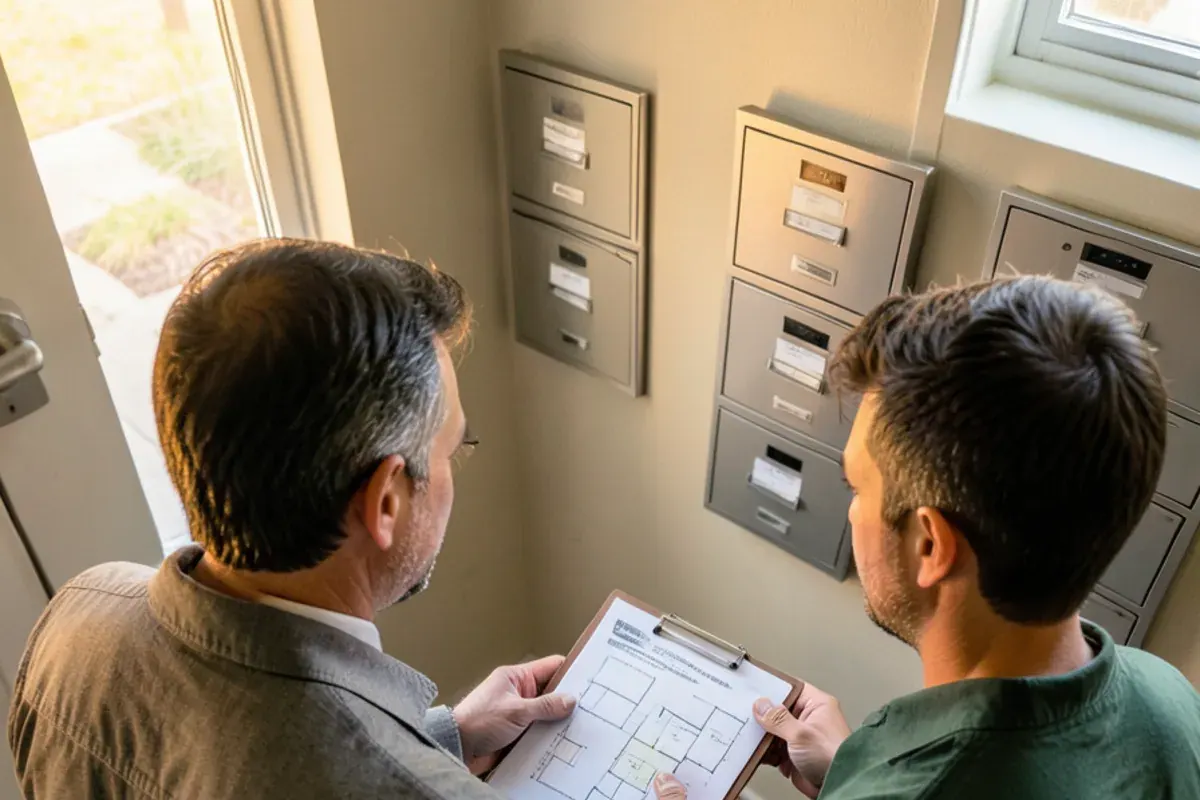
Apartment bed bugs in Franklin County: which health code and office applies
The office that handles a rental complaint depends on the address. Columbus Public Health covers addresses inside the city of Columbus, and Franklin County Public Health serves the county's townships and villages. Columbus Health Code §221.03 expects dwellings to be kept insect-free, and in a building with two or more units the owner is responsible for eliminating pests.
The Franklin County Municipal Court's Environmental Division publishes a bed bug guide that points tenants and landlords to those health departments and to the Central Ohio Bed Bug Task Force. Before work starts, ask the owner for the treatment date, the units covered and the prep sheet each tenant will receive, all in writing.
Why Boydes Exterminating for this work
We have worked with apartment managers as well as homeowners, hotels and restaurants across central Ohio.
We ask about the units next door, because that is where repeat problems come from.
Documentation after an inspection helps a landlord show what was done and a tenant show what was reported.
We can discuss heat, Aprehend and residual treatment for the building, not just the one we prefer.
Owner-run from 1967 Dunning Rd since 1990, with Robert J. Boyde Jr. in charge today. Managers can pay by cash, check, debit or credit, and Google shows 4.5 stars from 55 reviews.
Where we do this work
- Whitehall Roughly 61% of Whitehall homes are rented, many in doubles and small buildings where one unit's bugs reach the next.
- Columbus About 56% of Columbus homes are rented, and the city's health code puts the pest duty on owners of multi-unit buildings.
- Urbancrest About 77% of Urbancrest homes are rented, so most treatments there involve a landlord and shared walls.
- Grandview Heights About 43% of homes are rented, including Grandview Yard apartments open since 2012, so building-wide plans matter.
- Reynoldsburg About 39% of Reynoldsburg homes are rented, and the city spans Franklin, Licking and Fairfield counties.
- Lincoln Village A planned community begun in 1955 with 38% rented, mixing older apartments and houses along U.S. 40.
- Gahanna The median home dates to 1985 and 31% are rented, so apartment complexes sit beside single-family streets.
- Newark About 44% of Newark homes are rented and the median home dates to 1963, so multi-unit buildings drive many calls.
- Lancaster About 43% of Lancaster homes are rented and the median home dates to 1962, an older multi-unit stock.
We treat apartments and rentals across Columbus, including Whitehall and Gahanna about 11 minutes from our Dunning Rd base, and in Reynoldsburg. See all of our service areas if your building is farther out.
Apartment Bed Bug Treatment: common questions
Do neighboring units need treatment too?
Often they need at least an inspection. Bed bugs travel through walls, pipes and hallways, so we check the units on either side and above and below. If we find evidence, they join the plan. If not, they may only be monitored. Treating one unit alone commonly leads to a repeat call.
Who pays for bed bug treatment in a Columbus rental?
The Columbus Health Code, per Columbus Public Health, puts pest elimination in a two-or-more-unit dwelling on the owner, so the landlord usually pays in a multi-unit building. Your lease may add terms. We cannot give legal advice, but we can document what is found.
What should a tenant tell the landlord first?
Say, in writing, that you found signs of bed bugs, which unit, and when. Include photos and a specimen if you have one, ask for the neighboring units to be checked, and keep a copy. Mention that you have not used foggers or sprays. A written record protects you in any later dispute.
Can I treat my apartment myself?
It rarely works. Store-bought sprays and foggers miss the seams and voids where bugs hide, and they can scatter them into walls or other units. A do-it-yourself attempt can also complicate a professional job. Tell your landlord, keep the evidence and wait for an inspection before you spray.
Do I have to move out during treatment?
Not always. Residual and Aprehend jobs may let you stay at home outside the label's re-entry time. Heat requires you and your pets to be out while the unit heats. We explain what applies to your method and give you the time you can return before the visit.
Sources
- Columbus Public Health, Columbus Health Code on responsibility for pests in multi-unit dwellings
- Ohio Department of Agriculture, Pesticide Business License lookup
- U.S. Census Bureau, American Community Survey 2019-23, Whitehall housing tenure
- Ohio State University Extension, Bed Bugs fact sheet ENT-0109
- Franklin County Municipal Court Environmental Division, Bed Bugs guide
What customers say
4.5 stars from 55 Google reviews, checked November 2026. Read more reviews · Leave a review
Mr. Boyde made everything a breeze and put me at ease!
Mr. Boyde’s company is responsive and honest. They answer phone calls, give estimates, and come to your home quickly. Pricing is true to market price with no surprise charges.
Great service. Super dependable. Calls right back. This time he was able to come out same day.
Managing a building with bed bugs?
Tell us how many units are involved. We will outline inspection, treatment and documentation.
- Serving Columbus since 1990
- 4.5★ from 55 Google reviews
- Owner-run, based on Dunning Rd
- One-time or recurring service
Boydes Exterminating Co, 1967 Dunning Rd, Columbus, OH 43219