
Boydes Exterminating Co
Fly Control in Columbus, OH
Fly control in Columbus, OH comes down to finding what the flies are breeding in, because swatting and spraying adults never ends the cycle. Boydes Exterminating Co identifies the fly, tracks the breeding source in drains, trash, food debris or an attic, and treats what the flies rest on once the source is fixed.
- Serving Columbus since 1990
- 4.5★ from 55 Google reviews
- Owner-run, based on Dunning Rd
- One-time or recurring service
A kitchen full of tiny flies and an attic window crawling with big slow ones are two different problems with two different answers. This page is part of our insect control in Columbus work, and it covers houses, apartments and food businesses.
Why do I suddenly have so many flies?
A sudden burst of flies means something nearby is giving them a place to grow. Flies lay eggs in moist, rotting or fermenting material, and the young are maggots or larvae that feed there until they turn into adults. In warm weather that cycle can finish in a week or two, so one forgotten problem becomes a swarm quickly.
The usual suspects in a Columbus home are listed below. Most of them are fixable in an afternoon once you know where to look.
- A trash can, recycling bin or compost pail with food residue at the bottom
- A drain, floor sink or garbage disposal with a film of slime on the walls
- Overripe fruit, a forgotten potato or onion, or a spill behind an appliance
- Pet waste in the yard or a pet food bowl left out
- A dead mouse in a wall void or ceiling, which can bring a flush of larger flies

Which fly is it? House flies, drain flies, fruit flies and cluster flies
Naming the fly narrows down where the source is. Size, shape and where you see them tell most of the story:
| Fly | How to tell | Where it breeds | First thing to check |
|---|---|---|---|
| House fly | Gray, about the size of a pea, moves fast and lands on food | Garbage, pet waste, rotting food outdoors | Trash area, dumpster and door gaps |
| Drain fly | Small, fuzzy, moth-like, hops along walls near sinks and showers | Slime film inside drains and sewer lines | Slow or rarely used drains |
| Fruit fly | Tiny, tan with red eyes, hovers over produce and drains | Fermenting fruit, spills, drains and bar taps | Produce bowls, recycling and mop sinks |
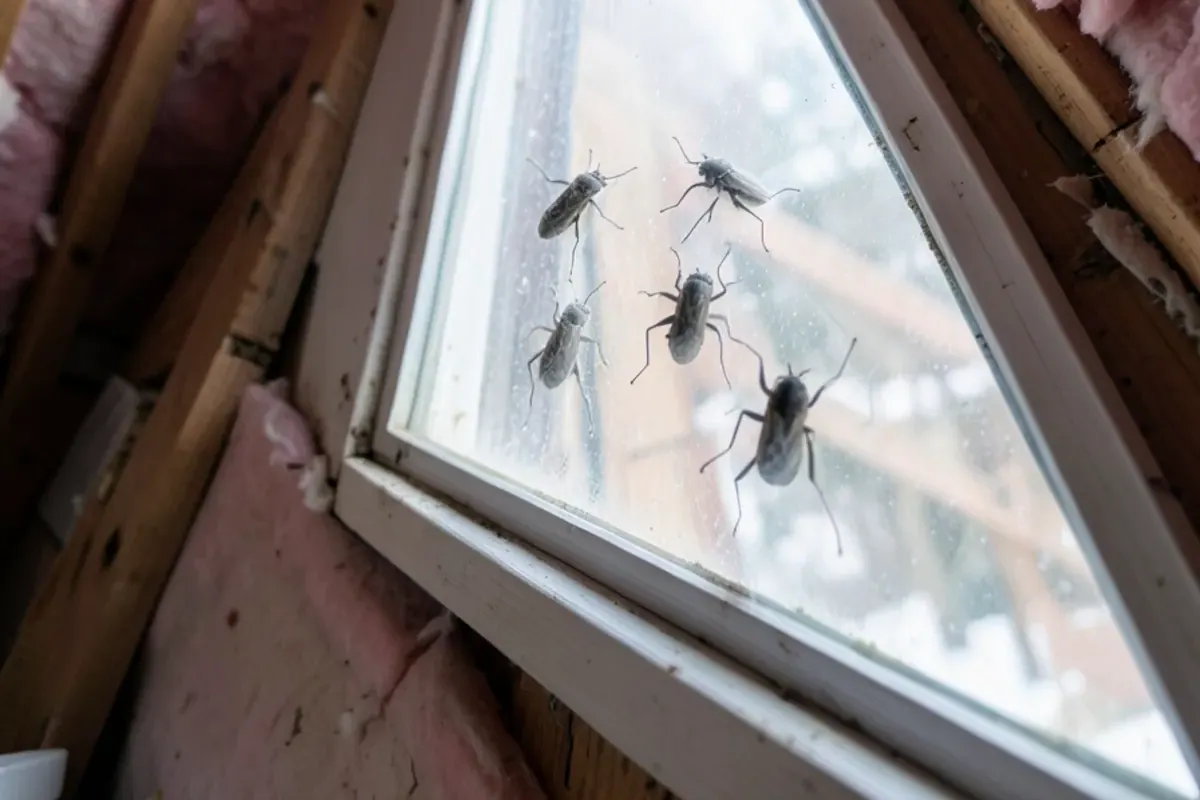
| Cluster fly | Larger and slower than a house fly, dull gray with golden hairs | Outdoors in soil, then rests in attics and wall voids | Sunny upper windows in late fall to early spring |
If cluster flies are your problem, the fall invader plan on our stink bug and boxelder bug page is a close cousin, since both pests move into the attic for the winter.
Flies back after you cleaned up?
That usually means the source is somewhere you have not looked. Call and we will help you narrow it down.
- Serving Columbus since 1990
- 4.5★ from 55 Google reviews
- Owner-run, based on Dunning Rd
- One-time or recurring service
Prefer to write it down?
Calling is fastest. The form comes to the same desk, and we call you back during business hours.
Call (209) 563-1650How do you find where flies are breeding?
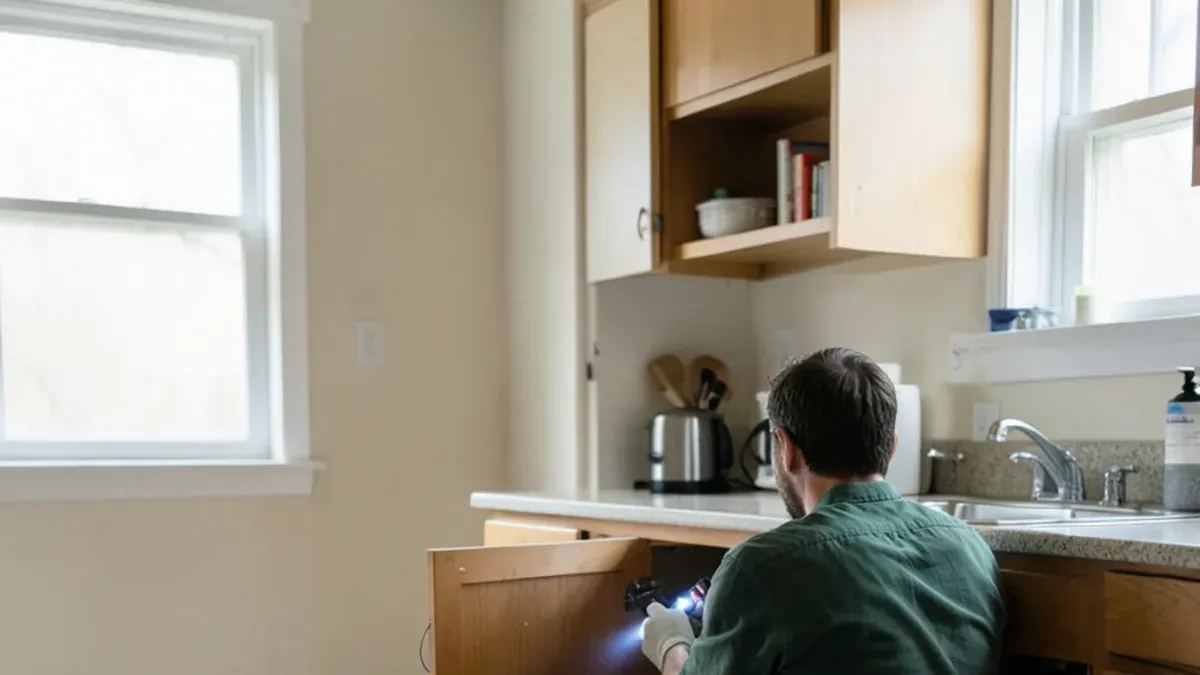
We start with a slow walk through the building, looking and smelling for the source. Flies rest near where they emerge, so a cluster of them on one wall or around one fixture is a lead.
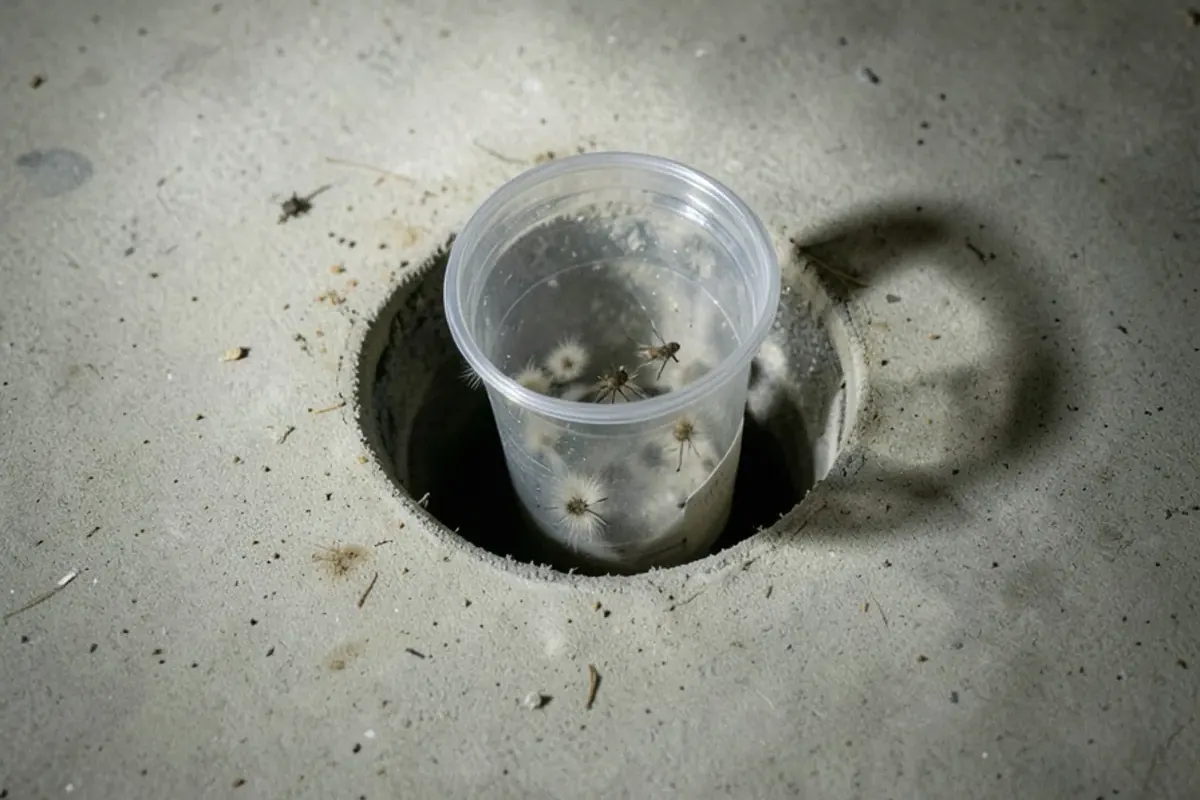
For drain flies, we may tape a clear cup or a piece of plastic over a suspect drain overnight. Adults that emerge from that drain end up stuck to the cup, which confirms the source. For house flies, we check trash storage, floor drains, loading areas and anywhere food waste sits. In an attic, we look at light fixtures, window ledges and the edges of the insulation.
Once the source is clear, we tell you what needs cleaning, repairing or removing before treatment. Cleaning is not a failure on your part. Fly sources hide in spots that look clean from the outside, such as a gasket on a trash chute or the underside of a floor sink.
What does fly control cost in Columbus?
Pricing depends on the type of fly and the extent of the problem. A single drain source is a short job. A cluster fly infestation in a large attic, or repeated fruit fly outbreaks in a restaurant, takes more time and more visits. We explain the price before work starts.
Factors that change the quote include the number of rooms or areas involved, how hard the source is to reach, whether sanitation work is needed first, and how many follow-up visits the plan includes. Reviewers describe our pricing as fair, with no surprise charges.
Fly infestation in the house: what treatment looks like
Treatment has three parts, and the order matters. Fix the source, treat the places adult flies rest, and keep new ones from coming in.
- Source work: drain cleaning with enzyme-type products, trash and compost routines, moving or removing the material they feed on
- Residual treatment: labeled product on walls, ceilings and window ledges where adult flies land, applied per label directions
- Exclusion: screens, door sweeps and sealed gaps, plus attic and soffit vent mesh against cluster flies
- Monitoring: sticky traps and light traps in kitchens and food areas to see whether the numbers drop
Fogging a room looks decisive and rarely is. It knocks down the adults flying in the air, and the next generation emerges from the source the next day. We use space treatments sparingly and only when the source is under control.
What does a fly control visit look like, step by step?
- You describe the fliesSize, color, where you see them and when they appeared. A photo or a stuck fly on tape is even better.
- We ask about food, pets and allergiesThe household shapes the treatment plan, and we ask again at each visit.
- We trace the sourceDrains, trash areas, appliances, wall voids and attics all get a look, depending on the fly.
- We treat and give you a task listProduct goes on per label directions, and you get the re-entry time. You also get a short list of sanitation and sealing jobs.
- We check back on scheduleFollow-ups are biweekly, monthly, bimonthly or as needed, depending on whether the source was found.
Do you treat flies in restaurants and food businesses?
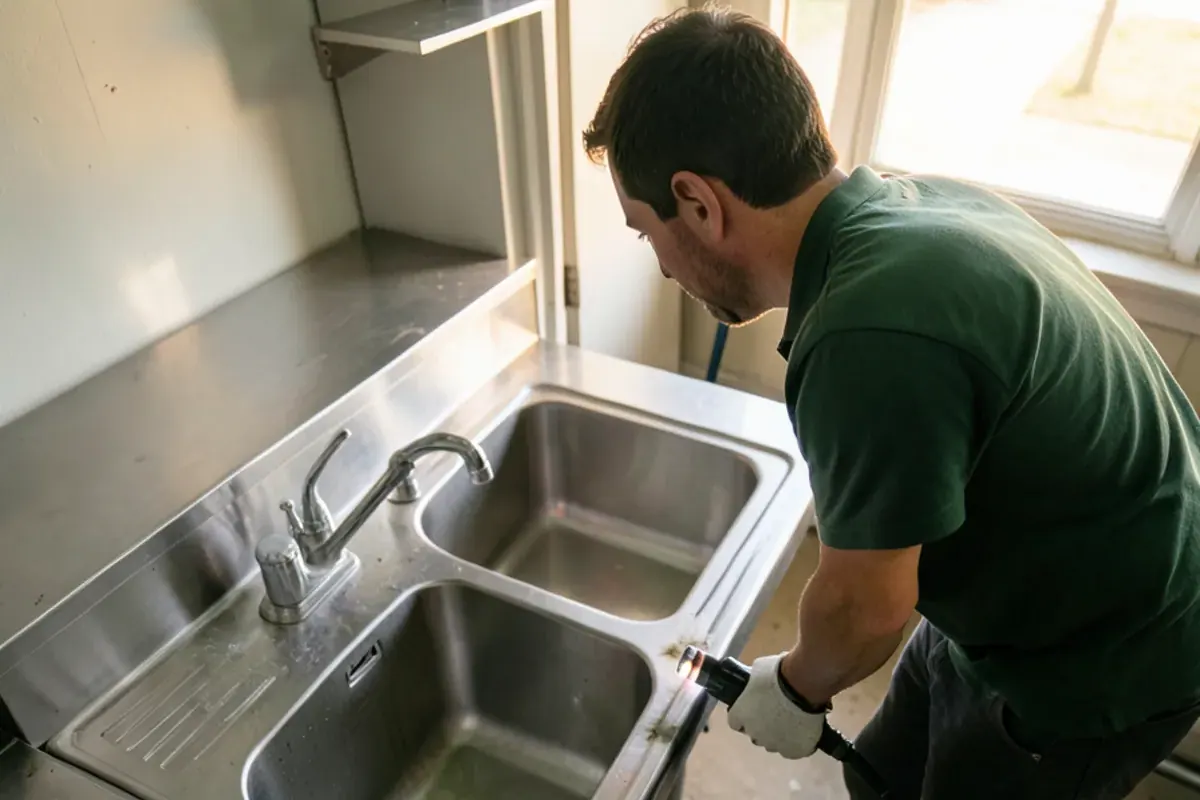
Yes. Restaurants, hotels and other food businesses in central Ohio are part of our regular work. In commercial kitchens the culprits are often fruit flies and drain flies, and the sources are floor sinks, mop sinks, ice machine drains and soda lines.
Commercial jobs can run on a repeating schedule, and we provide documentation after an inspection, so you have a record of what we found. Sanitation is shared work. We find the source and treat, and the staff keeps the drains and waste areas clean between visits.
How to keep flies from coming back
- Take out kitchen trash daily in warm weather and rinse the bottom of the can now and then
- Scrub drains with a stiff brush, because liquid cleaner alone rarely removes the slime film
- Store ripe fruit in the fridge and wipe spills under and behind appliances
- Keep door sweeps and window screens in good repair
- Pick up pet waste in the yard on a schedule
Flies in a Columbus kitchen: what Ohio's Uniform Food Safety Code requires
Ohio's Uniform Food Safety Code, rule 3717-1-06.4(K) of the Administrative Code, says a food operation must control insects, rodents and other pests by routinely inspecting the premises, using trapping or other control when pests are found, and eliminating harborage conditions. Rule 3717-1-06.1(M) adds that outer openings need closed, tight-fitting windows and solid, self-closing doors.
In practice, a fly complaint in a restaurant is a drain, waste and door problem as much as a spray problem. Ask any provider for a written note of where the breeding source was and what was done about it, and keep it with your inspection records. Ohio also requires a company applying pesticides for hire to hold an ODA Pesticide Business License, and ODA's public search lets you check one.
Why Boydes Exterminating for this work
Flies come back to a breeding spot until it is cleaned up. We work out where it is before we treat anything.
We work with hundreds of homeowners, hotels and restaurants in central Ohio, so a kitchen floor sink is not new to us.
Food businesses get documentation after an inspection, which helps when a health inspector asks.
Robert J. Boyde Jr. runs the company from 1967 Dunning Rd. Visits can be biweekly, monthly, bimonthly or as needed.
If the fix is mostly cleaning or sealing, we say so instead of selling a repeat spray. Pay by cash, check, debit or credit. Google shows us at 4.5 stars across 55 reviews.
Where we do this work
- Columbus About 56% of Columbus homes are rented, and restaurants and apartment dumpsters across the city are common fly sources.
- Whitehall About 61% of homes are rented, along the busy East Broad and East Main business corridors.
- Hilliard Franklin County Fairgrounds sits in Hilliard, where event food and waste are typical fly breeding spots.
- Grove City Median home built in 1993 with 30% rented, next to the I-71 corridor and its restaurants.
- Gahanna Big Walnut Creek runs through town, and about 31% of homes are rented.
- Dublin Bridge Park is a mixed-use development on the Scioto River, so restaurant kitchens sit close to apartments.
- Grandview Heights The first Grandview Yard apartments opened in 2012, and 43% of homes in town are rented.
- Obetz Warehouse and distribution employers cluster here, with loading docks and dumpsters that draw flies.
- Reynoldsburg Median home built in 1984, with 39% of homes rented across three counties.
We handle flies at homes and businesses throughout Columbus, including Whitehall, Hilliard, Grove City and Gahanna. The full list of service areas shows where we work.
Fly Control: common questions
Why do I suddenly have so many flies?
Something close by is giving them a place to breed. Common sources are a trash can with food residue, a slimy drain, rotting produce or a dead mouse in a wall. Flies can go from egg to adult in a week or two in warm weather, so a small source turns into a swarm fast. Finding it is the first job.
How do you find where flies are breeding?
We look where the flies are resting, then follow them back to the source. For drain flies we may tape a cup over a drain overnight to see whether adults emerge. For house flies we check trash, floor drains and pet waste. In attics we look at windows and insulation edges. The fly type tells us where to start.
Do you treat flies in restaurants?
Yes. Food businesses are a regular part of our work, including restaurants and hotels. We find drain and waste sources, apply labeled product where flies rest, and provide documentation after an inspection. Kitchens usually need repeat visits at set intervals, such as monthly or biweekly, until the fly activity stays low.
What are the tiny flies near my kitchen sink?
Fruit flies or drain flies, most often. Fruit flies are tan with red eyes and hover over produce. Drain flies are fuzzy and look like tiny moths, resting on walls near drains. Both breed in damp, rotting material. Clean the drain with a brush, tidy up the produce, and tell us if they keep coming back.
Why are there big flies in my attic in winter?
Those are probably cluster flies. They spend summer outdoors, then move into attics and wall voids in the fall and wake on warm winter days. They do not breed indoors. A treatment on the outside walls in early fall and sealing gaps and vents help most, and vacuuming handles the ones already inside.
Will a fly fogger fix the problem?
Not by itself. A fogger kills adults in the air, but the eggs and larvae in the drain or trash source survive and the next flies emerge within days. It can also push flies into other rooms. Fix the source first, then use a treatment on the surfaces where the adults rest.
Sources
- Ohio State University Extension, Ohioline fact sheets on household pests
- Ohio Uniform Food Safety Code, OAC 3717-1-06.1(M) and 3717-1-06.4(K) (2024 edition)
- Ohio Department of Agriculture, Pesticide Business License search
- Ohio Uniform Food Safety Code, OAC 3717-1-06.1(M) and 3717-1-06.4(K) (2024 edition)
- Ohio Department of Agriculture, Pesticide Business License search
What customers say
4.5 stars from 55 Google reviews, checked November 2026. Read more reviews · Leave a review
I manage a few rental properties around the city and Mr Boyde is the only exterminator that I can rely on to be on. Only had to make 1 visit and the problem was resolved.
Robert has been great to work with, he is quick to respond and professional. We are a small family business ourselves and like working with people with the same philosophy who take care of their clients.
Excellent service, took care of our major ant issue quickly and even came back out when a small area had a resurgence.
Clear the air of flies
Tell us what kind of flies you have and where you see them, and we will plan the visit and quote the job.
- Serving Columbus since 1990
- 4.5★ from 55 Google reviews
- Owner-run, based on Dunning Rd
- One-time or recurring service
Boydes Exterminating Co, 1967 Dunning Rd, Columbus, OH 43219