
Boydes Exterminating Co
Rat Control in Columbus, OH
A rat exterminator in Columbus, OH deals with the burrows outside, the food source that feeds them and the gap that lets them into your garage or basement. This page covers rats specifically, and our wider rodent control in Columbus page covers mice and the full approach.
- Serving Columbus since 1990
- 4.5★ from 55 Google reviews
- Owner-run, based on Dunning Rd
- One-time or recurring service
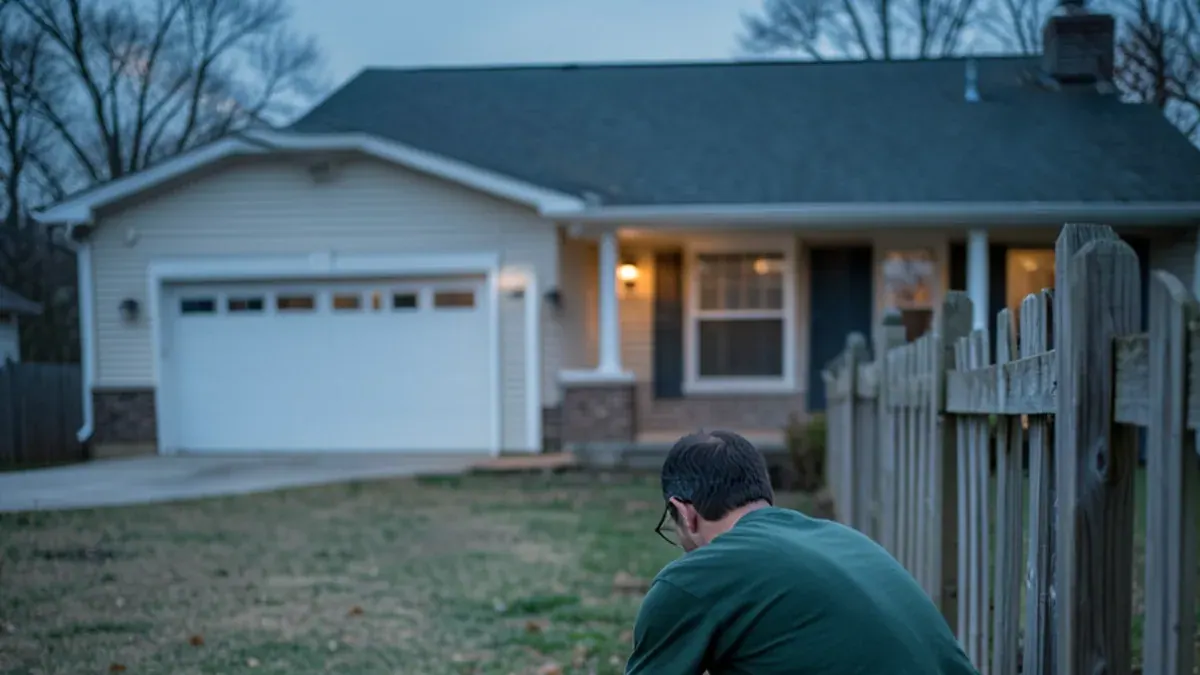
Rats are bigger, warier and more settled than mice. They dig, they chew through more than people expect, and they stay where food stays. If you found holes along a foundation or saw one cross the yard at dusk, here is what it means and what we do.
Norway rats in Ohio: what they are and how to spot them
The rat in most Ohio yards is the Norway rat. It is a heavy-bodied animal, often seven to nine inches long before the tail, and it prefers ground level: burrows, basements, crawlspaces and garages. It will climb to reach food, but it starts low.
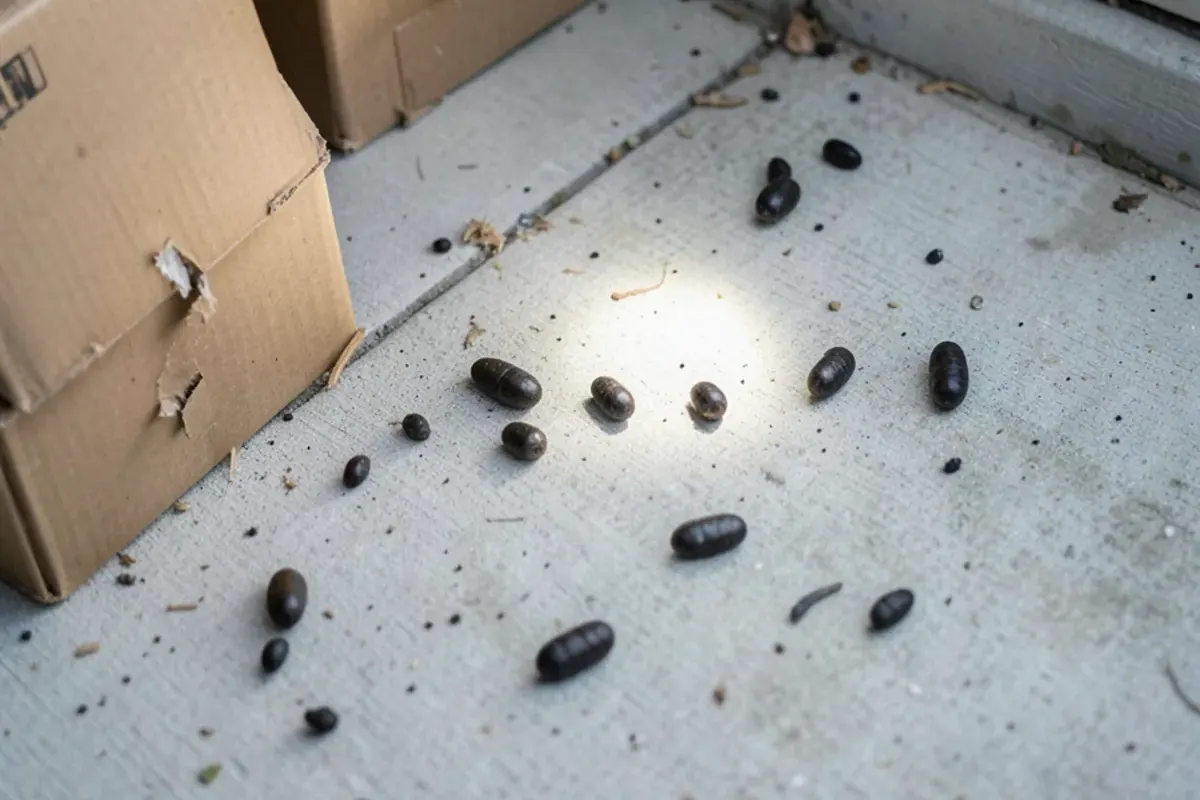
Signs are bigger than mouse signs, and easier to find outside:
- Droppings about the size of a capsule, often three quarters of an inch long, in clusters near food or along walls
- Gnaw marks on wood, plastic and bags that are wide and rough, not fine like a mouse's
- Smooth, dark rub marks along fences, foundations and pipes
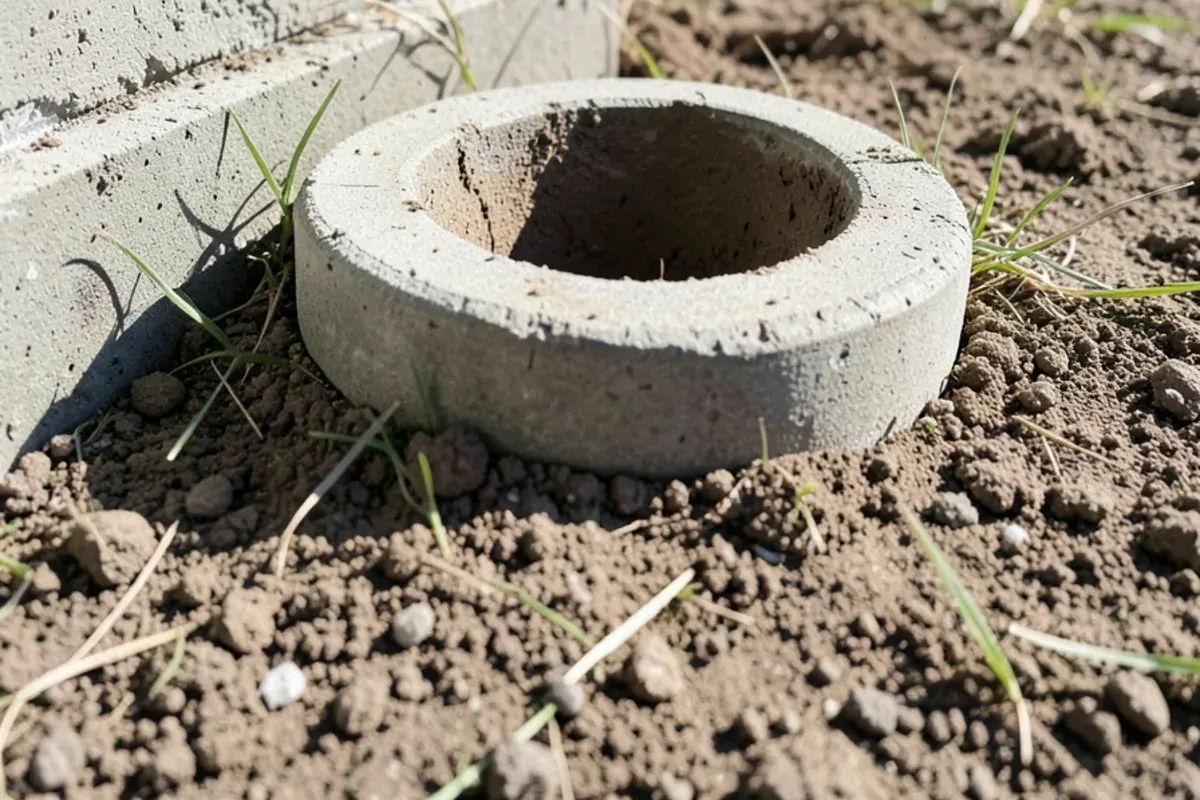
- Burrow holes two to three inches across, with packed dirt and no webs
- Chewed trash bags, torn garbage bins and gnawed pet food bins
If you are not sure whether the signs point to a mouse or a rat, our guide on telling a mouse from a rat is a good first read, and mouse control covers the smaller animal.
Are those burrows along your foundation from rats?
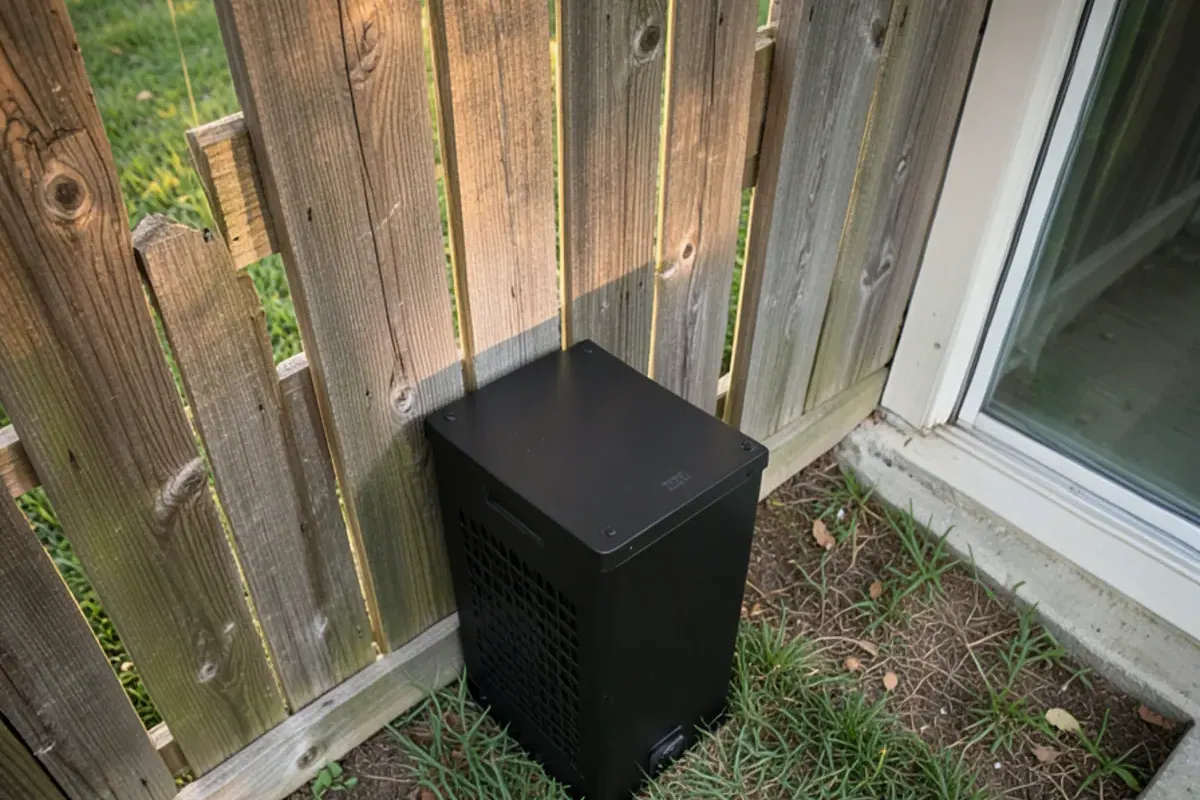
Often, yes. A rat burrow is a round hole two to three inches wide, usually against a foundation, under a slab, a shed or a woodpile, or beside a compost bin. The dirt at the mouth is packed smooth from traffic. Spider webs across the opening mean nobody is using it.
Other animals dig holes too, so look for evidence of use: fresh dirt, a polished edge, droppings nearby and a trail worn through grass or mulch. Rat burrows tend to have more than one opening. Do not fill them in before we look, since a plugged burrow tells the rats to dig a new one next to it, possibly closer to the house.
How far does a rat travel from its burrow?
Norway rats forage 100 to 500 feet from the nest at night, according to the University of California's IPM program. The burrow behind your garage may be feeding at a dumpster two lots over. A female has 4 to 6 litters a year and can wean 20 or more young annually, which is why a small problem should not wait.
Found a burrow along the foundation?
Leave it alone and call. Filling it in often pushes the rats to a new opening closer to the house.
- Serving Columbus since 1990
- 4.5★ from 55 Google reviews
- Owner-run, based on Dunning Rd
- One-time or recurring service
Prefer to write it down?
Calling is fastest. The form comes to the same desk, and we call you back during business hours.
Call (209) 563-1650What attracts rats to a Columbus yard, garage or alley?
Food and cover, in that order. Orkin's 2026 rattiest cities list has Columbus at No. 15, up 6 spots, and the factors behind that are the same ones you can see on your own block. Rats need very little to settle in. These are the usual draws:
- Garbage cans without tight lids, and bags left beside a full dumpster
- Pet food or spilled seed left outside overnight
- Fallen fruit, compost piles and dog waste in the yard
- Woodpiles, stacked pallets and overgrown ivy that give cover along a fence
- Garages used for storage, where cardboard boxes and a gap under the door make a ready nest
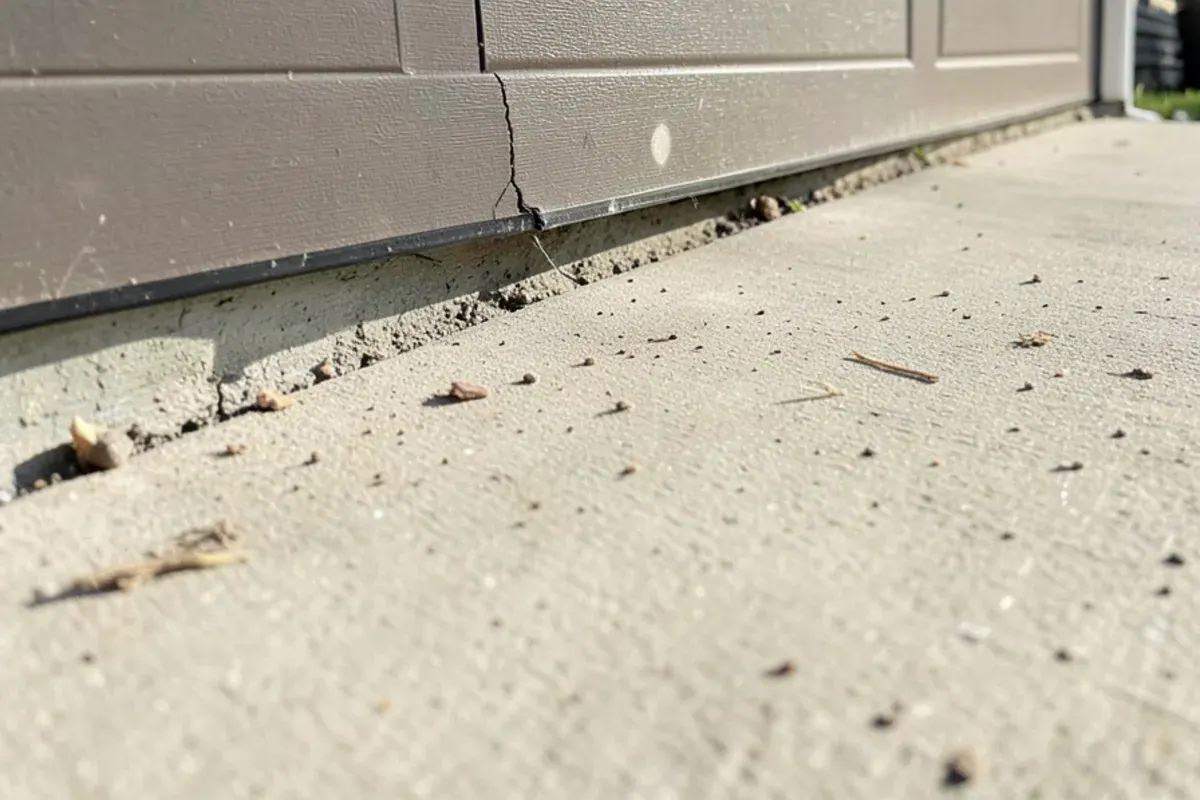
The garage is where yard problems turn into house problems. A gap beneath the door or a missing corner seal lets a rat walk in and nest behind boxes. Our post on rodent-proofing a garage and basement covers the fixes, and you can read how the city ranking connects to your own block in what to do about the rat ranking.
How do you keep rats out of a Columbus garage or basement?
Rats can squeeze under a door through a half-inch gap. Walk the garage and basement with a flashlight and fix these first:
- Replace a cracked or missing bottom seal on the garage door
- Move stored goods from cardboard into lidded plastic bins, off the floor
- Keep pet food and birdseed in metal bins with tight lids
- Seal pipe and wire openings where they pass through the wall
Can rats come up through a drain?
Yes. Norway rats swim, and they can enter through broken or uncovered drains and sewer lines. A basement floor drain with a missing cover is a quiet doorway. A cracked sewer lateral is a plumber's job, not a trap's, and fixing it is the only way to close that route.
Rat removal in Columbus: how the work is done
Rats learn. They avoid new objects for days, so the placement matters more than the product. Our plan rests on three parts:
- Bait stations, which are locked, tamper-resistant boxes holding rodenticide applied per label directions, set along walls, fences and burrow runs. Stations stay put so rats get used to them.
- Traps, larger than mouse traps and often used indoors or where bait is a concern. They also let us confirm what was caught.
- Exclusion, which means sealing the gaps rats use to enter the house, garage or crawlspace. See rodent proofing for the materials and process.
Rodent baits are pesticides, and Ohio requires any company applying them for hire to hold an ODA Pesticide Business License. You can look up a company on ODA's online business search before you hire.
Sanitation is the part only you can do. If the food source stays, new rats replace the ones we remove. We tell you what we see and what to change.
What does a rat control visit look like, step by step?
- You describe what you have seenBurrows, droppings, daytime sightings and noises tell us whether it is a yard problem, a house problem or both.
- We ask about pets, children and allergiesBait station and trap placement depends on who and what can reach them, so we ask first and again at each visit.
- We walk the yard, garage and foundationWe look for burrows, runways and gaps, then check the basement or crawlspace and the garage.
- We set bait stations and trapsThey go where the rats travel. We explain where each one is and how to avoid them.
- We return and sealReturn visits check the stations and traps. When activity drops, we close entry points. The schedule depends on how established the rats are.
Rat infestation in Columbus, Ohio: alleys, rentals and who handles it
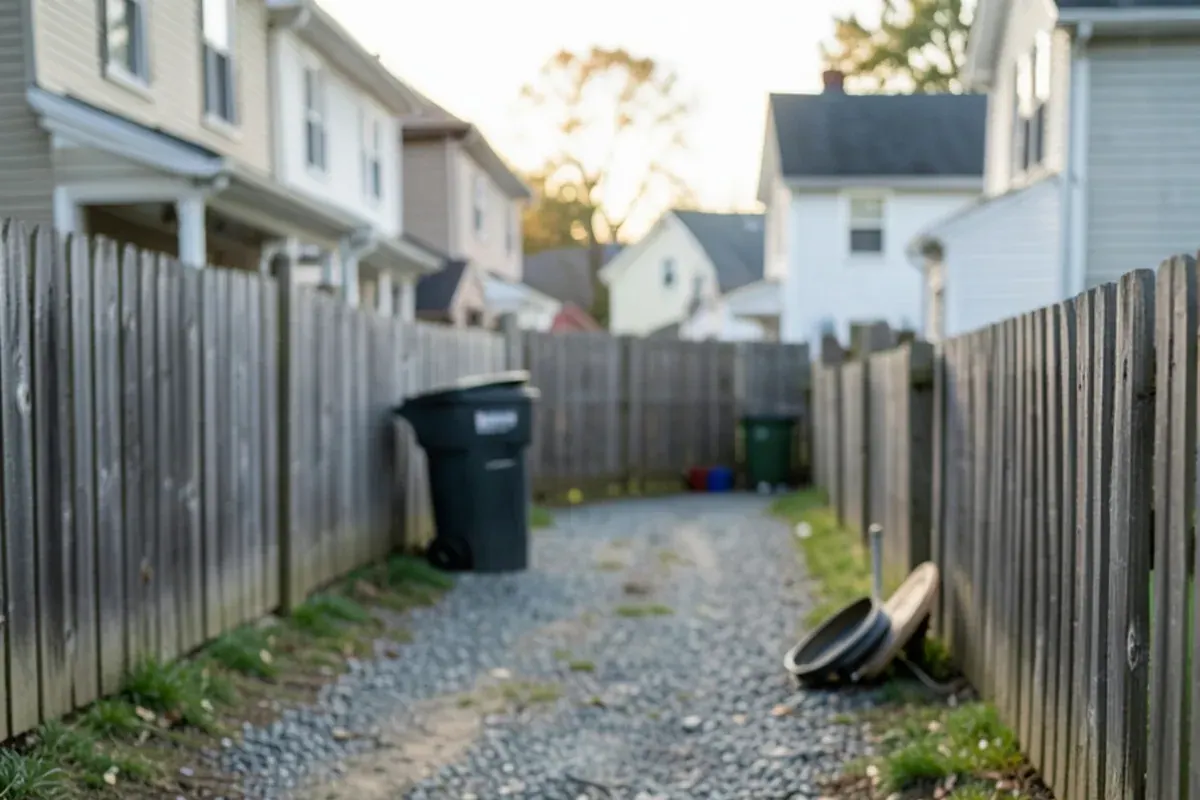
A rat problem often crosses property lines. The dumpster behind a building, the neighbor's compost and an alley behind a row of houses can all be part of the same colony. We treat what we can reach on your property and tell you what is outside it.
If the alley is public, report the problem through the city's 311 service. If you rent in a building with two or more units, Columbus Health Code makes the owner responsible for eliminating pests (Columbus Public Health), so tell the landlord in writing. Owners and managers can call us to set up a schedule.
How much does rat removal cost?
We price rat work by how established the rats are, how much of the property is involved and how many entry points need sealing. Pricing is explained before work starts. A single burrow near a shed is a different job from a colony with access to a garage, a crawlspace and the neighbor's yard.
Several things push the number up: multiple burrows, large lots, difficult access under decks and slabs, and food sources the household cannot remove quickly. We will tell you what applies to your property and what you can do to keep the plan short.
Rat baiting in Columbus: EPA label rules and the city rodent code
Rat bait is a pesticide, so federal label law decides how it is used. EPA says professional rodenticide labels require tamper-resistant bait stations wherever children under six, pets or other animals can reach the bait, and for every above-ground outdoor placement. Outdoor burrow baiting is allowed only with pelleted bait placed at least six inches down an active burrow.
Ohio adds the business side: a company that applies pesticides for hire needs an ODA Pesticide Business License, and ODA's public search shows who holds one. In Columbus, Health Code §221.03 expects dwellings to be kept rodent-free. Ask any company where each station will sit, what product is in it and when someone will check it.
Why Boydes Exterminating for this work
The company dates to 1990, when Mr. Robert Boyde founded it, and Robert J. Boyde Jr. runs it today from Dunning Rd on Columbus's east side.
We treat the yard and seal the building, so rats do not just move from the burrow to your basement.
Food, trash and clutter decide whether rats stay. We tell you what we see, even when it means work on your side.
You hear the price before work starts, and reviewers describe the pricing as fair with no surprise charges.
Where we do this work
- Columbus Columbus ranked No. 15 on Orkin's 2026 rattiest cities list, with alleys and shared dumpsters behind many rentals.
- Whitehall About 61% of Whitehall homes are rented, and shared dumpsters behind multi-unit buildings are a common rat draw.
- Obetz Park lakes such as Dixon Quarry and nearby warehouse dumpsters are the water and food sources rats look for.
- Groveport The old town grew along the Ohio and Erie Canal, and nearby distribution centers add dumpsters to the mix.
- Lake Darby Big Darby Creek forms the western border, and creek banks give burrowing rats cover near homes built around 1983.
- Blacklick Estates Homes built around 1966 sit beside Blacklick Creek, where bank vegetation gives burrowing rats cover.
- Huber Ridge Alum Creek forms part of its edge and the median home dates to 1969, so banks and foundations both need checking.
- Lincoln Village A planned community from 1955 along U.S. 40, with a median home built in 1962 and 38% rented.
- Gahanna Big Walnut Creek runs through the city and 31% of homes are rented, so banks and dumpsters both matter.
We handle rats in Columbus and nearby suburbs, including Whitehall, Reynoldsburg, Grove City and Hilliard. Check our service areas for the full list.
Rat Control: common questions
Are those burrows along my foundation from rats?
If the holes are two to three inches wide, with packed dirt and a worn edge, rats are a likely cause. Chipmunks and other diggers make smaller holes, and cobwebs across an opening mean it is unused. Leave burrows as they are until we look, because filling them can send rats to dig closer to your walls.
What attracts rats to a Columbus yard?
Food and cover. Loose trash, open bins, spilled seed, pet food left out, fallen fruit and compost feed them. Woodpiles, pallets, ivy and the gap under a shed hide them. Dense housing with shared dumpsters adds pressure, and Orkin's 2026 rattiest cities list ranks Columbus No. 15. Removing food does more than any trap.
Who handles a rat problem in an alley?
It depends on who owns the alley. If it is public, report it through the city's 311 service. If the rats come from a rental building, the owner is responsible under Columbus Health Code for buildings with two or more units. We treat the part of the problem on your property and tell you what is outside it.
Can rats get into the house itself?
Yes. A rat can pass through a hole about the size of a quarter and will chew at a gap to enlarge it. They enter through crawlspace vents, pipe openings, damaged siding and worn door sweeps. Columbus Public Health asks that openings of half an inch or more within 48 inches of the ground be sealed.
How long does rat control take?
A new problem with one burrow may settle in a few weeks. An established colony or a block with many food sources takes longer, since rats avoid new objects and bait needs days to work. We give you a schedule after the first inspection and tell you if it changes.
Will rats leave if I clean up the yard?
Some will, especially if you remove food and cover. But rats already in burrows and walls often stay, so cleanup works best alongside baiting, trapping and sealing. Do the cleanup and call us in the same week. The traps then catch what stays, and cleanup keeps new ones from replacing them.
Sources
- Orkin, Rattiest Cities list 2026, Columbus at No. 15
- Columbus Public Health, Columbus Health Code §221.03 and the owner responsibility rule for dwellings with two or more units
- Ohio Department of Agriculture, Pesticide Business License search
- EPA, Restrictions on Rodenticide Products (bait stations, burrow baiting)
- University of California Statewide IPM Program, Rats pest notes (foraging range, litters, gap size, drains)
What customers say
4.5 stars from 55 Google reviews, checked November 2026. Read more reviews · Leave a review
Mr. Boyde’s company is responsive and honest. They answer phone calls, give estimates, and come to your home quickly. Pricing is true to market price with no surprise charges.
Great service. Super dependable. Calls right back. This time he was able to come out same day.
Excellent service, very easy to schedule appointments. No inspection needed to get the job done sooner and very forward about the cost.
Take the yard and garage back
Describe the burrows or the sightings. We will explain the plan and the price before work begins.
- Serving Columbus since 1990
- 4.5★ from 55 Google reviews
- Owner-run, based on Dunning Rd
- One-time or recurring service
Boydes Exterminating Co, 1967 Dunning Rd, Columbus, OH 43219