
Cockroach Control
German vs American Cockroach: How to Tell Them Apart
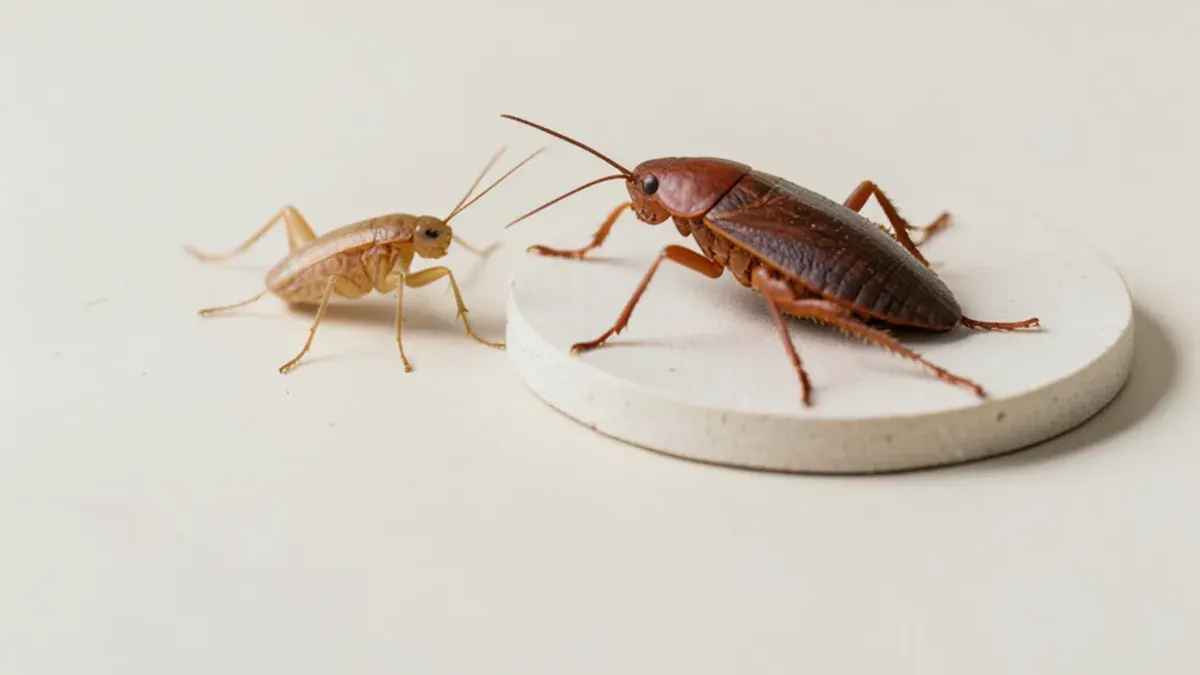
The German vs American cockroach question is mostly about size. A German roach is small, about half an inch, tan, and lives in kitchens and bathrooms. An American roach is more than an inch long, reddish brown, and turns up in basements, drains and crawl spaces.
- Serving Columbus since 1990
- 4.5★ from 55 Google reviews
- Owner-run, based on Dunning Rd
- One-time or recurring service
The difference matters because the two need different treatments. Below is how to tell them apart, plus the two other roaches that live in Ohio homes, so you can match what you found to the right plan.
How can you tell a German roach from an American roach?
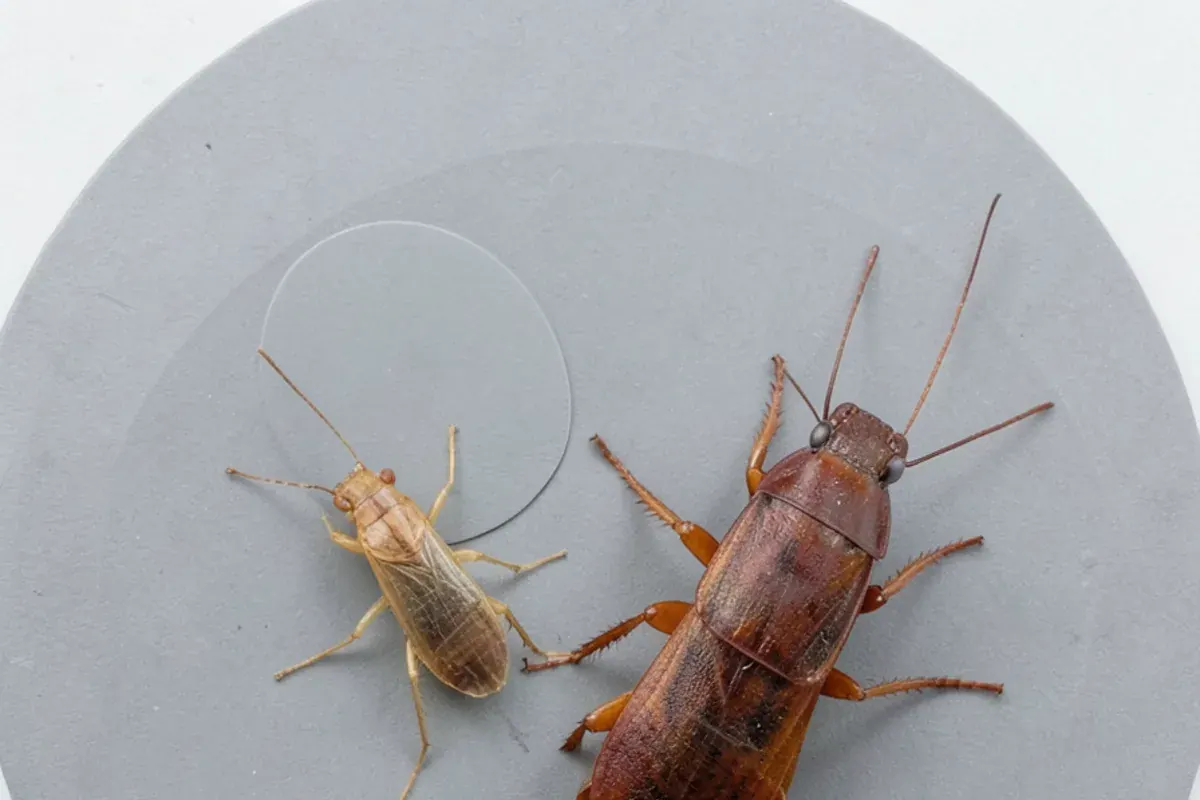
Start with size, then look at the shield behind the head, which is the pronotum. If you caught one in a cup, those two checks settle most cases.
- German roach: about half to five-eighths of an inch long, light tan to medium brown, with two dark parallel stripes on the shield. It rarely flies and moves fast across a surface.
- American roach: roughly an inch and a half long, reddish brown, with a pale yellow figure-eight pattern edging the shield. It has full wings and can glide or fly short distances.
Young roaches complicate things. A young American roach is smaller than the adult, but it is still darker and bigger than a young German roach, and the nymphs of the German species have a pale stripe down the middle of the back. If a roach is the size of a grain of rice, you are almost certainly looking at the German kind.
Found a roach and not sure which?
Send us its size, color and the room you found it in. We will help you sort out the species before you spend anything.
- Serving Columbus since 1990
- 4.5★ from 55 Google reviews
- Owner-run, based on Dunning Rd
- One-time or recurring service
Where does each cockroach live in a house?
Location is as useful as appearance. German roaches follow warmth, moisture and food, which pulls them to the kitchen and bath. They settle behind the refrigerator, inside appliance housings and in cabinet hinges, and they live indoors year round.
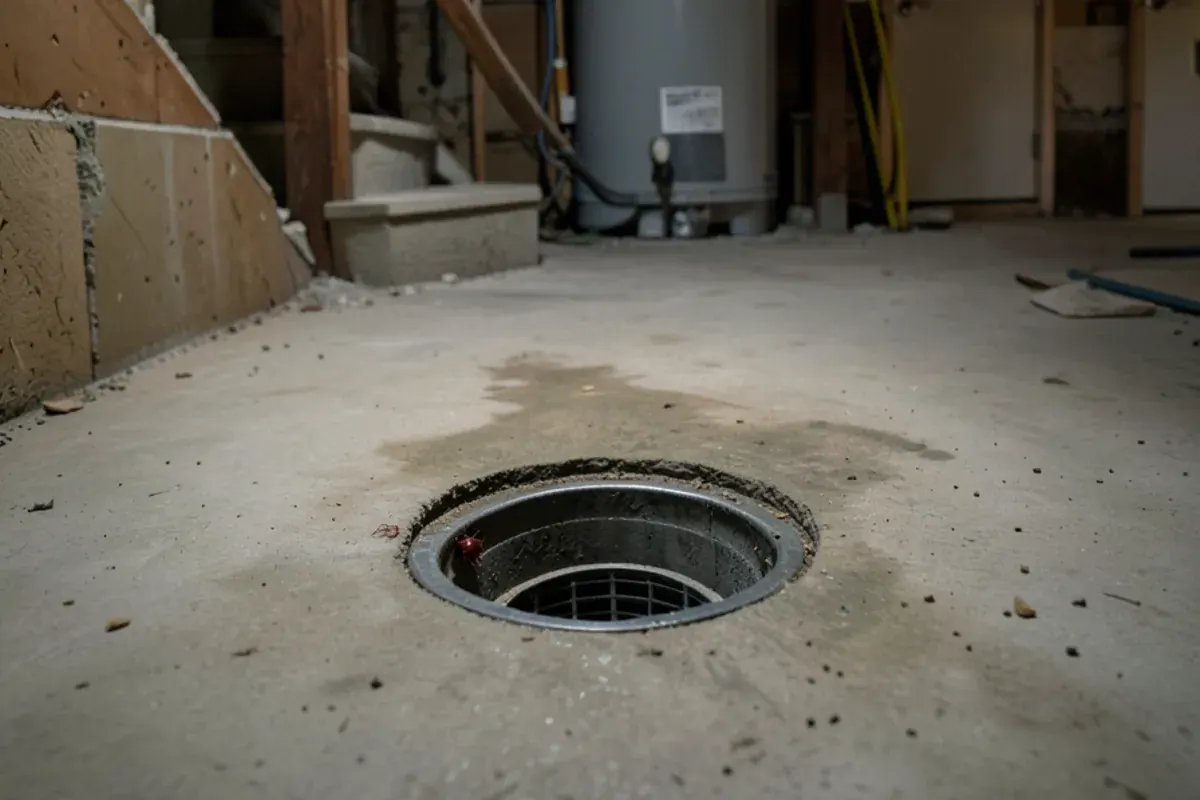
American roaches prefer damp, dark, larger spaces. In Ohio you tend to find them in basements, around floor drains, in crawl spaces and near sewer connections, then notice one wandering upstairs. They come and go from outdoors more than German roaches do, often after heavy rain or a cold snap.
That difference changes the response. A kitchen full of small roaches is an indoor population problem. A single big roach in the basement may be a wanderer, which makes exclusion and moisture control more useful than a kitchen-wide treatment.
What are the four common cockroaches in Ohio homes?
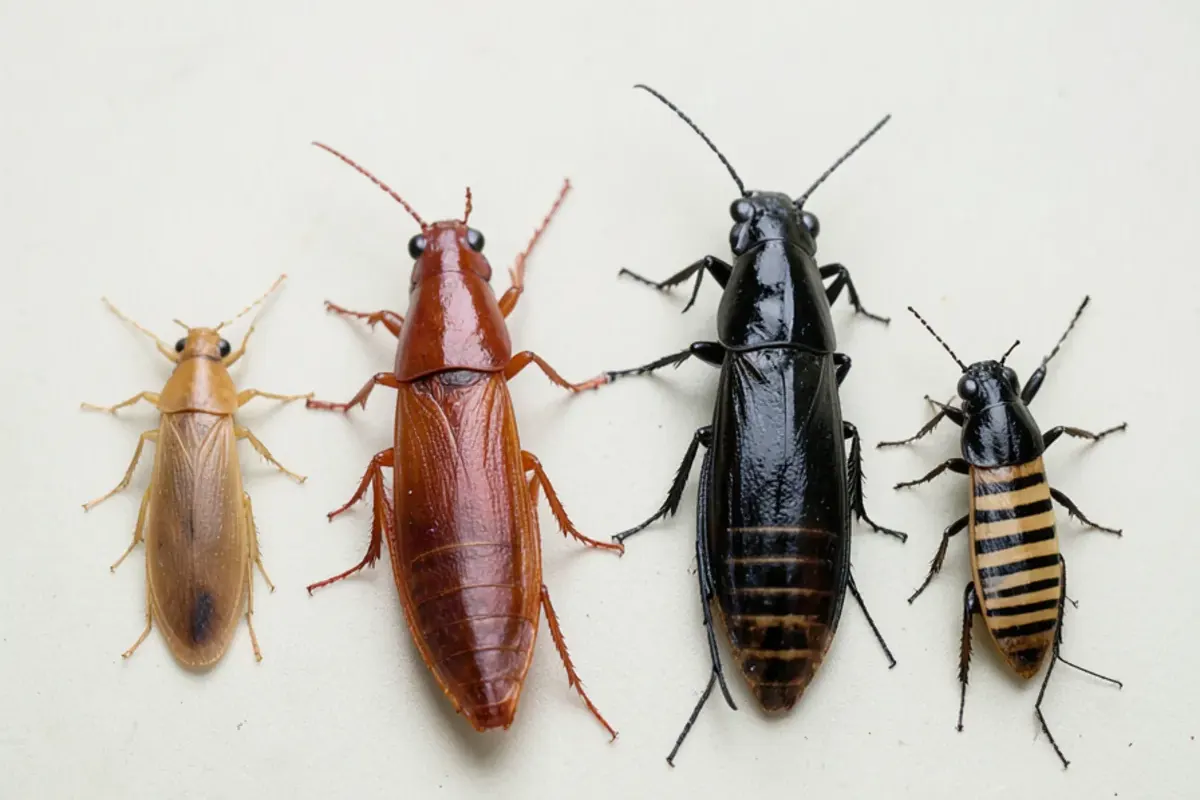
Four species do most of the damage in central Ohio, and the table puts them side by side. Each has its own page if you need the full plan.
| Species | Size and color | Where it lives | Our page |
|---|---|---|---|
| German | About half an inch, tan, two dark stripes on the shield | Kitchens, bathrooms, appliances | German cockroach control |
| American | About an inch and a half, reddish brown, yellow figure-eight on shield | Basements, drains, crawl spaces | American cockroach control |
| Oriental | About an inch, shiny dark brown to black | Cool, damp basements, drains, under sinks | Oriental cockroach control |
| Brown-banded | About half an inch, tan with two light bands across the back | Dry upper spots, closets, furniture, behind pictures | Brown-banded cockroach control |
Why does the species change the treatment?
Biology drives the plan. A German female carries her egg capsule until shortly before it hatches, and Penn State Extension notes that a capsule holds up to 48 eggs. A population like that explodes inside a kitchen, so the plan leans on bait, monitors and repeat visits.
An American female drops her capsule in a hidden spot early, and the roaches she produces are larger and slower to mature. The plan for them leans on finding the moisture and the entry, then a perimeter treatment, which is a band of product along the foundation where they cross into the house. Everything goes on per label directions.
Brown-banded roaches break the rules again. They like dry, high, warm places, so a treatment aimed at the sink misses them. If your roaches appear in a bedroom or living room, say so when you call.
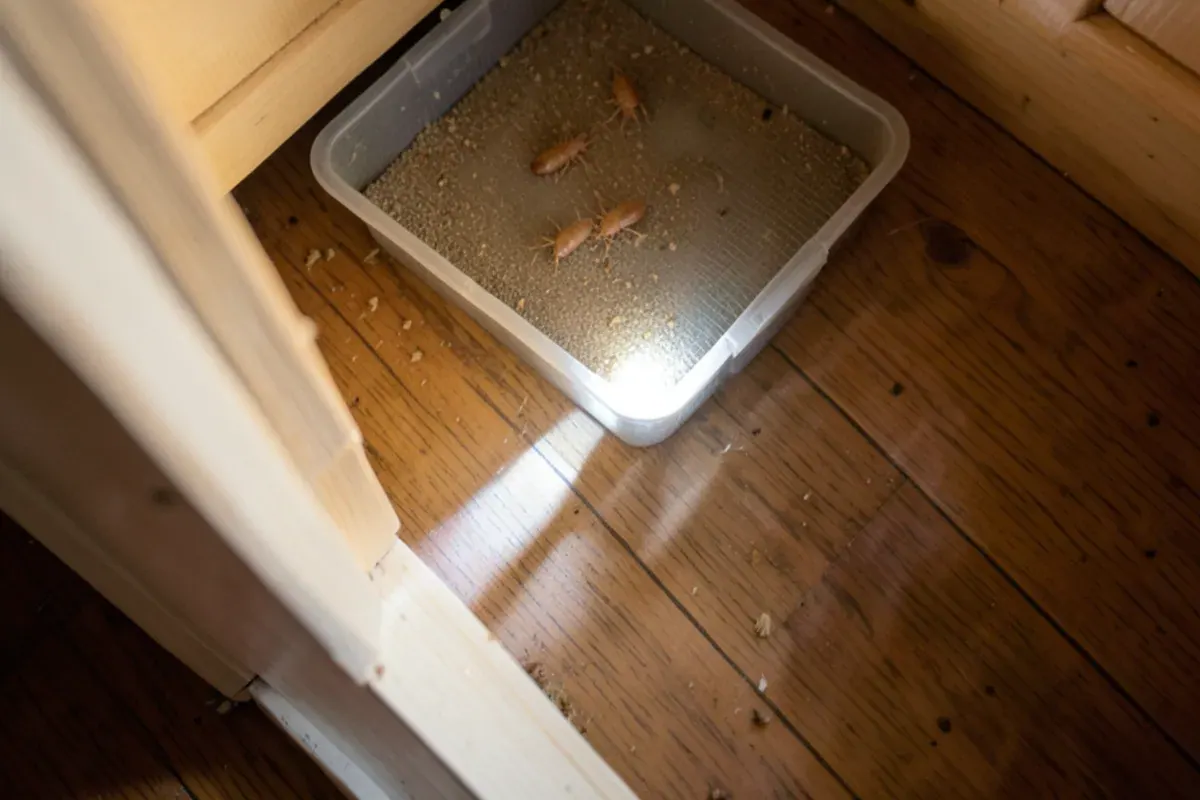
How do German and American roach life cycles compare?
The numbers below come from Penn State Extension. They explain why one species fills a kitchen in a season and the other shows up as a slow trickle in a basement.
| German | American | |
|---|---|---|
| Eggs per capsule | 30 to 48 | 14 to 16 |
| Capsules per female | 4 to 8 over her life | 15 to 90, about one a week |
| Nymph stage | Six to seven stages over 6 to 31 weeks | 160 to 971 days |
| Adult female lifespan | About 20 to 30 weeks | Up to 15 months |
| How they usually enter | Boxes, bags, suitcases, neighbors' units | Boxes, bags, furniture, drains and sewer lines |
Read the table as two strategies. The German roach is fast and indoors, and the American roach is slow and long-lived, which is why a basement roach can keep appearing for more than a year after the first.
Where do American roaches get in?
What should you do the first time you see a roach?
- Catch it in a jar or take a clear photo with a coin or ruler beside it.
- Note the room, the time of day and whether it was near water.
- Set sticky traps against the wall under the sink and near any basement drain, and leave them a week.
- Check that floor drains hold water and that sinks and tubs are not dripping.
- Seal the gaps you find around pipes and cabinets with caulk.
- Count the trap catch after a week and call with the numbers and the photo.
Penn State says one week of trapping often tells you enough to find an infestation. Sticky traps also separate the species. A card full of small roaches under the kitchen sink and one lone large roach at a basement drain are two different answers.
Penn State lists damp, warm, dark places such as basements, crawl spaces, drains, sewers and the area around tubs and sump pumps. They are also common in restaurant basements, bakeries and grocery stores. Check the floor drain trap in the basement first, since a dry trap leaves an open path from the sewer line.
What we ask when someone calls about a roach
Our first questions are about size, time of day and room. A roach seen in a kitchen at night tells us more than the same roach in a photo. If you can catch one in a jar and bring a clear photo, even better.
People often report an American roach as a German one, or the reverse, because their size memory is unreliable. We confirm the species on site before planning, since the wrong treatment wastes visits and lets the real population grow.
Know the limits of an identification. Photos mislead, and a half-grown American roach can pass for a different species. If you see one large roach after a heavy rain and nothing since, a call is probably not worth it. Check the drains, set a trap and watch it. If small roaches turn up in daylight or in cabinets, do not wait.
If you live in an apartment, our post on how German roaches spread between units covers the shared-wall routes. For sanitation steps that help any species, see the cockroach prevention checklist.
Related questions
Is a big roach in my basement an American cockroach?
Probably. A roach over an inch long, reddish brown with a pale pattern on its shield, is most likely an American roach, and basements, drains and crawl spaces suit it. An Oriental roach is smaller, darker and glossier, so a good look or a photo will settle it.
Are small roaches always German cockroaches?
Usually, but not always. Small tan roaches with two dark stripes behind the head are German. Tan roaches with two light bands across the back are brown-banded. Young American roaches are small too, though darker. Location also helps, since German roaches favor kitchens and bathrooms.
Do American cockroaches infest like German cockroaches?
Not in the same way. German roaches breed indoors and build large populations in a kitchen. American roaches usually live in damp spaces such as drains and basements, and many wander in from outside. They can still infest a building, but the fix often involves moisture and entry points.
Can I treat both species the same way?
No. German roach control relies on bait, monitoring and return visits. American roach control relies on locating moisture, sealing entry points and perimeter treatment. Mixed infestations happen, so the plan is built after an inspection that confirms what is there and where.
How long do American cockroaches live compared to German cockroaches?
American cockroach females live up to about 15 months under ideal conditions, according to Penn State Extension, while German females live roughly 20 to 30 weeks. The American nymph stage can last from about five months to more than two years, which is why basement roaches can keep appearing long after the first.
Once you know which roach you have, the next step gets easier. Start with the cockroach control overview, or go straight to the species page for German or American roaches. Call (209) 563-1650 and describe the size, color and room, and we will help you narrow it down. We serve Columbus and nearby suburbs.
Sources
Questions about this? Call the shop.
Tell us what you are seeing and we will tell you what happens next.
- Serving Columbus since 1990
- 4.5★ from 55 Google reviews
- Owner-run, based on Dunning Rd
- One-time or recurring service
Boydes Exterminating Co, 1967 Dunning Rd, Columbus, OH 43219